


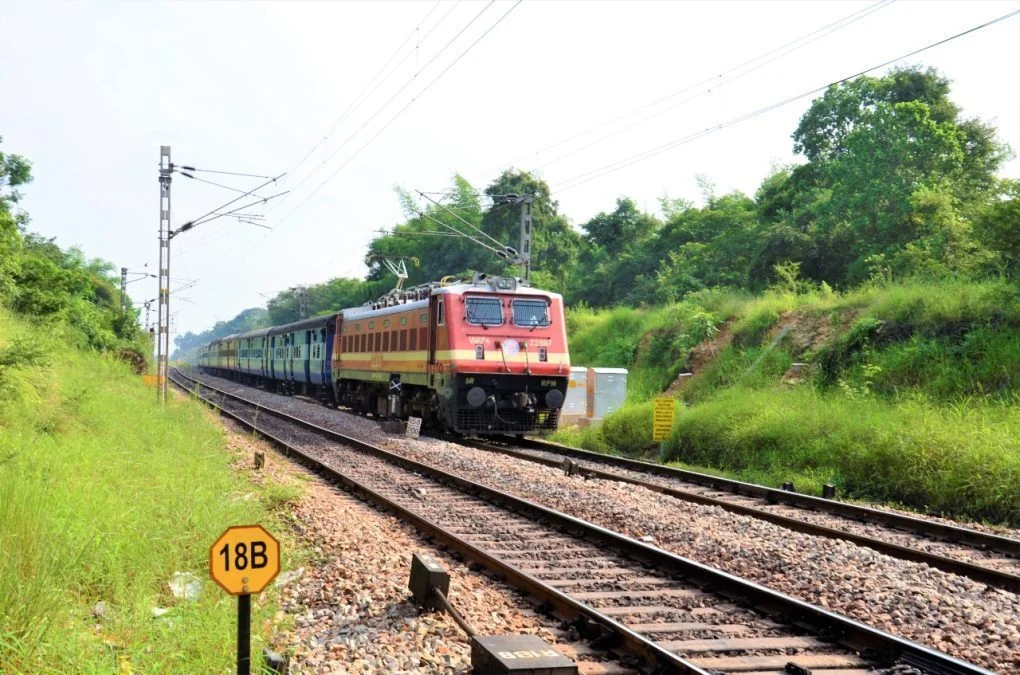
Indian Railways has approved the implementation of the indigenous Kavach system across 14 additional railway routes, covering over 600 kilometres of critical rail sections. The Railway Board has sanctioned a budget of ₹309.26 crore for the deployment of this technology, with project completion targeted by 2025.
The Kavach system, a homegrown Automatic Train Protection (ATP) technology, is engineered to prevent train collisions by automatically controlling train speeds and providing fail-safe alerts to loco pilots. It also ensures operational continuity in extreme weather conditions, such as dense fog, and during communication lapses or signal failures. This safety upgrade aligns closely with the national commitment to “Zero Tolerance for Safety” under the broader framework of Atmanirbhar Bharat. The new rollout will span major routes within the Prayagraj, Jhansi, and Agra divisions. Among the strategic rail sections earmarked are Shikohabad-Farrukhabad (103.58 km), Dholpur-Sarmathura (70 km), Bhandai-Udimod (113 km), Lalitpur-Khajuraho (164 km), Khajuraho-Mahoba (64 km), Et-Kaunch (13 km), and Ligarh-Harduaganj (14 km). These corridors play a vital role in regional passenger and freight mobility and have been prioritised for modernisation.
Railway officials confirmed that the Kavach system is currently undergoing phased integration with advanced components under its latest version, Kavach 4.0, which was recently commissioned on the high-density Kota-Mathura section of the Delhi-Mumbai corridor. Approved by the Research Designs & Standards Organisation (RDSO) in July 2024, this upgrade signifies India’s rapid technological advancement in railway safety systems, a feat achieved in just a few years compared to the decades it took other global rail networks. Officials associated with the implementation affirmed that the indigenous design, manufacturing, and installation of Kavach mark a substantial leap in self-reliant public transport innovation. The speed of execution demonstrates a firm commitment to future-ready infrastructure that prioritises human safety without compromising efficiency.
As the installation begins, railway divisions have been tasked with fast-tracking preparatory works, including track assessment and signal synchronisation. Safety experts have hailed the move as critical to reducing human error and mitigating large-scale accidents in an era of increasing train traffic. While the final installations and calibrations are expected to take place through 2025, authorities believe this initiative will significantly bolster public confidence in Indian Railways and set new benchmarks for safety in high-volume corridors.
The initiative not only enhances infrastructure resilience but also reinforces India’s global image as a leader in sustainable and safe transportation systems, built indigenously for long-term national benefit.
Also Read : Mumbai CBSE School Ready But Students Blocked Due To Missing Access Road
