Punjab Agriculture Infrastructure Fund Boosts Rural Infrastructure Growth
Punjab has emerged as the country’s strongest performer under the Agriculture Infrastructure Fund (AIF), with the state moving ahead of others in both project approvals and implementation. The development reflects a broader shift in how agricultural states are investing in post-harvest infrastructure rather than focusing only on crop production, a move that is increasingly being linked to rural economic resilience and climate-aware development.
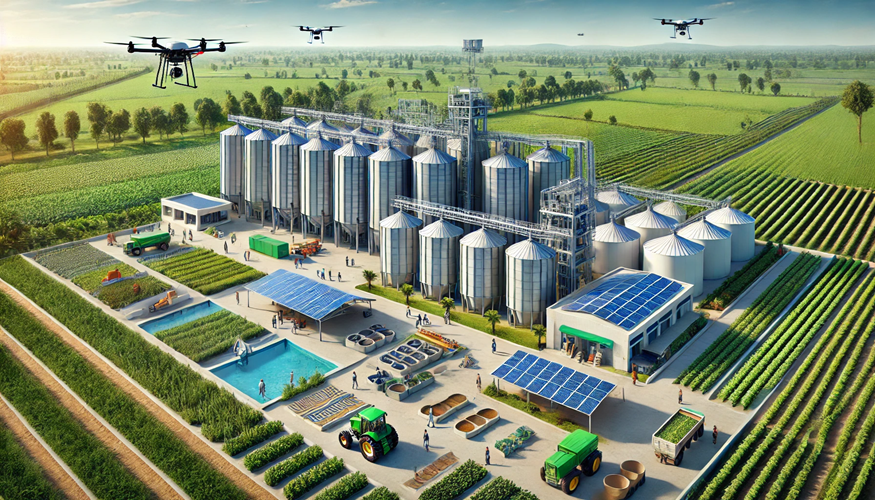
Official data released earlier indicates that Punjab has already crossed its original allocation under the AIF scheme, which was part of the Centre’s ₹1-lakh-crore financing programme aimed at modernising agricultural infrastructure nationwide. By early 2025, the state had more than 21,000 sanctioned projects—placing it well ahead of other large agricultural states and securing the top position nationally. The projects under the Punjab agriculture infrastructure fund are spread across a wide range of rural infrastructure segments. These include cold storage facilities, grading and packaging units, food-processing plants, warehouses, solar-powered storage systems and custom hiring centres that allow small farmers to access modern equipment. According to scheme documents, nearly three-quarters of the beneficiaries are individual farmers, and most projects are small-scale investments—suggesting that the initiative is not limited to large agribusinesses but has reached village-level enterprises.
The strong uptake of the scheme also reflects structural changes in Punjab’s rural economy. With crop yields stabilising and groundwater concerns intensifying, policymakers have increasingly emphasised value addition and storage infrastructure as the next stage of agricultural growth. Experts say post-harvest infrastructure can significantly reduce losses in fruits, vegetables and grains, while also helping farmers store produce and sell when market prices are more favourable. The scale of the Punjab agriculture infrastructure fund projects is also influencing how smaller towns and peri-urban areas are developing. Warehousing clusters, small food-processing units and cold-chain facilities often lead to the creation of new employment zones near villages and highway corridors. Urban planners note that such decentralised infrastructure reduces migration pressure on large cities while strengthening local economies in secondary towns.
Recent reports from the region also indicate parallel investments in irrigation and research infrastructure, suggesting that the state is trying to modernise agriculture in a more integrated way rather than relying solely on financial incentives. Improvements in canal-based irrigation and new research investments at agricultural universities are expected to complement the infrastructure created under the AIF scheme. There is also a sustainability angle to the expansion. Cold-chain infrastructure and processing facilities can reduce post-harvest waste, which in turn lowers the environmental footprint of food production. Experts say that such investments are particularly important in states like Punjab, where climate-related challenges—especially groundwater depletion and changing weather patterns—are forcing a shift toward more efficient farming systems.
With the scheme continuing until 2026, the next phase will likely focus on ensuring that sanctioned projects become fully operational and economically viable. If implemented effectively, the Punjab agriculture infrastructure fund could reshape how agricultural growth translates into rural employment, sustainable infrastructure and more balanced regional development.