


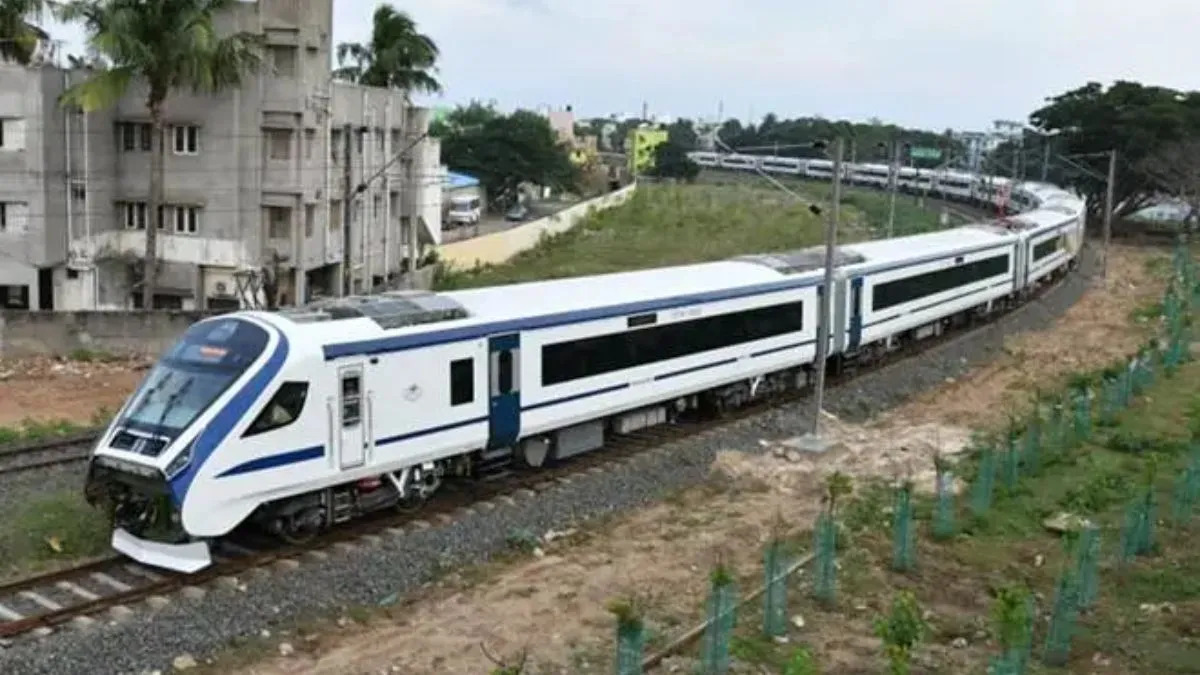
Pune’s Vande Bharat Express trains are significantly reducing travel times on key routes connecting to cities like Belagavi, Mumbai, and Kolhapur. While these modern services offer a considerable advantage in speed, cutting journeys by 1.5 to 2 hours on average, they come with a substantial premium in ticket prices. Passengers often face fares ranging from 60% to over 300% higher than those of conventional superfast express trains, prompting a critical evaluation of the value proposition for the everyday traveller in a rapidly urbanising landscape.
On the Pune-Belagavi corridor, the Vande Bharat completes the journey in approximately six hours, a notable improvement over the seven hours and forty to fifty minutes taken by traditional services. However, the fare of ₹1,250 for the Vande Bharat contrasts sharply with sleeper class tickets at ₹290 and 3AC fares at ₹750 on older trains. This disparity, ranging from 66% to 300% depending on the chosen class, raises questions about the equitable access to faster travel for a broader demographic, highlighting a potential segmentation in the public transport market.
Similarly, the busy Pune-Mumbai route sees the Vande Bharat completing its trip in three hours and fifteen minutes at a cost of ₹720. This is only a marginal time saving compared to popular services like the Deccan Queen, which takes three hours and ten minutes for a chair car fare of just ₹390, with general tickets as low as ₹110. For longer journeys, such as the Pune-Kolhapur line, the Vande Bharat takes five hours and twenty-five minutes for ₹890, while older express trains cover the distance in seven hours and five to forty-five minutes, with sleeper class options at ₹220 and 3AC at ₹595. The consistent pattern of higher fares for faster travel underscores a shift towards a premium service model.
Despite the elevated pricing, Vande Bharat trains maintain an average occupancy rate of 60% to 65% on Pune routes over the last six months. This indicates a segment of the travelling public is willing to pay for the enhanced experience, yet it also suggests that a significant portion of seats remain unfilled, possibly due to the cost barrier. This scenario presents a challenge for railway authorities to optimise pricing strategies to ensure higher utilisation while still recovering the substantial investment in these advanced, eco-friendly electric trains.
The Vande Bharat trains offer a suite of modern amenities that justify their premium positioning. These include rapid acceleration, on-board Wi-Fi connectivity, comfortable seating with mobile charging points, and advanced bio-vacuum toilets that contribute to better hygiene and environmental sustainability. Enhanced suspension systems provide a smoother ride, while integrated safety features like CCTV cameras, fire detection systems, and automatic doors ensure a secure travel environment. These features are integral to the vision of creating smart, sustainable, and comfortable urban transit solutions.
As India continues to invest in modernising its rail infrastructure, the balance between speed, comfort, and affordability remains a critical consideration. The Vande Bharat Express represents a leap forward in rail technology and passenger experience, aligning with the broader national agenda for efficient and sustainable transportation. However, ensuring that these advancements are accessible to a wider cross-section of society will be key to fostering truly equitable and inclusive urban development.
Also Read :Mangaluru Railways Launch Onam Special Train Services
