


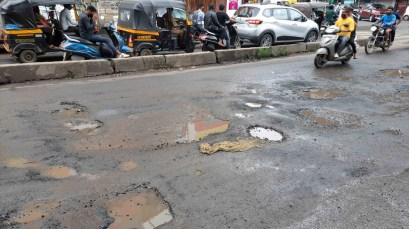
Pune’s road infrastructure has deteriorated to alarming levels, with numerous major thoroughfares now plagued by deep potholes. This situation has resulted in hazardous driving conditions and severe traffic congestion throughout the city. The deteriorating state of Pune’s roads has sparked a wave of criticism from local residents and netizens, who have condemned the issue as a “national disgrace.”
On Monday, a video highlighting the perilous state of Pune’s roads was shared widely on social media by a former president of the Mahratta Chamber of Commerce, Industries and Agriculture (MCCIA). The video accompanied a post lamenting the state of Pune’s infrastructure. The post reads, “#Pune’s infrastructure, especially our roads and lack of cleanliness, has become a national disgrace. It is unacceptable for a city that serves as an educational, automotive, and IT hub—blessed with natural beauty and ideal weather—to be marked by such infrastructural failures. It is a disgrace that demands urgent rectification. Pune deserves better, and it is high time we demand it.”
The criticism resonated with many social media users. One commentator suggested that Pune’s city engineer, roads department, and project division heads should face dismissal, rather than mere transfers, to ensure accountability. The user argued that without addressing bureaucratic failures, changes in political leadership would not rectify the fundamental issues. Another user emphasised the need for accountability and quality control, urging the municipality to disclose detailed information about road construction, maintenance schedules, quality checks, and payment authorisation. This call reflects a broader demand for transparency and effective governance in managing public infrastructure.
A third critic attributed the current crisis to contractors and Pune Municipal Corporation (PMC) officials, alleging that they are prioritising profit over quality. They highlighted the recurring issue of road reconstruction and expressed frustration over the apparent lack of standards and the misuse of public funds. Furthermore, another user noted that Pune appears to be neglected by both politicians and administrators, lamenting the lack of visionary leadership over the past two decades. They pointed out deficiencies in basic services such as road maintenance, water supply, garbage management, and public transport.
The widespread discontent underscores a growing demand for systemic reform and better governance to address the infrastructure woes plaguing Pune. As the city grapples with these challenges, the pressure is mounting on authorities to implement effective solutions and restore confidence in urban management.
