


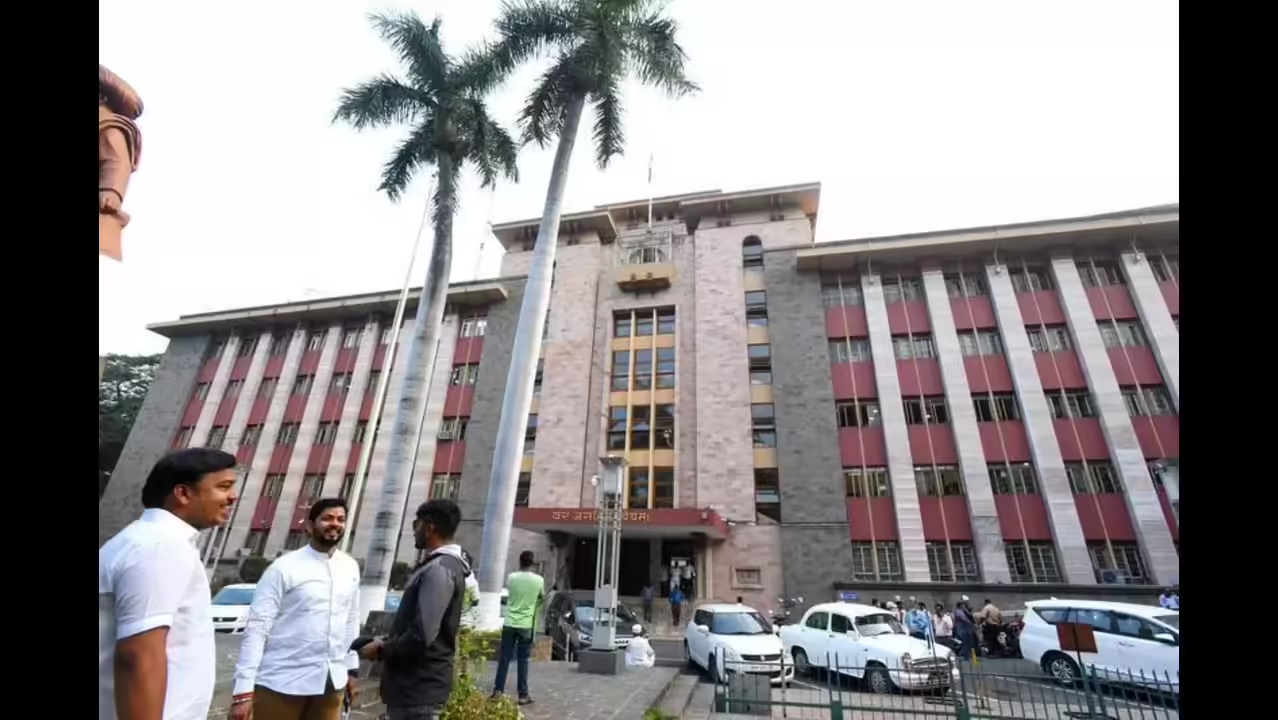
The PMC’s election office, under the guidance of Election Officer Prasad Katkar, has begun drafting a new ward-boundary structure — a critical prerequisite for the upcoming municipal elections. Supported by satellite imagery and Google Earth, officials aim to complete the initial draft by July 24, followed by field verification. The finalised version, with the Municipal Commissioner’s approval, is scheduled for submission to the Urban Development Department (UDD) by August 4.
This delimitation exercise, mandated by the UDD and prompted by a Supreme Court directive to 29 municipal corporations including Pune, emphasises transparency. Draft boundaries will be shared publicly, inviting scrutiny before the final plan is formalised in September.
Key considerations during the process include equitable voter representation—each four-member ward is intended to cover 84,000–92,000 voters, based on the 2011 census population of 3.48 million — and allocation of reserved seats for women and marginalised communities.
This delimitation is particularly significant in the context of recent administrative changes: Pune’s boundary expanded in 2017 and contracted slightly in 2024. The addition and subtraction of municipal areas increased complexity, creating a new electoral set-up of approximately 165 corporators.
Adopting satellite and GIS technologies along with comprehensive site inspections ensures accuracy while reducing ecological impact—minimising duplication of resources and avoiding redundant field visits. The 20-member specialised team, comprising engineers and mapping experts, reflects a commitment to smart-city principles and sustainable governance .
From a political standpoint, the redrawn boundaries could materially shift voter alignments and alter corporator outcomes across Pune’s economic corridors and emerging zones. Political observers are closely tracking shifts in reservation allocations and the realignment of fiscal wards, which are likely to influence resource delivery and developmental planning.
The timeline indicates: drafting completes by July 24; public hearings follow through late July and August; and final notification in early September, paving the way for polling post-Diwali.
Ultimately, this delimitation marks a key step toward equitable urban governance. By merging technology with public oversight, Pune is setting an example in delivering an eco‐responsible, inclusive, gender‑neutral electoral process. The revised wards could lay the foundation for more accountable civic administration and sustainable urban planning.
Also Read: Indore Z‑Shaped ROB With Two Sharp Turns Sparks Official Concern
