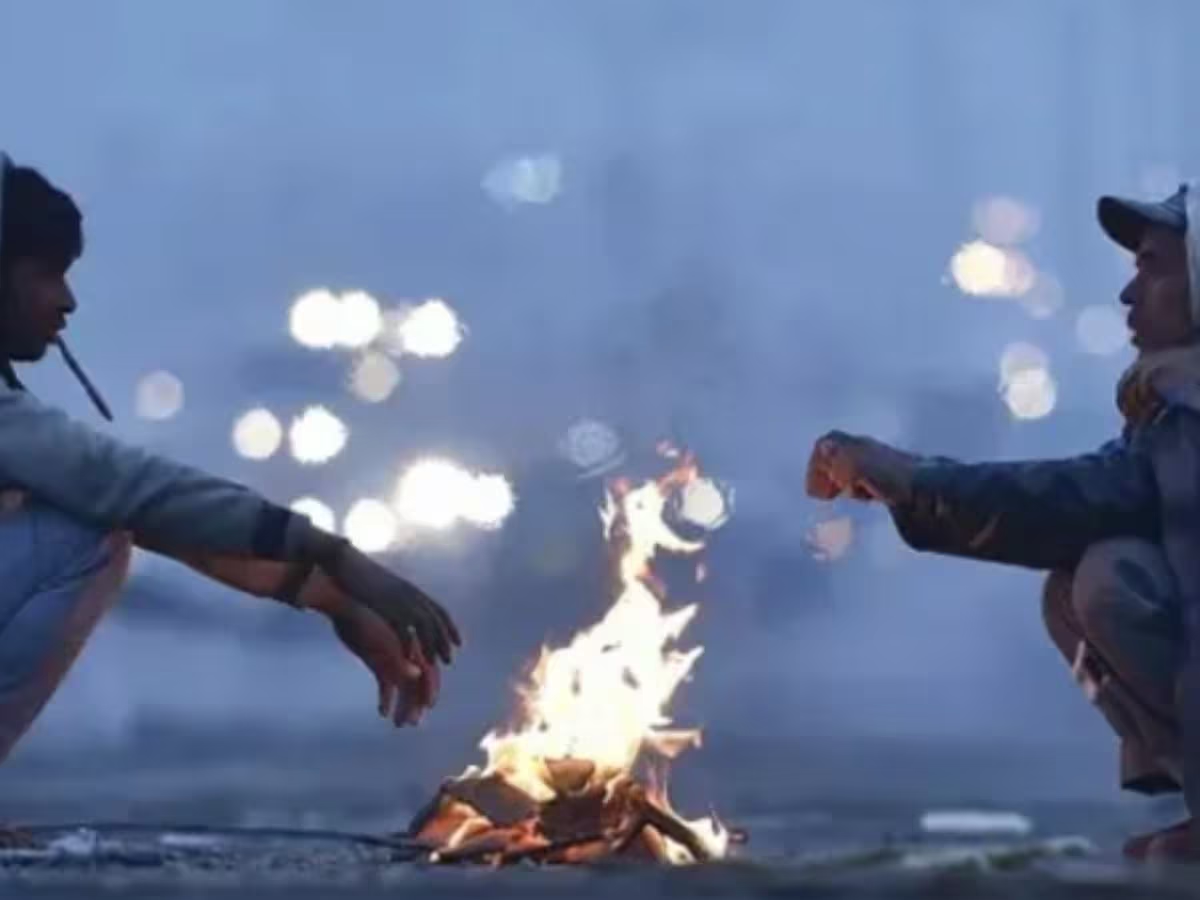
Pune closed the year under an unusually sharp chill, with early-morning temperatures falling to levels not seen at the year-end since the late 2010s. The cold spell, driven by persistent northerly winds and clear skies, has pushed minimum readings close to 10 degrees Celsius, altering daily routines, affecting energy use, and renewing attention on how Indian cities adapt to climate variability.
Data from the city’s primary weather observatories show that several neighbourhoods recorded single-digit or near-single-digit minimums in the final days of December. Western and southern parts of Pune were among the coldest, while traditionally warmer eastern suburbs also experienced a notable drop. These readings contrast sharply with recent years, when December-end mornings were considerably milder, underlining the scale of the current shift. Meteorologists tracking regional patterns attribute the cooler conditions to dry, cold air flows from the north combined with clear ноч skies. This combination accelerates heat loss after sunset and keeps early mornings colder than usual. Experts note that similar conditions were last observed several years ago, suggesting a cyclical but increasingly unpredictable winter pattern rather than a one-off anomaly.
The daytime environment has also changed. Maximum temperatures have remained below the 30-degree mark on most days, a departure from previous year-end periods when afternoons regularly crossed that threshold. For residents, this has meant reduced reliance on cooling but higher early-morning energy demand for heating, particularly in older housing stock with limited insulation. City administrators have responded by reiterating restrictions on open burning of waste, coal, or plastic practices that often increase during colder spells. Enforcement teams have been instructed to act against violations, reflecting concerns that winter air stagnation can quickly amplify local pollution levels. Urban planners point out that such measures are critical to prevent short-term coping behaviours from undermining long-term air quality gains.
The cold spell has also highlighted structural inequalities within the urban fabric. Informal workers, night-shift staff, and those living in poorly insulated homes are more exposed to temperature extremes. Climate resilience specialists argue that housing design, access to clean heating solutions, and neighbourhood-level services will play a growing role as weather variability intensifies. From an economic perspective, the cooler conditions have modestly reduced heat-related stress on infrastructure and outdoor labour but introduced new challenges for transport workers and early-morning supply chains. Retailers and service providers have adjusted operating hours in some areas to reflect slower morning footfall.
Forecasts suggest that minimum temperatures will remain low for the first days of the new year, with only a gradual rise expected thereafter. For Pune, the episode serves as a reminder that climate adaptation is not only about managing heat and flooding, but also preparing for colder extremes. How the city integrates climate-responsive design, cleaner energy use, and inclusive public policy will shape its ability to navigate such shifts in the years ahead.
Pune winter temperatures dip to multi year lows