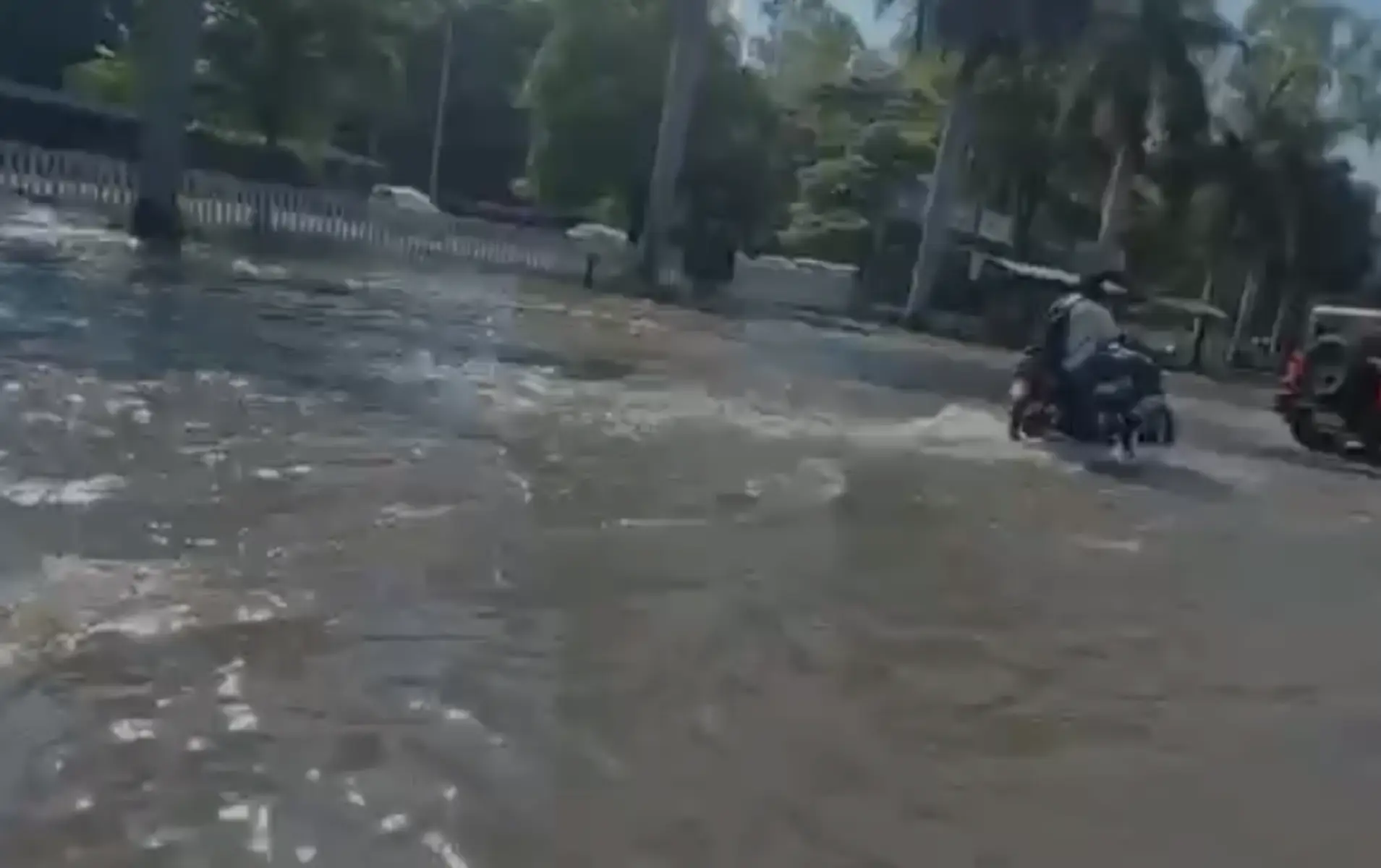
A late-night canal breach in Pune’s eastern corridor has triggered extensive waterlogging and paralysed traffic movement along a key arterial stretch connecting Hadapsar and Mundhwa, exposing vulnerabilities in the city’s urban infrastructure during extreme water events. The disruption has not only slowed daily commutes but also raised concerns over the resilience of Pune’s drainage and water management systems in rapidly urbanising zones.
The incident unfolded near the Magarpatta area, where a surge of water inundated adjoining roads, leaving long queues of vehicles stranded through peak hours. The affected belt, a crucial link between residential clusters and commercial hubs, witnessed near gridlock conditions, with congestion spilling into feeder roads and junctions. Traffic authorities responded by activating diversions and advising commuters to avoid the stretch until water levels recede. Officials monitoring the situation indicated that clearance operations could take several hours, depending on the pace of drainage and repair work. In the interim, alternate routes through internal roads and neighbouring localities have been opened to redistribute vehicular load. However, urban mobility experts note that such diversions often shift congestion rather than resolve it, especially in densely built neighbourhoods with limited road capacity.
The Pune canal breach underscores a broader pattern seen across Indian cities where ageing water infrastructure intersects with unplanned urban expansion. Areas like Magarpatta, once peripheral, have evolved into high-density mixed-use districts, placing additional pressure on legacy canal networks and stormwater systems not designed for current load levels. Urban planners point out that canal embankments and drainage channels require continuous monitoring, reinforcement, and integration with modern flood management systems. Beyond immediate traffic disruption, the event highlights economic implications. Prolonged delays impact workforce productivity, disrupt logistics, and strain last-mile connectivity for businesses operating in the Hadapsar-Mundhwa corridor. For a city positioning itself as an IT and manufacturing hub, such disruptions underline the cost of infrastructure gaps.
Climate variability further complicates the challenge. Increased instances of intense rainfall and sudden water surges demand adaptive planning, including real-time monitoring of water bodies, predictive maintenance, and decentralised drainage solutions. Experts suggest that investments in smart water management systems and resilient urban design could mitigate similar risks in the future. Authorities have urged citizens to plan travel carefully and cooperate with traffic management measures as restoration efforts continue. As Pune expands, the incident serves as a reminder that infrastructure resilience must keep pace with growth, ensuring that mobility, safety, and economic activity remain uninterrupted even during unforeseen disruptions.
Pune Waterlogging Crisis Halts Key Road Movement