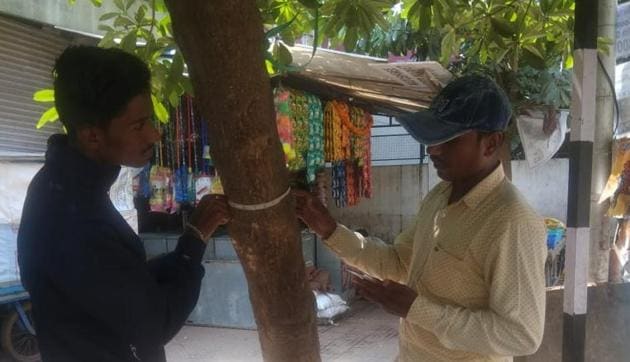
Pune’s urban green narrative is facing renewed scrutiny after independent spatial analysis revealed significant inconsistencies in the city’s official tree records, raising concerns about how India’s fast-expanding cities measure environmental assets critical to climate resilience and liveability.A detailed review of the Pune tree census and associated land-use data indicates that the city experienced a substantial decline in tree and grassland cover over a three-year period, even as municipal records suggested stable or rising numbers. For a city grappling with heat stress, flooding risks and declining air quality, the credibility of such data is not merely technical it directly shapes infrastructure planning, real estate approvals and long-term sustainability strategies.
Urban researchers analysing satellite imagery and machine-learning-based land classification found a net loss of hundreds of hectares of tree cover across rapidly developing eastern and western corridors. Grasslands, often the first casualty of construction-led growth, shrank sharply in peripheral neighbourhoods that have seen intense residential and commercial expansion. Built-up areas expanded at a far faster pace than compensatory green infrastructure. Experts involved in the assessment observed that remaining trees are largely younger and shorter, with mature, wide-canopy specimens becoming increasingly rare in central business districts and legacy residential zones. From an urban economics perspective, this shift reduces carbon storage, increases surface temperatures and places additional pressure on public health systems hidden costs rarely captured in project feasibility reports.
The Pune tree census has previously claimed comprehensive ground-level enumeration using field teams and GPS-enabled mapping. However, spatial audits flagged anomalies such as trees mapped on rooftops, road surfaces and high-density clusters unlikely to exist outside forest patches. In growth corridors, recorded tree counts appeared disconnected from visual evidence available through high-resolution imagery. Municipal officials maintain that surveys were conducted using accepted digital tools and that discrepancies may reflect post-survey development activity. Urban planners, however, argue that this explanation underscores the need for continuous, verifiable monitoring rather than static datasets that quickly lose relevance in dynamic real estate markets.Independent geospatial professionals note that satellite-based assessments alone are not a silver bullet. Without selective ground verification, remote sensing can misclassify vegetation types. Yet they agree that existing civic datasets require systematic cleaning, transparent public access and periodic third-party validation.
The implications extend beyond environmental reporting. For developers, lenders and infrastructure agencies, unreliable green cover data can distort environmental impact assessments and climate-risk disclosures. For citizens, it affects neighbourhood heat levels, walkability and flood resilience. Policy specialists suggest that hybrid models combining open-source satellite data, drone surveys and citizen-led verification could significantly improve accuracy without straining municipal budgets. Making the Pune tree census publicly accessible would also allow independent scrutiny, strengthening trust and governance. As Indian cities race to accommodate growth, Pune’s experience highlights a broader challenge: urban sustainability cannot rest on unverified numbers. Reliable ecological data is foundational to building cities that are resilient, equitable and economically viable in a warming world.