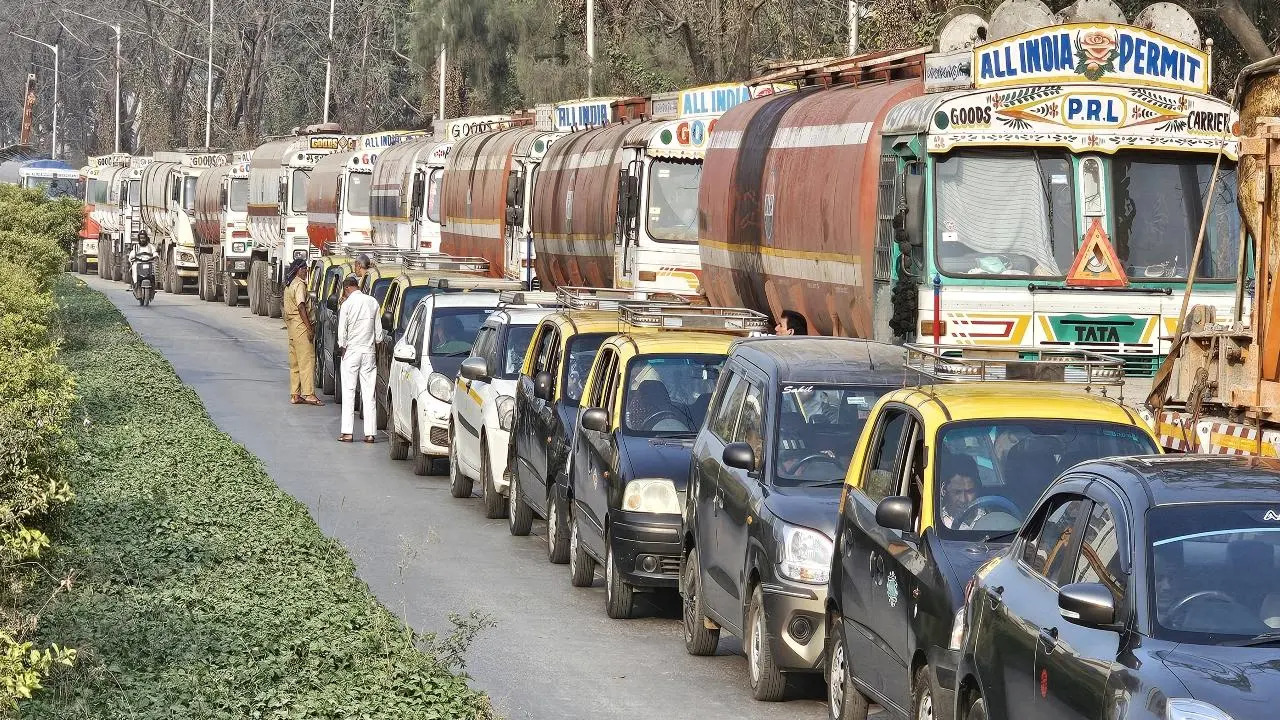
Traffic movement on the Mumbai–Pune Expressway resumed early Thursday after one of the longest shutdowns in recent years, but the disruption has raised urgent questions about emergency preparedness on India’s most critical urban transport corridors. The nearly 36-hour standstill, triggered by a hazardous materials incident in the Khandala ghat section, paralysed regional mobility and exposed systemic gaps in infrastructure resilience. The disruption began after a tanker transporting a highly flammable industrial gas developed a leak near a tunnel stretch, prompting authorities to halt traffic in both directions as a safety precaution. What followed was an extended closure that left thousands of private vehicles, buses and freight carriers stranded across multiple interchanges. While lanes heading towards Pune reopened smoothly after containment operations were completed, congestion persisted on the city-bound carriageway well into the day.
For the Mumbai–Pune Expressway, a vital economic artery linking the Mumbai Metropolitan Region with western Maharashtra’s manufacturing and technology hubs, the incident had immediate ripple effects. Logistics operators reported delayed cargo deliveries, while intercity bus services were forced to cancel or reroute trips. Industry experts note that even a single day of disruption on this corridor can translate into significant productivity losses across supply chains dependent on time-sensitive movement. Beyond economic costs, the human impact was severe. Stranded commuters, including families, elderly passengers and patients, spent extended hours inside vehicles with limited access to food, drinking water or sanitation. Urban planners point out that such conditions highlight the absence of minimum emergency amenities along high-speed corridors designed primarily for vehicle throughput rather than human safety during prolonged stoppages.
Officials involved in the clearance operation said specialist teams were deployed to neutralise the chemical risk before allowing traffic to resume. However, the duration of the shutdown has reignited debate on whether expressways carrying hazardous cargo should be supported by faster diversion protocols, better real-time communication systems, and designated safe-holding zones for stranded motorists. The Mumbai Pune Expressway traffic disruption also underscores a broader challenge facing India’s urbanising regions: infrastructure has expanded rapidly, but resilience planning has lagged behind. Climate variability, rising freight movement and increased reliance on road-based logistics mean that emergency incidents are likely to become more frequent and more complex to manage.
Urban policy specialists argue that future upgrades to intercity corridors must integrate emergency response infrastructure, including lay-bys with basic services, digital alert systems, and coordination mechanisms between transport, disaster management and health agencies. Such measures, they say, are essential for people-first mobility systems that balance speed with safety. As traffic conditions gradually normalise, the episode serves as a reminder that sustainable urban connectivity is not only about building faster roads, but about ensuring they function safely under stress for cities, markets and citizens alike.