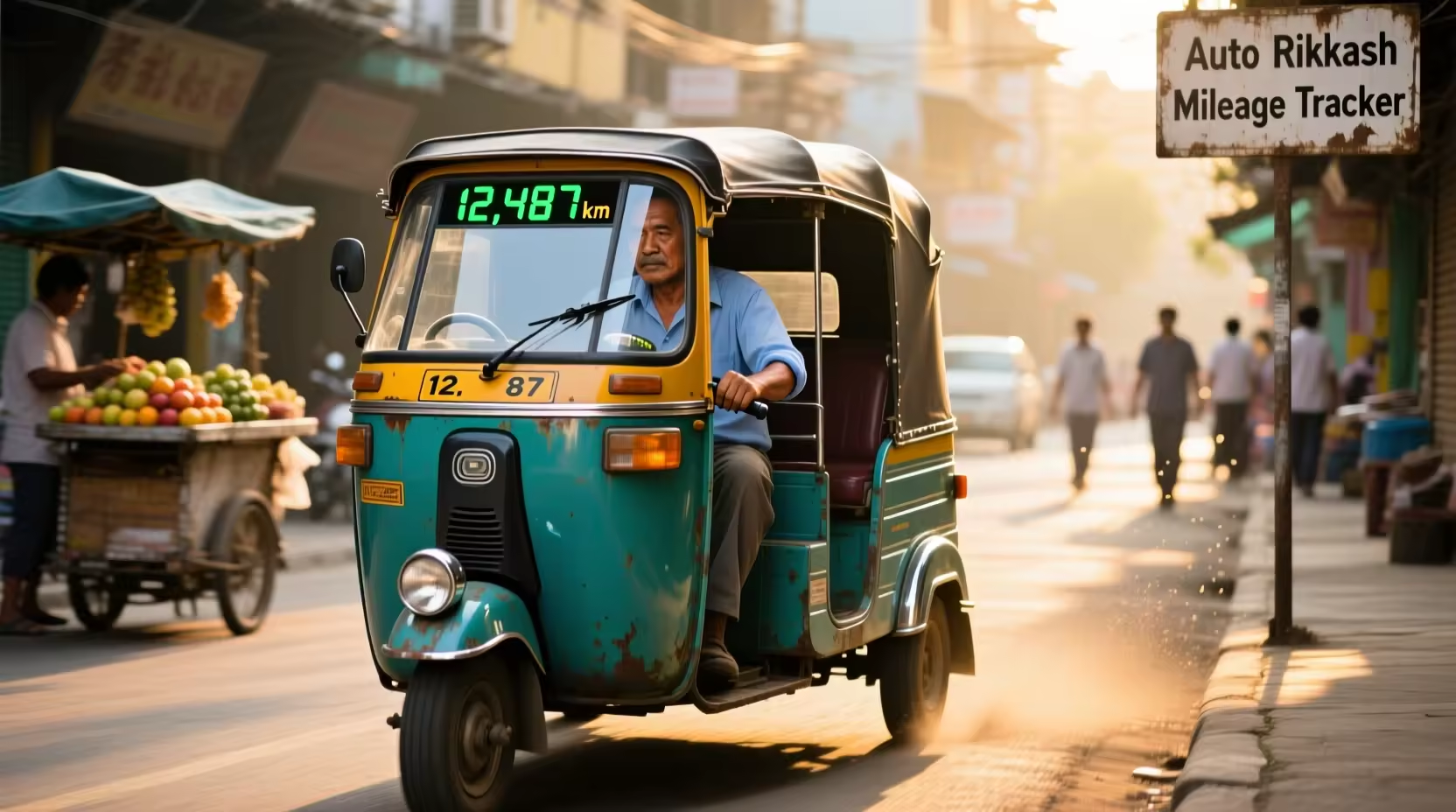
Pune Transport Drive Reshapes Autorickshaw Workforce
Pune’s transport administration has begun enforcing long-standing eligibility rules for autorickshaw permits, directing permit holders who are simultaneously employed elsewhere to surrender their licences. The move, initiated by the city’s Regional Transport Office (RTO), signals a stricter regulatory approach as Pune grapples with rising mobility demand, workforce informality, and pressure on urban transport systems. Under the Motor Vehicles Act, autorickshaw permits are intended for self-employment, issued on the condition that applicants are not engaged in other forms of salaried work. Transport officials say internal verification exercises revealed widespread non-compliance, with permit holders linked to government departments, private firms, and organised-sector employers. Enforcement action is now underway, with authorities warning that continued violations could invite penalties under the Act.
Urban transport experts say the development has implications beyond regulatory compliance. Autorickshaws form a critical layer of last-mile connectivity in Pune, particularly for lower-income neighbourhoods and areas not directly served by mass transit. Ensuring that permits are held by full-time drivers, they argue, is central to maintaining service availability and economic fairness within the informal mobility sector. The current clampdown also reflects structural pressures within Pune’s transport ecosystem. Since 2017, the state transport department has expanded autorickshaw permits to address population growth, rising commuter demand, and employment generation. Pune city alone now accounts for over 83,000 permits, while the adjoining Pimpri-Chinchwad region hosts more than 40,000. This rapid expansion, while improving access, has also increased competition and regulatory complexity.
Senior transport officials indicate that permit misuse undermines the original objective of inclusive self-employment. When permits are held by individuals with alternate income sources, it limits opportunities for those who depend exclusively on driving for livelihoods. From an urban governance perspective, the issue intersects with broader goals of equitable economic participation and efficient allocation of public mobility resources. The enforcement drive arrives as Pune continues to invest in metro corridors, bus fleet upgrades, and non-motorised transport infrastructure. Planners note that informal modes like autorickshaws will remain essential to sustainable urban mobility, especially in bridging gaps between high-capacity transit and residential clusters. Regulatory clarity, they add, is necessary to align informal transport with long-term climate-resilient city planning.
Looking ahead, policy analysts suggest the episode highlights the need for better data integration between employment records and transport licensing systems. Transparent enforcement, coupled with alternative livelihood pathways and skill support for affected individuals, could help the city balance compliance with social stability. As Pune’s urban footprint expands, the challenge will be to manage growth in a way that supports people-first mobility while ensuring that transport regulations serve their intended economic and civic purpose.