


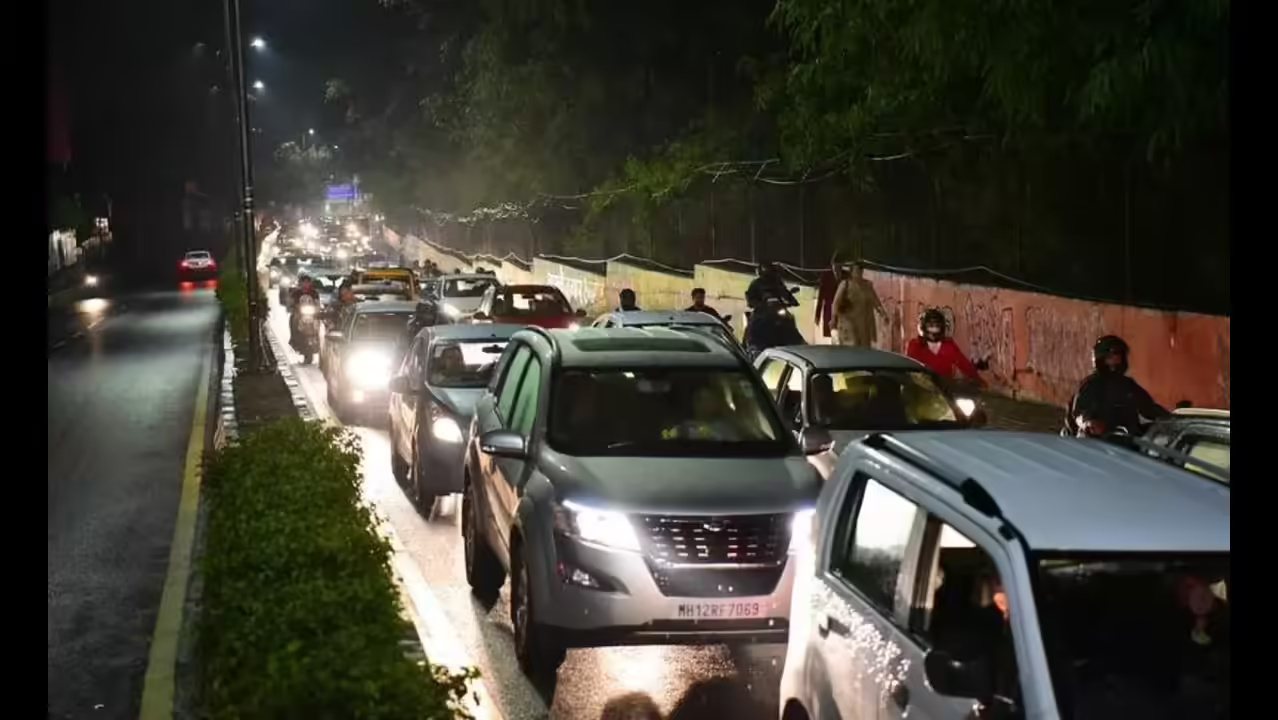
Pune’s Viman Nagar locality is experiencing its first real traffic relief in years following the implementation of a long-pending one-way traffic system. Residents have long struggled with chronic congestion, overflowing intersections, and delayed emergency responses, particularly during peak hours. The new traffic arrangement, introduced this week, is expected to streamline vehicle movement, reduce gridlocks, and enhance pedestrian safety across the neighbourhood’s narrow internal roads.
For decades, even short commutes in Viman Nagar were painfully slow, with a single kilometre often taking over an hour during evenings. Ambulances and emergency vehicles routinely faced delays of 20–30 minutes, prompting concerns about the area’s road safety and overall quality of life. A senior traffic official said, “The one-way system has been designed to ensure smoother flow and minimise critical delays, especially for emergency services.” The initiative reflects sustained community advocacy over several years. Local social workers and resident associations conducted surveys, collected traffic data, and consistently engaged civic authorities to highlight the pressing need for structural traffic management. By mobilising support across the community, residents were able to push the proposal through official channels, culminating in a system that now promises tangible improvements for everyday mobility.
Experts note that the scheme could also benefit the local environment. Reduced vehicle idling times are likely to decrease emissions, improving air quality in the area. “Streamlined traffic not only helps residents reach their destinations faster but also contributes to lowering local pollution levels, which is critical for sustainable urban living,” a city-based urban planner said. Early observations suggest improved compliance and more disciplined traffic patterns. Pedestrian movement is expected to become safer, particularly on congested streets with narrow footpaths. Residents have expressed optimism that, over the coming weeks, daily commutes will become faster and less stressful, and civic authorities will continue monitoring the new arrangement to make further refinements if necessary.
The success of Viman Nagar’s one-way system highlights the power of coordinated civic participation. By combining persistent advocacy, data-driven proposals, and constructive engagement with city authorities, residents helped create a solution that improves safety, mobility, and urban liveability. Officials have indicated that similar models could be evaluated for other congested areas in Pune, promoting more sustainable, citizen-friendly traffic planning across the city.
Also Read: Pune Air Quality Drops From Fair To Poor Within Two Weeks
