


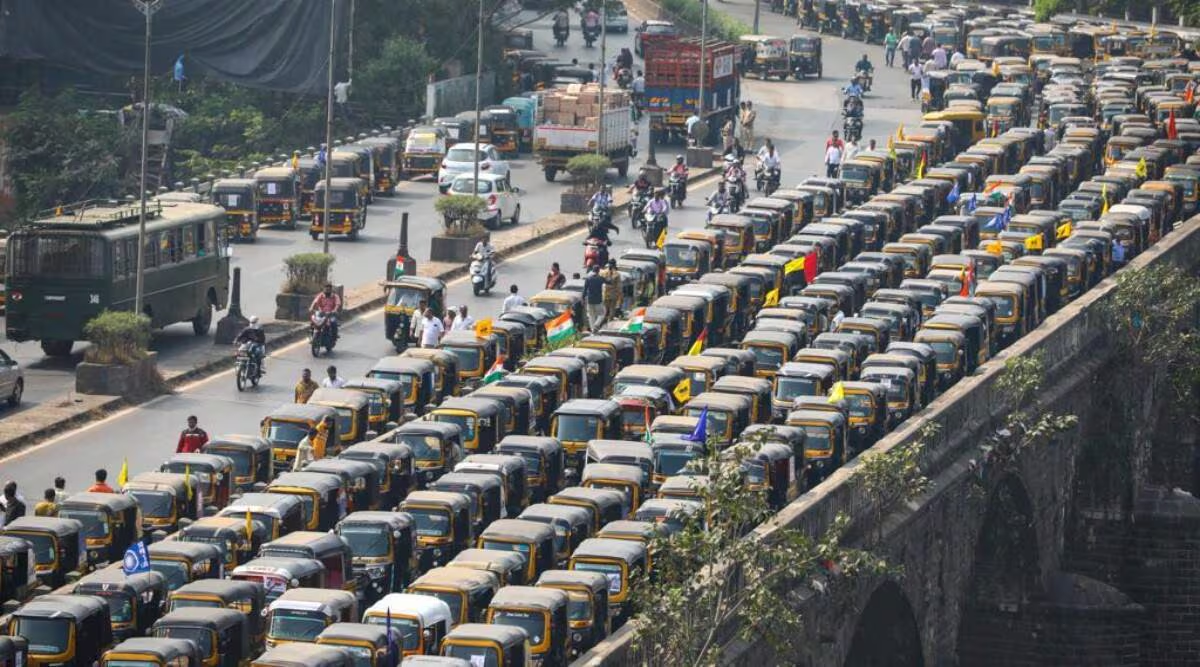
Pune Traffic Crisis Spurs Civic Activism and Innovative Solutions
Community-led solutions gain momentum as experts and volunteers advocate for stricter enforcement and innovative traffic management strategies
Amidst growing frustration over Pune’s worsening traffic congestion, a coalition of civic activists, traffic volunteers, and urban planners convened in Viman Nagar to strategise sustainable solutions. The city, plagued by reckless driving, signal violations, and infrastructural inefficiencies, has seen a surge in citizen-led initiatives pushing for reforms. At the heart of the discussion was the proposal of an unconventional penalty for signal jumpers—rather than imposing fines, offenders would be required to wait at the spot for an hour. Advocates argue that monetary penalties are often ineffective, whereas enforced waiting periods could serve as a stronger deterrent for habitual violators. The proposal, if implemented, could mark a significant behavioural shift in traffic discipline across Pune’s roads.
Illegal Number Plates and Weak Enforcement Pose Safety Risks
Another critical issue raised during the meeting was the rampant use of illegal number plates, despite the mandated High-Security Registration Plates (HSRP) rule. Civic activist Nachiket Deshpande underscored the failure of enforcement agencies to curb unauthorised plate manufacturing, urging strict action against violators. The absence of proper identification mechanisms has not only contributed to a rise in traffic violations but has also raised security concerns. Experts argue that a citywide crackdown on illegal plates, coupled with better monitoring of registration processes, could significantly enhance road safety. Strengthening compliance frameworks and integrating advanced tracking technologies were among the key recommendations presented to the authorities.
Data-Backed Insights Drive Smarter Traffic Solutions
In a move towards evidence-based policy recommendations, postgraduate students from IIEBM College presented a traffic analysis study of the Wagholi-Ramwadi stretch. Their findings revealed that minor adjustments in traffic management had already resulted in an average commute time reduction of 90 seconds within a week. The study highlights the importance of real-time data analytics in optimising traffic flow, reinforcing the need for a dynamic, tech-driven approach to urban mobility challenges. Civic experts emphasised that leveraging AI-powered traffic monitoring systems and predictive analytics could further streamline traffic movement, minimising congestion and enhancing commuter experiences.
Sustainability and Urban Planning: The Way Forward
Beyond immediate traffic concerns, the meeting also stressed the importance of long-term urban planning and sustainable mobility solutions. Pune’s rapid urbanisation has led to an exponential rise in vehicular density, exacerbating environmental and infrastructural strains. Experts advocated for a shift towards sustainable transport models, including enhanced public transit networks, pedestrian-friendly infrastructure, and stricter vehicle regulations. As Pune moves towards becoming a smart city, an integrated policy framework focusing on congestion mitigation, environmental sustainability, and civic participation will be key to ensuring long-term road safety and efficiency. The collective insights from this discussion will be compiled and formally submitted to the Pune Traffic Police for consideration, marking a step forward in citizen-driven urban reforms.
