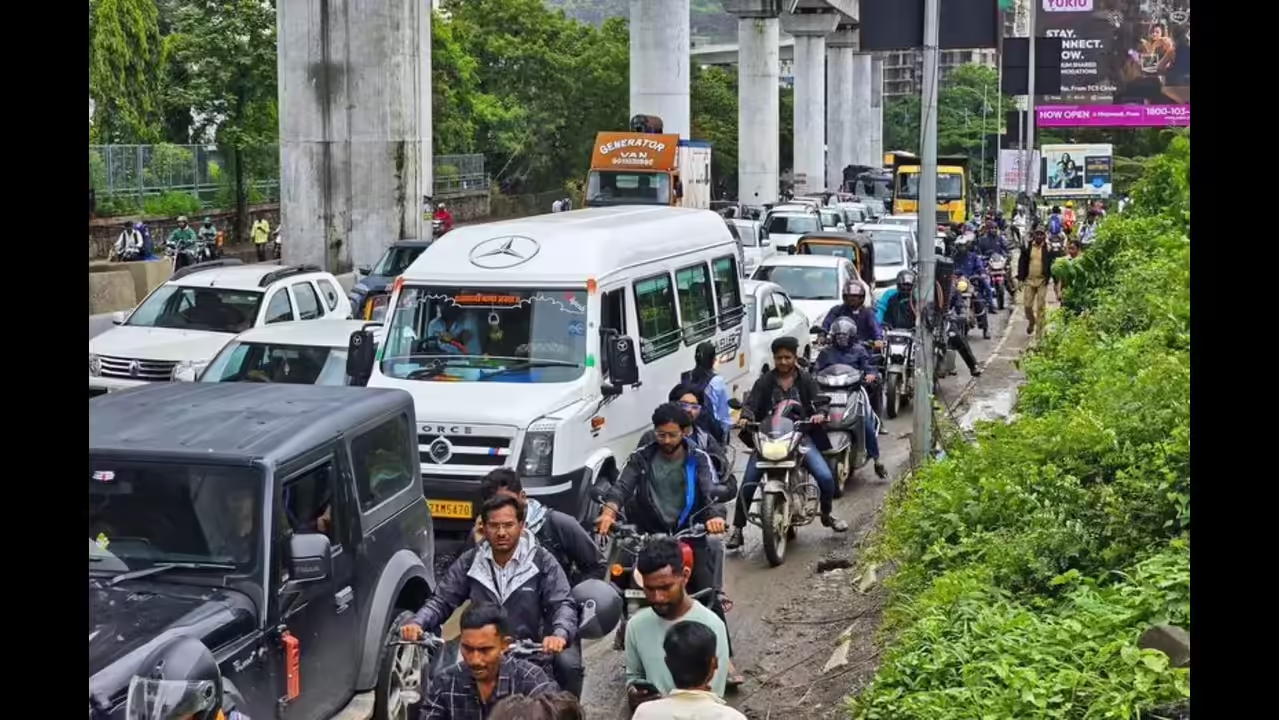
Pune Traffic Chaos Halts Pune–Nashik, Talegaon–Chakan Routes Completely
Pune witnessed one of its worst traffic gridlocks this weekend, with long stretches on the Pune–Nashik and Talegaon–Chakan–Shikrapur highways grinding to a halt. As vehicles streamed back toward the city following the festive exodus, commuters endured hours-long delays across critical junctions, exposing the chronic strain on Pune’s road infrastructure.
By mid-Sunday, the congestion stretched for nearly six kilometres, forcing vehicles to crawl at walking pace between Alandi Phata and Talegaon Chowk—a distance that took between three and five hours to cover. The chaos was most severe around industrial corridors such as Chimbali Phata, Kuruli Phata, and Ambethan Chowk, where traffic movement nearly froze between 10 a.m. and 2 p.m.
Officials estimate that over two lakh vehicles traverse the Nashik highway daily, and the weekend surge pushed the network beyond capacity. Factory-bound employees in the Chakan MIDC area were among the worst affected, with many unable to reach work on time due to the severe logjam. “The high vehicle density combined with narrow lanes and encroachments left no scope for movement,” an official from the traffic control department stated.
Urban mobility experts say the latest gridlock is a predictable outcome of poor infrastructure planning and unchecked urban expansion. The Talegaon–Chakan industrial belt, a vital economic hub, has seen vehicle numbers multiply faster than road capacity. Despite repeated calls for expansion and enforcement against encroachments, little tangible progress has been made.
Locals and civic officials have urged immediate interventions such as road widening, removal of illegal structures, and better lane discipline to prevent recurrent breakdowns of mobility. Environmental advocates have also pointed out that extended idling of vehicles in such gridlocks adds significantly to the city’s air pollution and carbon footprint. Pune’s rising vehicle population, coupled with limited reliance on public transport, continues to undermine efforts toward sustainable and low-carbon urban transport.Infrastructure planners suggest a more systemic approach developing bypasses to divert industrial traffic, encouraging shared mobility, and adopting smart traffic signal coordination powered by data analytics.
According to an urban development expert, “The problem is not just congestion it’s the absence of a coordinated transport vision for a growing metropolis like Pune.”
Sunday’s traffic paralysis, therefore, is more than a logistical inconvenience; it is a warning signal for city planners and policymakers to accelerate investment in green transport, better enforcement, and long-term resilience planning. As Pune positions itself as an emerging smart city, sustainable traffic management will remain central to ensuring that progress does not come at the cost of mobility or air quality.