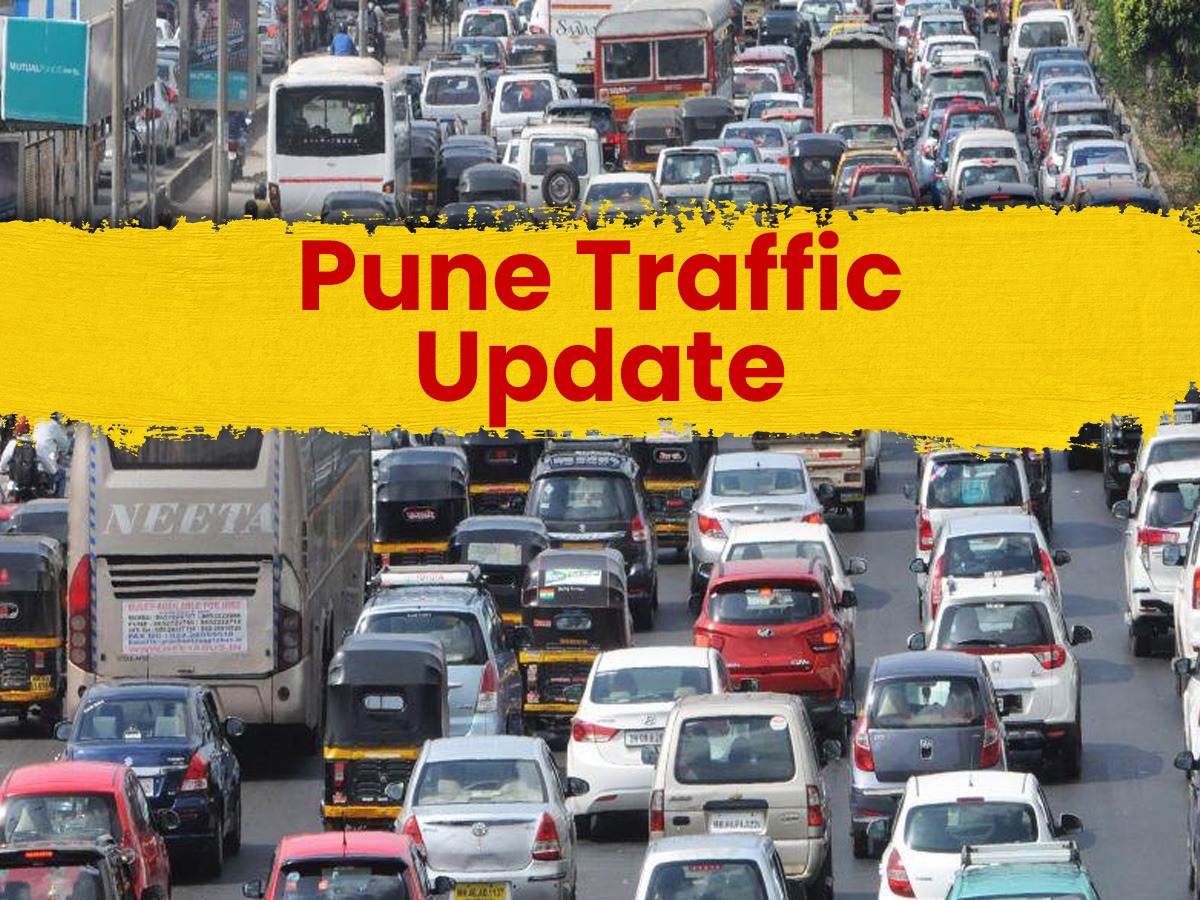
Pune motorists travelling between Hadapsar and Dive Ghat will face a two-hour traffic suspension on Sunday afternoon as authorities temporarily close a key arterial stretch for controlled blasting linked to a highway expansion project. The move, though brief, highlights the delicate balance between infrastructure upgrades and daily commuter mobility in one of Maharashtra’s fastest-growing urban regions.
The Pune Traffic Alert applies to the Alandi–Pandharpur Palkhi corridor segment connecting Hadapsar to Dive Ghat, where widening works are underway to strengthen regional connectivity. Traffic movement will remain fully suspended between 1 pm and 3 pm to facilitate rock blasting activity considered essential for slope cutting and carriageway expansion. Officials overseeing traffic management indicated that the temporary closure was approved following a formal request from the highway implementing agency responsible for upgrading the route. Police personnel will be deployed at key junctions to divert vehicles and prevent congestion from cascading into adjacent neighbourhoods.
For Pune’s eastern growth corridor, the road-widening exercise is more than a routine civil works intervention. Hadapsar has emerged as a mixed-use urban zone with expanding residential clusters, logistics hubs and IT-linked employment nodes. The Dive Ghat stretch, meanwhile, serves both daily commuters and inter-district traffic moving towards Solapur and southern Maharashtra. Periodic closures, even for a few hours, can ripple across freight schedules and urban commute patterns. Urban planners say the Pune Traffic Alert reflects a broader transition underway in secondary metropolitan corridors. As vehicular volumes rise, legacy two-lane hill stretches are being re-engineered into wider, safer alignments. However, such upgrades demand careful sequencing to limit disruption, especially in densely populated peri-urban belts where public transport alternatives remain limited.
Blasting operations in ghat sections also carry environmental and safety sensitivities. Experts note that slope stabilisation, debris management and dust mitigation must be integrated into project execution to reduce ecological impact. Climate-resilient road design including improved drainage and landslide-prevention systems is increasingly critical as extreme rainfall events intensify in western India. Transport economists point out that short, well-communicated closures are preferable to prolonged congestion caused by unplanned bottlenecks. Digital advisories, advance route mapping and coordination between civic and highway agencies can reduce economic losses linked to idle fuel consumption and delivery delays.
Authorities have advised commuters to plan alternate routes during the suspension window and allow buffer travel time. While the immediate inconvenience is temporary, the longer-term objective remains improved corridor capacity and safer gradients through Dive Ghat. As Pune’s urban footprint continues to expand eastwards, coordinated mobility planning will determine whether infrastructure growth supports equitable access and lower emissions or compounds congestion. The current Pune Traffic Alert serves as a reminder that building resilient roads requires both engineering precision and commuter-centric governance.
Pune Traffic Alert On Dive Ghat Stretch