


Pune’s law enforcement network is set for a significant expansion with the addition of five new police stations aimed at improving crime control, traffic management, and public safety in rapidly growing urban and peri-urban areas. Senior officials announced that the move responds to increasing demands on existing infrastructure due to the city’s swift population growth and urban sprawl.
The proposed stations will be located in Narhe, Yeolewadi, Manjari, Laxminagar, and Lohegaon—areas carved out from larger jurisdictions currently managed by overburdened units. These new facilities are expected to enhance accessibility for residents, shorten police response times, and strengthen surveillance in regions identified as high-priority zones. Narhe and Laxminagar, in particular, have been flagged for rising crime and require targeted intervention. In addition to expanding the policing footprint, the city has introduced an advanced AI-powered Integrated Command and Control Centre (ICCC) and an Integrated Traffic Management System (ITMS). The ITMS will monitor traffic at over 500 major intersections, using satellite-enabled simulation to optimise signal timing and ease congestion. The system will also draw on historical data to predict traffic surges and recommend diversion strategies, enabling faster and more sustainable commuting across the city.
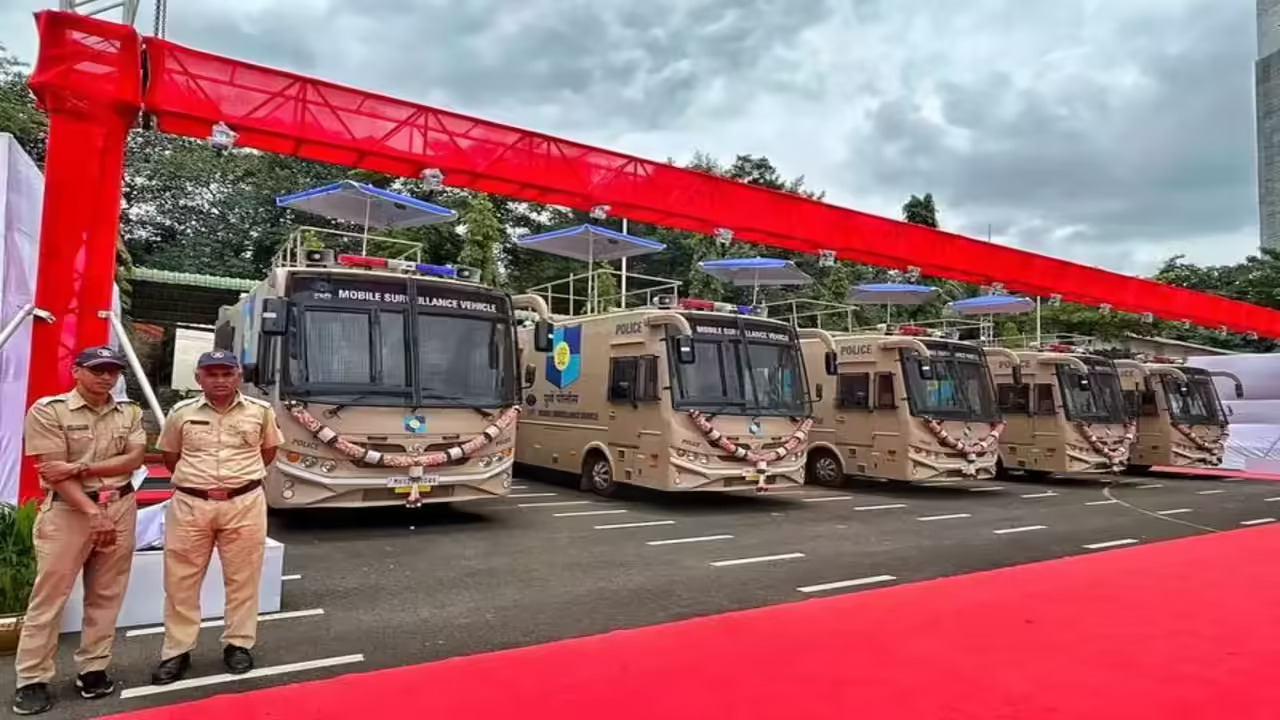
Five state-of-the-art surveillance vans and aerial drones have also been deployed, with new CCTV and lighting installations in identified high-risk locations, including Bopdev Ghat. Authorities have confirmed that 21 such secluded spots across Pune will now have enhanced monitoring to improve citizen safety, particularly in areas frequented by families and tourists. Senior home department officials have raised concerns over the growing challenge of drug trafficking in the state, acknowledging Pune police’s recent success in seizing significant quantities of contraband. The campaign against narcotics is being intensified through a combination of enforcement drives and intelligence-based operations.
Meanwhile, the city is also addressing a worrying rise in incidents of vehicle vandalism involving minors. Law enforcement officials have suggested that changes to existing legal provisions may be required to deter such offences effectively. Urban infrastructure projects are also on the agenda, with plans to relocate and rebuild key police stations to facilitate road widening and improved traffic flow. The police commissioner has confirmed that an ongoing mapping drive will integrate CCTV networks from private establishments into the ICCC, creating a city-wide security grid for faster incident detection and response.
Urban safety experts believe that the dual approach—expanding local police coverage while leveraging cutting-edge technology—marks a pivotal step in reshaping Pune’s public security framework. If implemented effectively, these measures could significantly reduce crime rates, improve road discipline, and set the groundwork for a safer, more sustainable city.
Also Read : Pune to Get Three New Municipal Corporations to Ease Urban Strain
