


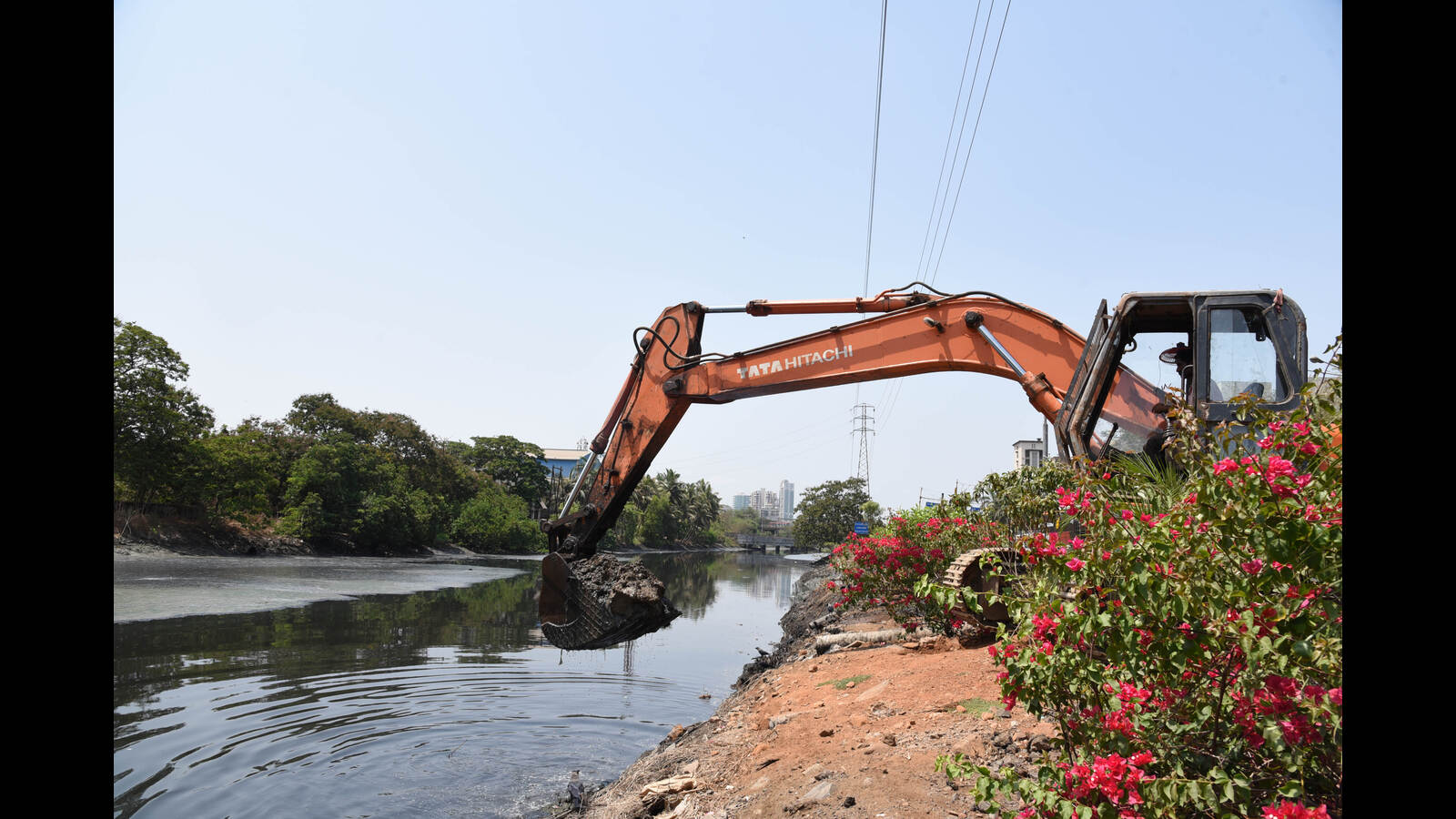
Pune Metropolitan Region Development Authority (PMRDA) floated a fresh tender for nullah cleaning on May 23—well into the monsoon season. The decision, involving a budget of ₹5 crore, has been roundly criticised by residents, civic activists, and urban planning experts for its poor timing and inadequate preparedness in flood mitigation.
The tender aims to clean and widen stormwater drains across nine talukas, including Mulshi, Maval, Haveli, Shirur, Daund, Ambegaon, Khed, Purandar, and Velhe. However, with pre-monsoon showers already battering parts of the district and drains clogged with silt, debris, and vegetation, the delay in execution has heightened the risk of waterlogging and urban flooding. According to officials from PMRDA, the original tender was floated in April, but due to lack of adequate response, the process had to be reinitiated. As a result, the deadline for nullah-cleaning, originally set for May 30, has now been extended to late June. With the fresh bids also failing eligibility checks, the actual desilting work may now begin only in July—by which time the monsoon will be in full swing.
Experts and civil society groups have called the delay emblematic of deeper governance lapses. A senior civic planning expert said the PMRDA had been warned in multiple coordination meetings—including those chaired by the Chief Minister and Divisional Commissioner—to ensure all pre-monsoon cleaning activities were completed before June. “The timing of this tendering process betrays the fundamental lack of urgency when it comes to urban climate resilience,” the expert noted. Adding to the criticism, local civic activists said that the residents of flood-prone areas are once again left to fend for themselves. “This isn’t simply poor planning; it reflects a pattern of reactive governance,” said one activist, pointing to recurring waterlogging in zones along the Mula-Mutha river, which are particularly vulnerable to stormwater overflow.
Despite PMRDA officials asserting that the tender is not solely for monsoon but year-round nullah maintenance, the public perception remains deeply critical. A senior PMRDA engineer, speaking on condition of anonymity, admitted that cleaning operations during peak rains are logistically difficult, especially when drains are submerged and inaccessible. On-the-ground surveys conducted by PMRDA ahead of the monsoon revealed drains blocked with weeds, branches, and domestic waste, posing a major flood risk. Yet, no interim emergency measures were announced to tackle this high-risk situation. The authority’s inability to secure eligible contractors in time has effectively stalled work when it is most needed.
Urban sustainability planners argue that climate change is reshaping the intensity and frequency of monsoons, necessitating a paradigm shift in how civic bodies prepare for seasonal weather events. “We are witnessing increased rainfall in shorter durations. This isn’t business as usual,” said a flood management specialist from a Pune-based institute. “Monsoon preparedness can no longer afford to be driven by bureaucratic timelines and procedural delays.” The 2023 and 2022 monsoons had already provided ample warning, with multiple localities experiencing ankle-to-knee-deep flooding. Areas such as Baner, Balewadi, parts of Pimpri-Chinchwad, and villages in the Maval region were marooned due to backflow from clogged nullahs. Despite the data and repeated public appeals, pre-monsoon nullah cleaning continues to be treated as an annual ritual rather than a structured, time-bound process integrated with broader climate adaptation plans.
The fallout from these delays is not merely inconvenience; it carries tangible health and economic risks. Waterborne diseases, damage to property, and disrupted mobility disproportionately impact lower-income communities, who often reside in low-lying and poorly drained neighbourhoods. Local resident groups in Khed and Daund have already filed complaints with the district administration regarding rising water levels after recent showers. At a time when global climate summits and national policies are urging decentralised, responsive governance, the PMRDA’s inability to implement a basic drain-cleaning plan on schedule reflects poorly on urban governance. State-level disaster management authorities have been repeatedly calling for integrated infrastructure audits and GIS-based real-time monitoring of drains, yet implementation remains fragmented.
Officials within PMRDA maintain that the tender includes provisions for year-round upkeep and not just pre-monsoon cleaning. “This is our first dedicated tender for nullah maintenance,” said a senior official. However, critics argue that such a statement fails to acknowledge the urgency dictated by the current monsoon calendar and ongoing ground realities. Meanwhile, both eligible and ineligible bids received under the reissued tender are being scrutinised. If found non-compliant, a third round of tendering may be necessary, pushing actual work even further into the monsoon cycle.
The need of the hour, according to infrastructure experts, is to professionalise drain management through public-private partnerships, third-party auditing, and community engagement. Smart sensors, early flood warning systems, and standardised desilting protocols must become part of routine urban planning. “You cannot just dig a drain in June and expect it to work in July,” remarked a retired urban engineer. As Pune and its peripheral towns rapidly urbanise under regional planning bodies like PMRDA, the stakes are higher than ever. With weather becoming increasingly erratic, even a week’s delay in pre-monsoon work can translate into flooded roads, school closures, interrupted healthcare, and economic losses across sectors.
Whether this episode serves as a lesson or gets buried like the silt-filled nullahs depends on whether authorities treat it as a one-off lapse or the wake-up call it truly is.
Also Read : Rotterdam Ship Astoria Sold for Recycling
