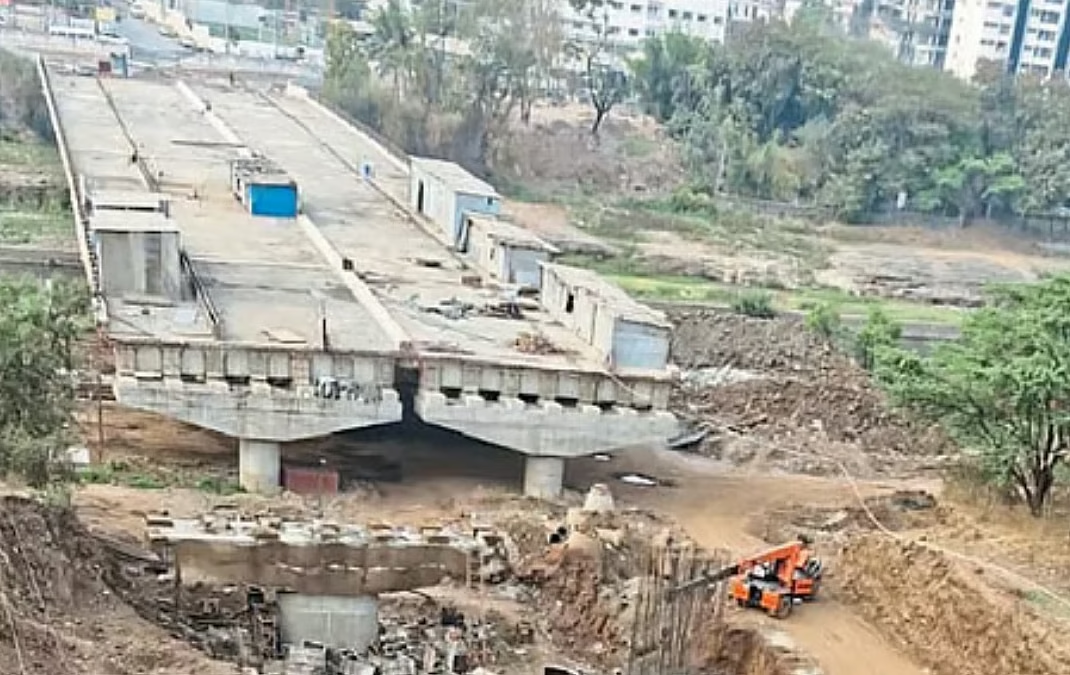
Pune is set to add a critical east–west link across the Mutha river basin, with the Suncity Karvenagar Bridge entering its final construction phase and targeted for public use by late April. The project is expected to ease mounting pressure on Sinhagad Road and surrounding arterial routes, improving cross-city connectivity in one of the city’s fastest-growing residential belts.
The 279-metre structure, being executed by the Pune Municipal Corporation, will connect the Suncity stretch of Narveer Tanaji Malusare Road with Karvenagar, offering an alternative to the frequently congested Rajaram Bridge and the Warje segment of the Pune–Bengaluru highway. With nine spans and a width of 30 metres, the bridge has been designed to accommodate multi-lane traffic and pedestrian movement. Urban mobility experts say the Suncity Karvenagar Bridge could significantly reduce travel time for commuters moving between Sinhagad Road, Kothrud, Satara Road and Katraj. At present, peak-hour bottlenecks along Sinhagad Road ripple outward, affecting residential catchments and school zones while increasing fuel consumption and vehicular emissions.
Construction began in late 2023 following administrative approvals earlier that year. Structural works, including piers and girders, are largely complete on the Karvenagar side, while finishing activities and the remaining structural components on the Suncity end are underway. Officials overseeing the project indicate that civil works will conclude within two months, followed by surfacing, lighting installation, drainage integration and footpath development. With a project outlay of ₹44.86 crore, the bridge reflects Pune’s continuing investment in decentralised infrastructure to support expanding housing clusters. Over the past decade, rapid residential growth along Sinhagad Road and adjoining neighbourhoods has outpaced road capacity, intensifying congestion and safety risks.
Transport planners note that while flyovers and bridges offer short- to medium-term relief, their long-term impact depends on integration with broader mobility planning, including public transport, non-motorised transport infrastructure and land-use regulation. The inclusion of pedestrian pathways and stormwater systems in the Suncity Karvenagar Bridge design aligns with emerging standards for climate-resilient urban infrastructure. Real estate observers also expect improved connectivity to stabilise property values in Karvenagar and adjoining localities by reducing commute uncertainty.
However, experts caution that traffic redistribution must be monitored to prevent congestion shifts to secondary roads. As Pune continues to urbanise, infrastructure upgrades such as the Suncity Karvenagar Bridge highlight the need for coordinated corridor planning rather than isolated interventions. The coming months will determine how effectively the new link reshapes daily mobility patterns and supports a more balanced, lower-emission urban transport network.
Pune Suncity Karvenagar Bridge Set for April Launch