


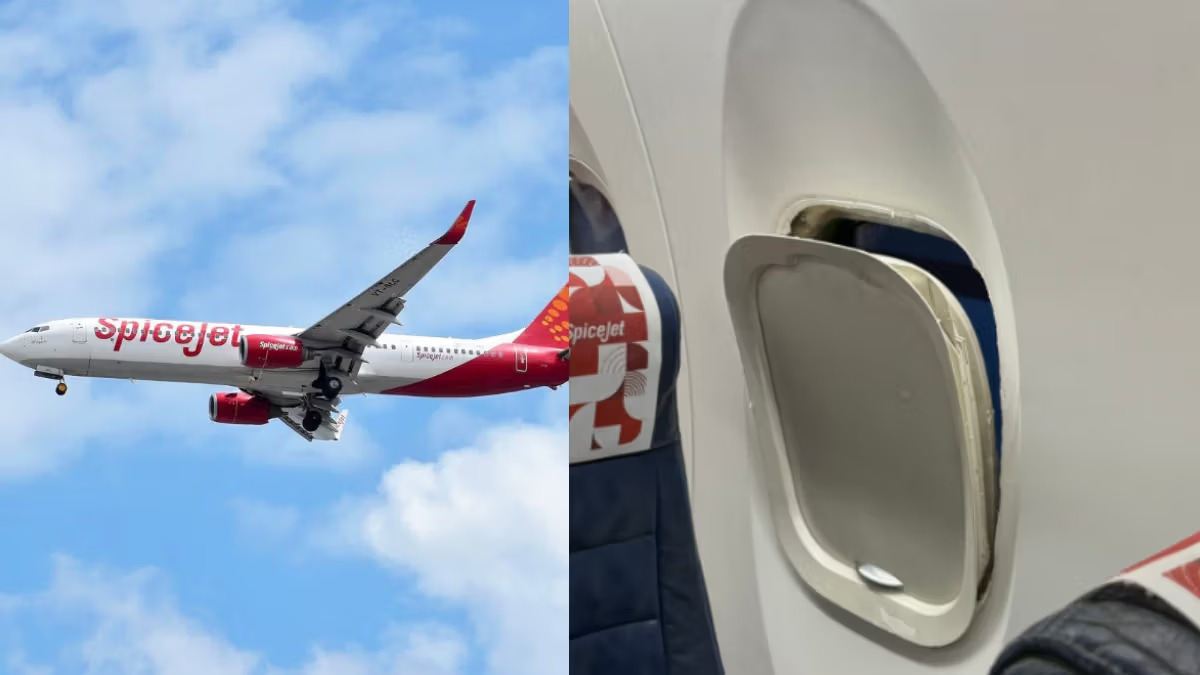
A SpiceJet Q400 turboprop flying from Goa to Pune experienced a mid-air scare on 1 July when an interior window frame dislodged during cruising. Although the vehicle’s structural integrity remained intact, the incident triggered passenger anxiety and raised fresh scrutiny of aircraft maintenance procedures in the aftermath of recent aviation accidents.
Passengers reported that layers of the window’s trim panel—a non-structural shade component—became loose and partially detached around 30 minutes into the flight. A concerned traveller seated nearby told local media that cabin crew calmly relocated an infant and adult to another seat and stabilised the trim temporarily. The airline confirmed the window’s outer panes, which preserve cabin pressure, remained unaffected. SpiceJet issued a firm statement that the dislodged part was purely cosmetic and did not compromise safety. Cabin pressurisation remained constant, and the panel was re-secured upon landing as part of standard maintenance procedures. The carrier reaffirmed that the Q400 features a multi-layered window system, ensuring the aircraft’s structural resilience even when interior fittings fail.
Yet, the incident shook passengers, especially given SpiceJet’s recent technical delays on the same aircraft. One passenger posted a video clip online tagging the Directorate General of Civil Aviation (DGCA), writing, “Wonder if it’s airworthy,” and reigniting public debate about aircraft maintenance standards among budget carriers. Aviation safety experts say interior fitment failures, although non-critical, can severely erode passenger confidence and signal procedural lapses in quality control. The DGCA classifies such malfunctions as serious occurrences, even if they do not affect flight safety directly. While regulatory action is discretionary, analysts warn that repeated maintenance oversights could warrant stricter scrutiny of airlines’ upkeep regimes.
Regional airports have noted rising public concern, with some travellers shifting preference to carriers with stronger reputations for upkeep and safety. The DGCA has reportedly initiated a follow-up investigation into the incident, requesting a detailed maintenance history of the aircraft in question. The episode also highlights broader systemic challenges facing India’s aviation sector. The sharp expansion of low-cost airlines, such as SpiceJet, has pressed fleet utilisation to its limits, increasing the strain on maintenance schedules and cabin refurbishment routines. Experts suggest that refurbishing cabin interiors may not have kept pace with the accelerated flying cycles, risking passenger discomfort if not safety compromise.
Environmental and equity considerations further underscore the issue. With airline emissions under global scrutiny, superficial malfunctions risk undermining credibility at a time when carriers are promoting greener operations and inclusive travel environments. For a flight servicing both leisure and business commuters—including families with children—perceived safety shortcomings can disproportionately affect vulnerable passengers. On the flip side, SpiceJet’s swift resolution of the issue suggests resilient operational practices. Cabin crew’s rapid response, temporary closure of the panel, and post-flight maintenance adherence reflect adherence to safety protocols. Whether this incident triggers changes in maintenance inspection intervals or interior audit policies is likely to emerge in upcoming policy reviews.
Passengers booked on regional turboprops like the Q400 may now give added weight to reputational signals when choosing flights. Airlines might soon find that passenger reassurance—through regular maintenance updates, transparent communication, and cabin quality certificates—will be a key differentiator in India’s increasingly competitive aviation landscape. As India’s domestic air travel rebounds post-pandemic, incidents like the Goa-Pune scare reinforce the need for vigilance across both structural and interior aircraft systems. While this event did not threaten in-flight safety, it offers a timely reminder: in aviation, confidence is as vital as engineering—and each loose panel, visible or not, dents the credibility of a nation’s airlines.
Also Read : Madhya Pradesh secures 100 MW solar and 200 MWh battery storage project by Hindustan Power
