


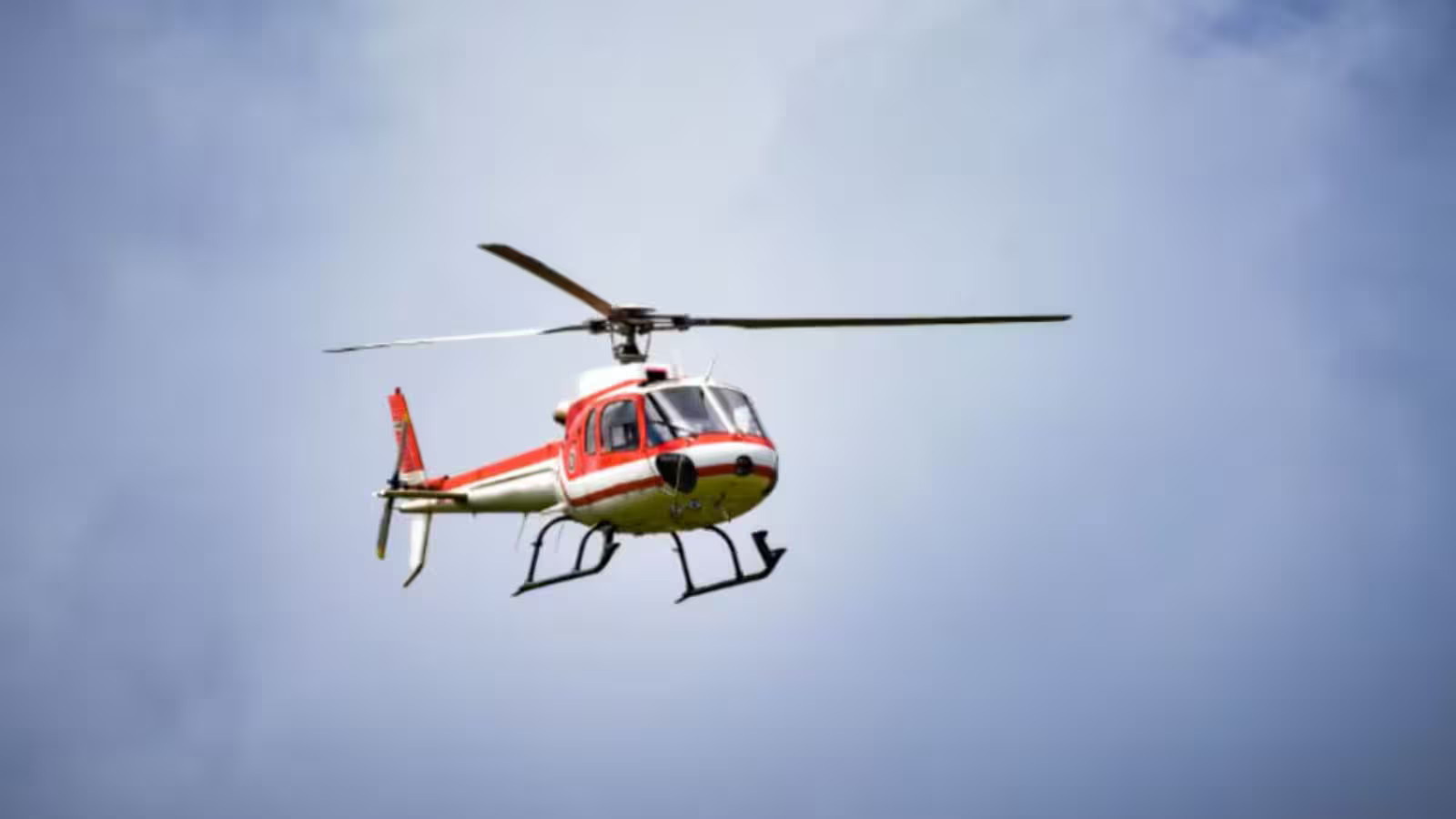
Pune is set to become home to Maharashtra’s first dedicated heliport. The proposed project will be located at the Hadapsar Gliding Centre, a 230-acre aviation space in the heart of the city, currently operated by the Directorate General of Civil Aviation (DGCA).
This initiative is being undertaken in collaboration with the Airports Authority of India (AAI), which is expected to assume control of the land shortly, paving the way for the development of a state-of-the-art heliport and an adjoining aviation gallery. Once operational, the heliport will serve as a critical hub for helicopter-based connectivity, supporting diverse sectors including medical services, tourism, disaster response, and business travel. Officials from the Ministry of Civil Aviation confirmed that the project is in its initial stages, with a detailed project report (DPR) to be prepared following the formal land transfer to AAI. The heliport will be a landmark facility, aimed not just at easing congestion in traditional air corridors but also at expanding the utility of vertical air mobility within urban environments.
The Hadapsar Gliding Centre has long been a key training and recreational site for aviation enthusiasts. Its conversion into a full-fledged heliport is being seen as a natural evolution, leveraging the existing airstrip, open landscape, and strategic location. Experts from the civil aviation sector noted that Pune already hosts India’s largest fleet of helicopters due to its importance in tourism, corporate travel, and logistical operations. The new infrastructure is expected to further streamline these services while reducing pressure on conventional airport facilities. Beyond its transport utility, the heliport project includes a forward-looking plan for a public aviation gallery. This facility will combine educational exhibits and interactive technology to narrate the history of aviation—from ancient flying concepts to contemporary helicopter and drone technologies. Designed to attract students, aviation aspirants, and tourists alike, the gallery will also feature simulators and digital displays, encouraging a broader public understanding of aerospace innovation.
This dual-purpose project, integrating a heliport with a knowledge-sharing hub, aligns with national goals of promoting STEM (Science, Technology, Engineering and Mathematics) education and increasing awareness about India’s growing aviation sector. Officials said the gallery will be developed as a sustainable and inclusive space, incorporating accessibility features and promoting climate-conscious design principles. The long-term lease of the Hadapsar site was finalised in March 2022 through an agreement between the Ministry of Civil Aviation and AAI. The site has been allotted for 99 years at a nominal rent of one rupee annually, emphasising the government’s commitment to expanding public aviation infrastructure without heavy financial burden. According to officials involved in the planning, this symbolic lease underscores the project’s public-oriented mission rather than being driven by commercial aviation objectives alone.
While this will be Maharashtra’s first heliport, it is unlikely to be the last. Plans are already being discussed for a second facility within Pune district, reinforcing the region’s emerging role as a future-ready aviation node. Experts from the aviation sector suggest that establishing a robust network of heliports across Indian cities could dramatically improve regional connectivity, especially in areas where fixed-wing airport infrastructure remains limited. The Pune heliport will also contribute to decarbonisation goals by offering a platform for electric vertical take-off and landing (eVTOL) aircraft in the future. Officials confirmed that the DPR would explore the feasibility of integrating green aviation technology and sustainable ground operations, in line with India’s national roadmap for zero-emission transport systems.
From a city-planning perspective, this initiative reflects a broader vision for urban mobility that is multimodal, resilient, and responsive to both economic and ecological needs. Urban planners welcomed the move, citing the potential for reduced traffic congestion, faster medical evacuations, and improved business linkages across key nodes in western India. Though the project is still in its early stages, it is emblematic of how cities like Pune are evolving to meet future challenges by adopting smart infrastructure. It is also a step toward reimagining how under-utilised government land can be repurposed for high-impact public infrastructure without displacing existing ecosystems.
The timeline for execution will depend on how quickly the administrative handover to AAI is completed, but officials are optimistic that planning and development will be fast-tracked to meet rising demand during the post-pandemic aviation recovery phase. As India moves towards a more connected and decentralised model of air mobility, the Pune heliport project marks a bold new chapter—not only for the city but for the state of Maharashtra’s aviation ambitions. With a focus on sustainability, education, and public access, it is poised to become a flagship example of integrated urban aviation infrastructure.
Also Read : Pune Metro Builds Key Footbridge Amidst Monsoon Challenge.
