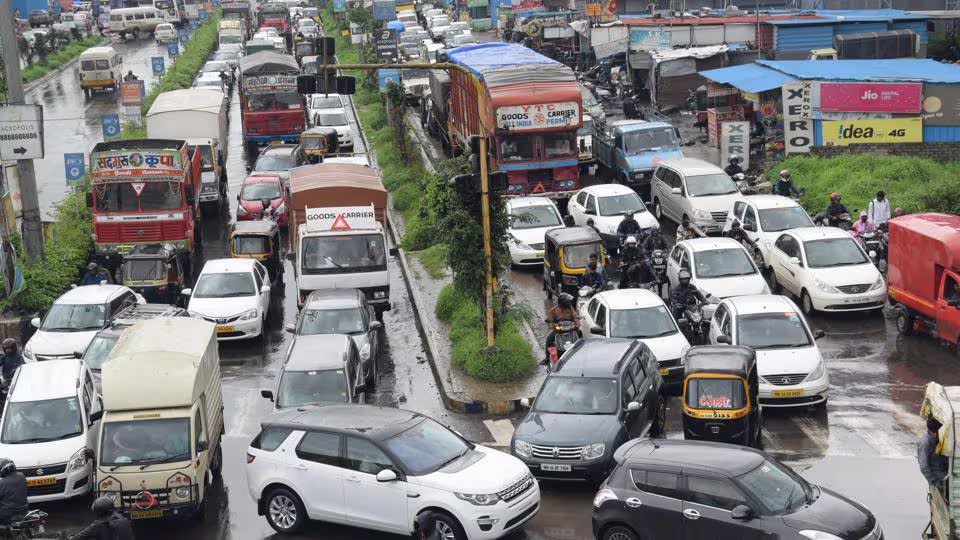
Pune’s rapid urban expansion is exposing gaps in traffic safety, as residents of a cooperative housing society near the Mumbai-Bengaluru Highway report persistent risks at their sole operational entry point. The service road connecting Bavdhan to Chandni Chowk has become a high-speed corridor for heavy vehicles and public transport, creating daily hazards for pedestrians and motorists alike. Despite repeated appeals over the past two years, local authorities have yet to install physical speed controls, raising broader concerns about urban road governance.
The service road, now frequented by cement trucks, trailers, and buses, runs directly past the society’s main gate, leaving residents vulnerable to collisions. Experts note that such roads often see vehicles exceeding safe speeds due to insufficient enforcement and unclear signage, with serious implications for commuter safety and urban mobility. Temporary signage indicating two-way traffic has been installed, but their poor visibility does little to curb reckless driving. Local residents highlight that the risk is heightened during peak hours and in low-light conditions, particularly for senior citizens and children navigating the entry point. A recent near-miss incident involving a two-wheeler underscores the hazards posed by unregulated traffic and mixed-use service lanes. Urban planners emphasise that unchecked speed and inadequate traffic calming measures on service roads near highways significantly increase accident likelihood, making proactive interventions essential.
Authorities acknowledge the problem but point to jurisdictional complexities. While the National Highways Authority of India (NHAI) maintains oversight of certain stretches, municipal bodies are in the process of assuming control. Any installation of permanent traffic-calming infrastructure, such as speed breakers or rumbler strips, requires coordination between municipal engineers, NHAI, and the local traffic police, alongside formal approvals and funding allocation. Officials indicate that initial steps may involve temporary rumbler strips to balance safety for two-wheelers with the need to slow down vehicles effectively.
Urban development experts say the situation reflects broader challenges in rapidly growing cities, where infrastructure upgrades lag behind traffic volume and residential density. Ensuring safe mobility on arterial service roads requires integrated planning, clear jurisdictional responsibility, and timely resource allocation. Until permanent measures are implemented, residents remain exposed to avoidable risks, highlighting the intersection of road safety, civic governance, and urban growth management. The case underlines the urgency of structured interventions in Pune’s peripheral zones, reinforcing the need for collaborative solutions that prioritise human safety alongside urban connectivity.