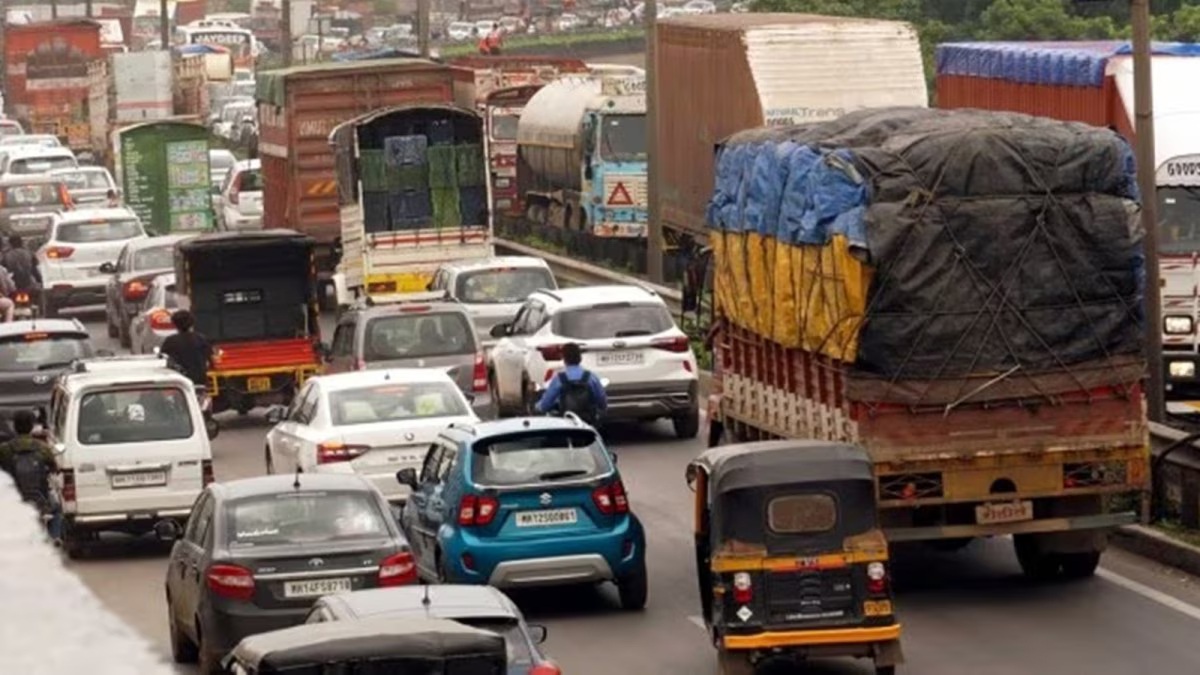
Early-morning traffic restrictions are set to be introduced on a key stretch of the Pune–Satara corridor as national highway authorities commence installation of automated speed enforcement infrastructure near the Katraj–Navale section. The temporary measures are aimed at enabling safe erection of overhead gantries while also signalling a broader push towards technology-led road safety management in rapidly expanding urban regions.
According to project officials, one carriageway heading toward Mumbai will experience controlled lane closures between 6 am and 8 am over a three-day window in early February. The works are concentrated around the tunnel-to-bridge stretch that routinely witnesses heavy commuter and freight movement. Urban mobility experts note that such targeted time-bound restrictions are increasingly being adopted in Indian metropolitan areas to reduce daytime disruption while advancing long-term infrastructure upgrades.The Pune Satara Highway Traffic Curbs highlight how transport authorities are balancing construction logistics with the need to maintain economic activity in high-density corridors. The Pune metropolitan region has witnessed sustained growth in residential layouts, warehousing clusters and peri-urban townships along its southern axis, intensifying pressure on arterial road networks.
Temporary regulation of vehicle flow during off-peak hours is therefore viewed as a practical compromise between safety enforcement and commuter convenience. Officials associated with the project indicate that the speed monitoring framework is being positioned as a preventive safety intervention rather than a punitive measure. Accident data from similar corridors across the country shows that automated detection systems, when paired with signage and public advisories, often result in measurable declines in high-speed collisions. Urban planners emphasise that intelligent transport systems are becoming essential to climate-resilient and people-centric city planning, where smoother traffic flow can also reduce fuel wastage and vehicular emissions.
Commuters have been advised to utilise older tunnel routes and service roads during the notified hours, underscoring the need for multimodal planning even in highway-centric regions. The Pune Satara Highway Traffic Curbs also draw attention to the broader question of how Indian cities can retrofit legacy infrastructure to meet contemporary mobility standards without causing prolonged disruption. As Pune continues to expand as an industrial and residential hub, periodic interventions of this nature may become more common. Urban development observers suggest that the success of such initiatives will depend on transparent communication, data-driven traffic management, and integration with public transport networks factors that ultimately shape safer, more inclusive and economically resilient urban growth.