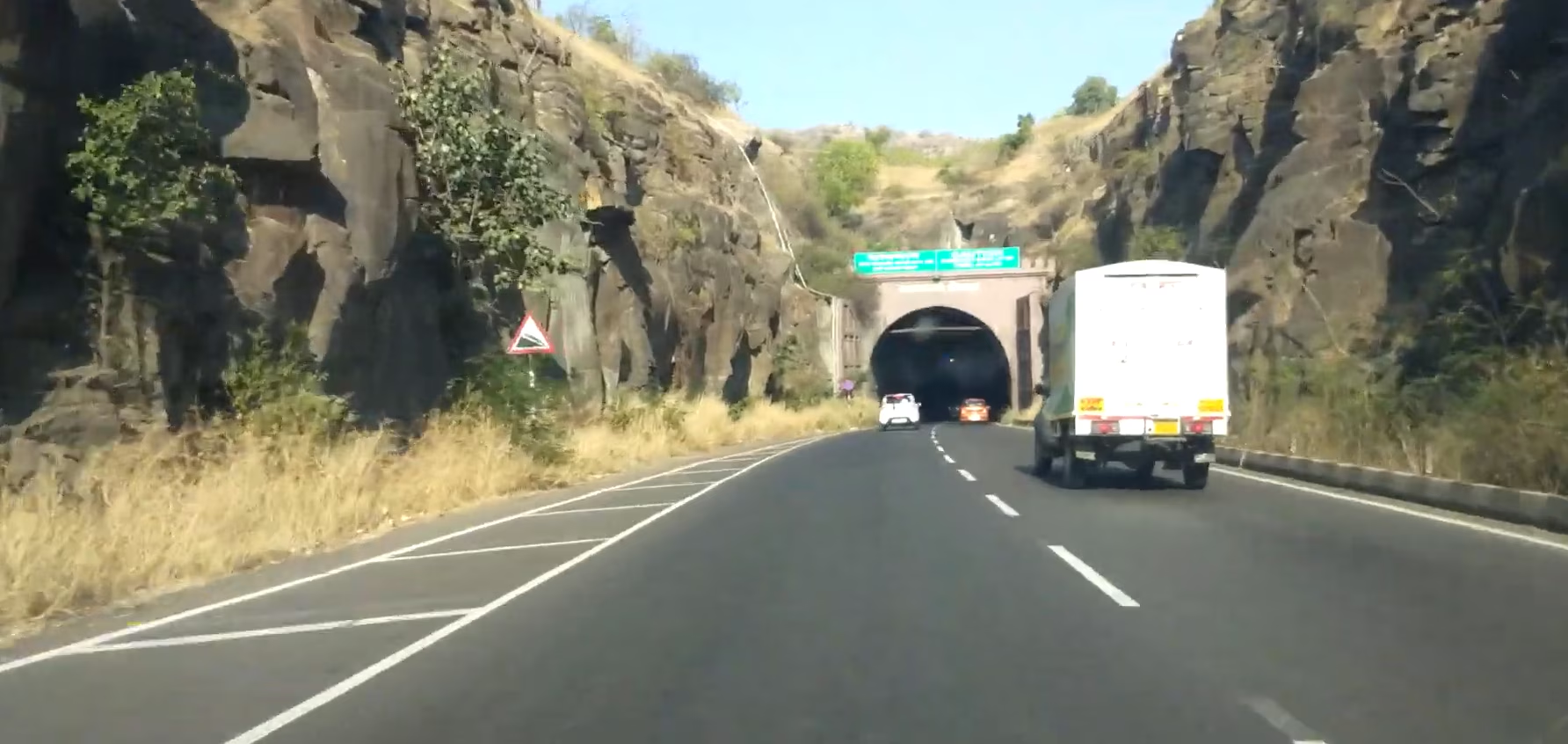
Pune–Satara road users in Maharashtra are on the cusp of a dramatic improvement in travel efficiency as the long‑planned Khambatki Ghat tunnel nears full commissioning, with partial operations already under way and full traffic expected by June 2026. Once fully operational, vehicles travelling through this key pass on the National Highway corridor will see transit times through the once‑treacherous ghat fall from roughly 45 minutes to just about seven minutes, reshaping how people and goods move between western Maharashtra’s urban and rural hubs.
The infrastructure intervention – a twin‑tube, six‑lane tunnel bypassing the winding, steep ‘S’ curves of the existing ghat road – represents a significant upgrade on an alignment notorious for slow speeds, congestion and elevated accident risks. One bore of the tunnel, approximately 1.3 kilometres long with a 1.2‑kilometre elevated approach, is already in a trial phase, while the second bore and remaining viaduct work are on track for completion ahead of the mid‑year deadline. Urban mobility experts highlight that this project is about more than just time savings. Reducing transit time through mountainous terrain directly impacts fuel consumption, reduces vehicular emissions and enhances reliability for commercial transporters and daily commuters alike. In an era of climate‑conscious planning, such efficiency gains ripple through urban logistics chains and local economies, supporting lower operating costs and fewer delays.
The design also factors safety improvements into a corridor long plagued by sharp bends, limited sight distances and frequent weather‑related slowdowns. Industry planners observe that replacing hazardous road geometry with controlled‑environment tunnels and viaducts minimises conflict points and should significantly reduce crash incidence on this stretch, a boon for both passenger vehicles and freight operators that rely on consistent schedules. From an economic geography perspective, the enhanced link strengthens the transport spine of western Maharashtra by tightening connections between Pune’s industrial, educational and service sectors with Satara’s agricultural and emerging small‑scale manufacturing districts. Such connectivity improvements tend to catalyse balanced regional growth and can attract investment in logistics parks, warehousing and value‑added processing closer to highway nodes.
Local administration sources note that the project’s capacity – engineered to handle more than 150,000 passenger car units daily – is designed with long‑term demand growth in mind. This forward planning helps avoid bottlenecks that have historically plagued major ghat routes, where seasonal tourism traffic and monsoon challenges compound congestion. However, the work is not yet complete: final safety certification, finishing touches on drainage and emergency systems, and commissioning of the second tunnel tube are scheduled over the coming months. Once these are achieved and contingent on clearances, the full six‑lane tunnel is expected to open to mixed traffic, marking a transformative phase for the Pune–Satara corridor.
For communities along the route and the travelling public, the next chapter involves integrating this new infrastructure into traffic management plans, ensuring feeder roads are capable of handling increased flows and embedding climate‑responsive maintenance practices to sustain performance under variable weather and traffic conditions.