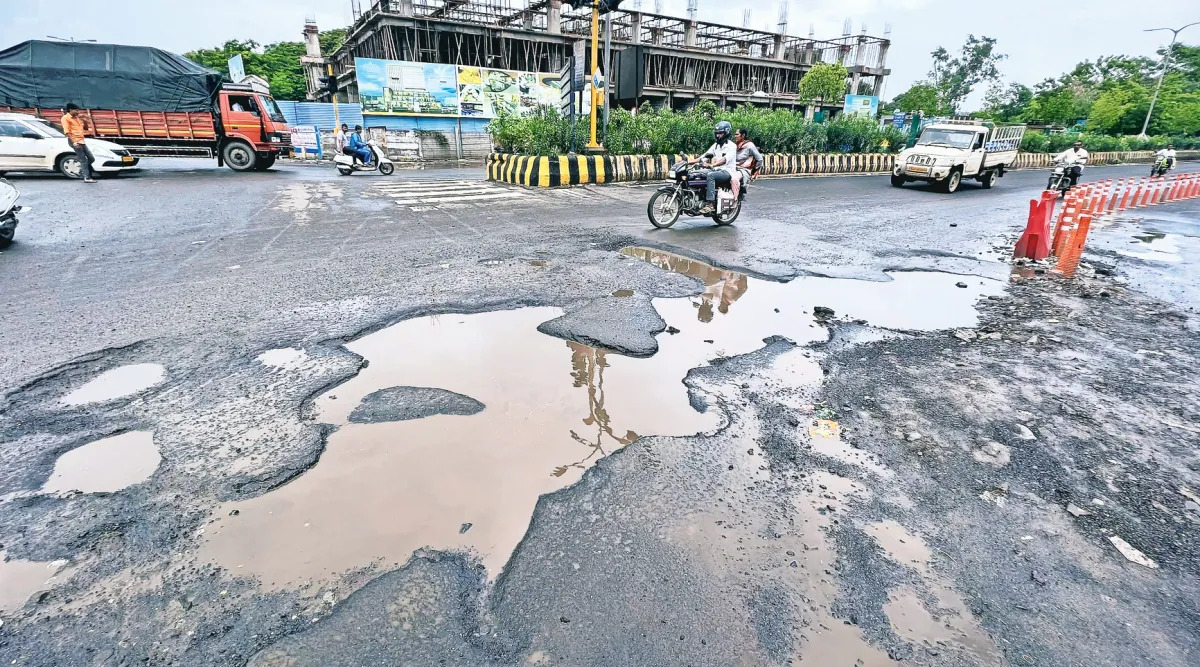
Pune’s civic administration has initiated an independent technical review of road restoration works carried out ahead of a high-profile international cycling event, signalling a shift towards tighter accountability in urban infrastructure delivery. The assessment, to be conducted in collaboration with leading academic institutions, is aimed at evaluating construction quality, durability, and long-term performance of recently upgraded road corridors across the city. Over the past two months, the Pune Municipal Corporation (PMC) undertook extensive resurfacing and rehabilitation of key arterial routes to support a multi-city, globally recognised cycling race passing through the region. Around 75 kilometres of road stretches were upgraded under a fast-tracked programme valued at approximately ₹45 crore. The works included the removal of traffic-calming structures, replacement of damaged utility covers, and fresh bituminous surfacing to international cycling standards.
Urban planners and transport experts note that the decision to commission a third-party audit reflects growing public pressure on city governments to ensure that infrastructure investments are not event-specific or cosmetic. In Pune’s case, repeated concerns have been raised over premature road failures, especially after monsoon cycles, leading to higher maintenance costs and commuter disruption. According to senior civic officials familiar with the process, the external review will assess material quality, construction practices, slope accuracy, drainage integration, and compliance with tender specifications. Engineering institutes are also expected to support capacity-building programmes for municipal engineers and site supervisors, with the objective of improving in-house technical oversight.
The road works were executed under stricter contractual norms than standard civic projects. Contractors were required to deploy specialised machinery, maintain in-house asphalt production facilities within a defined radius of the city, and follow sensor-guided paving techniques to ensure uniform surface levels. A long-term defect liability clause has also been introduced, extending contractor responsibility for maintenance and performance well beyond conventional timelines. From an urban resilience perspective, infrastructure economists say such measures are essential for cities facing climate stress, heavier rainfall, and rising vehicle loads. Roads built without adequate quality control often deteriorate faster, increasing carbon emissions through repeated repairs and disrupting public transport efficiency.
Residents’ groups have broadly welcomed the move towards independent verification but stress that quality assurance should become routine rather than episodic. Citizen feedback mechanisms, transparent audit findings, and coordinated planning between utility agencies remain critical gaps in urban road management, they argue. Looking ahead, PMC officials indicate that lessons from this assessment will inform future road projects, particularly in high-footfall zones near hospitals, schools, and commercial hubs. If institutionalised, third-party audits could mark a meaningful step towards longer-lasting, safer, and more climate-resilient urban roads outcomes increasingly central to sustainable city governance.