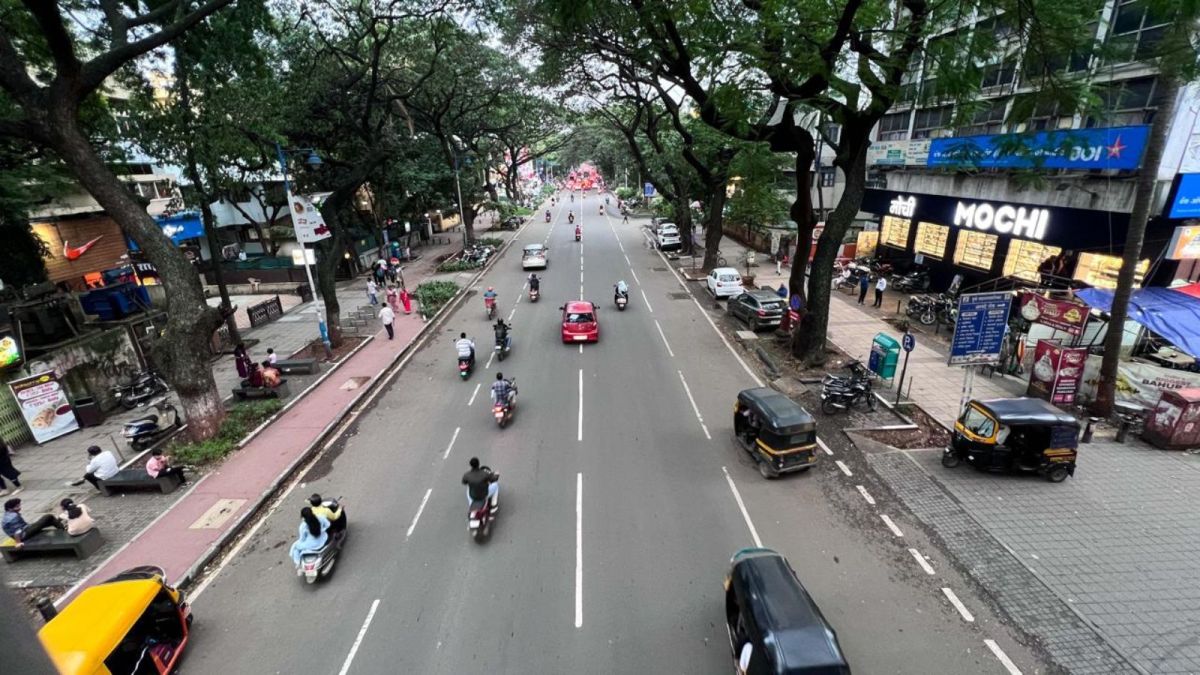
Pune’s recent international cycling showcase projected a polished urban image, but the spotlight on select corridors has reignited debate over uneven road quality across the city’s everyday network. Ahead of the event, designated stretches were resurfaced, repainted and levelled to meet competitive cycling standards. However, commuters report that adjoining feeder roads and internal lanes continue to display cracks, uneven cement slabs, abrupt level changes and poorly aligned manhole covers.
The visible contrast has drawn scrutiny from residents and urban mobility observers.The episode has sharpened questions about road quality in Pune, a city with one of the country’s highest two-wheeler densities. For daily riders navigating routes between Katraj, Baner, Kharadi and the old city areas, surface consistency is not cosmetic it is a safety concern. Transport planners note that sudden transitions between newly laid asphalt and older, deteriorated sections create instability, particularly for motorcycles and scooters. Minor height differences at manholes or expansion joints can cause skidding during monsoon months. “Surface uniformity is critical in high two-wheeler cities,” said an independent road safety consultant. “Even small irregularities increase accident risk when traffic volumes are dense.”
Cement roads, introduced in several zones as a long-term alternative to bitumen, were intended to withstand heavy traffic and seasonal wear. Yet in some corridors, expansion joints have opened unevenly and hairline fractures are visible within a few years of commissioning. Experts attribute early distress to inadequate joint sealing, poor subgrade preparation or inconsistent quality supervision.
The larger issue, analysts argue, is lifecycle management. Urban infrastructure cannot rely on periodic resurfacing tied to events or public visibility. Preventive maintenance including timely crack filling, edge compaction and shoulder stabilisation extends asset life and reduces long-term public expenditure.
Civic officials maintain that road upgrades follow budget cycles and prioritisation frameworks. However, the event has amplified citizen calls for stronger enforcement of defect liability clauses, which hold contractors accountable for premature deterioration. Urban governance specialists suggest that transparent performance audits and public disclosure of maintenance timelines could rebuild trust.
Beyond safety, inconsistent road quality in Pune carries environmental implications. Stop-start driving caused by uneven surfaces increases fuel consumption and emissions, undermining broader climate resilience objectives. Reliable, well-maintained roads support smoother traffic flow and complement investments in public transport and non-motorised mobility. For a city positioning itself as a global IT and manufacturing hub, infrastructure credibility matters. High-profile events may showcase potential, but everyday reliability shapes investor confidence and resident well-being. As Pune continues to expand, aligning engineering standards, monitoring mechanisms and accountability frameworks will determine whether improved road quality becomes systemic rather than situational. The challenge is not constructing a flawless corridor for a few days it is ensuring that every commuter experiences safe, consistent surfaces year-round.
Pune Road Quality Under Public Lens