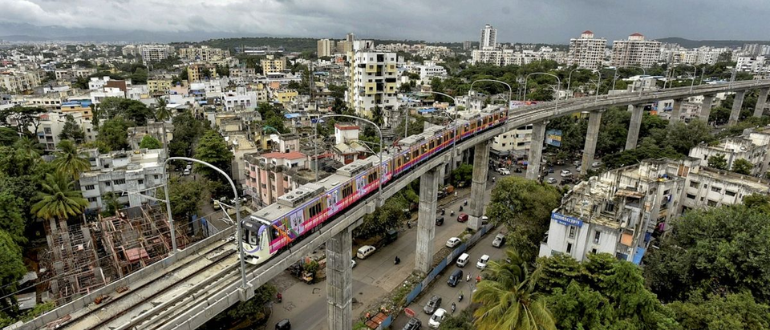
Pune Road and Metro Projects Boost Real Estate Uptake
India’s urban real estate landscape is undergoing a structural transformation, with infrastructure investment emerging as the primary driver of sustainable growth. Recent government expenditure, particularly the ₹12.2 lakh crore allocation for 2026‑27, underscores a deliberate push to modernise transport, digital, and urban connectivity, shaping both residential and commercial property dynamics across the country.
Infrastructure improvements fundamentally alter city geographies, expanding catchment areas and redefining land economics. Metro corridors, expressways, and arterial road upgrades enable peripheral areas to evolve into mainstream residential and commercial hubs. Delhi’s metro expansion over the past two decades illustrates this phenomenon, elevating districts such as Dwarka, Noida, and Ghaziabad from fringe settlements to high-demand residential markets. Similar patterns are visible in Mumbai, where new metro lines and road enhancements have shifted buyer interest toward previously underdeveloped suburbs.
Experts highlight that while infrastructure provides the framework, demand arises from households and investors responding to accessibility and convenience. Residential sales across India’s seven largest urban centres reached nearly 4 million units in 2025, a reflection of buyers prioritising end-user usability and long-term occupancy over speculative investment. Formalised incomes, regulatory oversight, and enhanced developer credibility have also strengthened buyer confidence, although affordability remains sensitive to home loan interest rates, which can influence mortgage EMIs by 7–9% over 20 years. Commercial real estate has mirrored this trend, with office leasing in cities like Bengaluru, Hyderabad, and Pune reaching eight million square feet in 2025. Leasing decisions increasingly account for employee commute times and proximity to social infrastructure, demonstrating how connectivity directly impacts corporate real estate strategies.
The alignment of supply with infrastructure milestones remains crucial. Projects launched ahead of connectivity often face absorption delays, pricing pressures, and execution challenges. Urban planners advocate phased, mixed-use developments and transit-oriented designs to synchronise market readiness with public investment, mitigating volatility and fostering sustained demand. Looking ahead, India’s urban population is projected to exceed 600 million by 2036, ensuring structural housing requirements. Yet modern buyers evaluate projects on multiple parameters beyond location, including walkability, digital infrastructure, and environmental performance. Coordinated infrastructure and carefully timed real estate supply will therefore define the sustainability and resilience of urban property markets, supporting more data-driven, demand-focused growth while reducing speculative distortions.