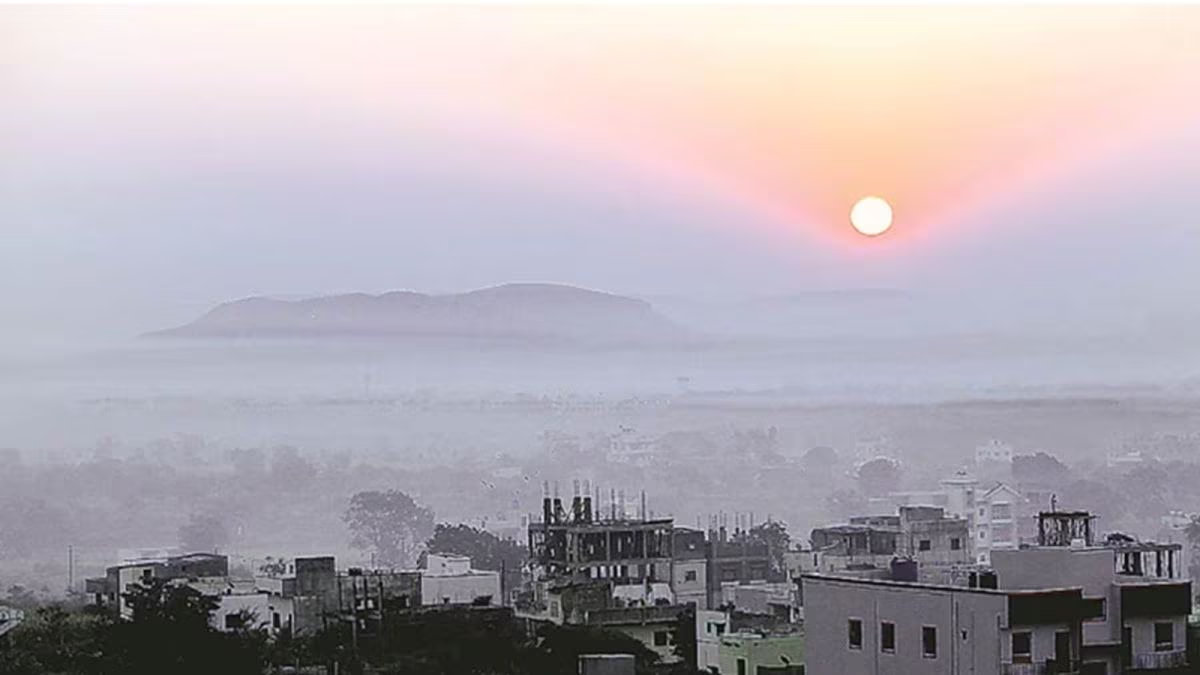
Pune is witnessing a steady rise in daytime heat levels, with Pune rising temperatures approaching seasonal highs and meteorologists warning the mercury could edge closer to 40°C in the coming days. The warming trend, driven by stable atmospheric conditions and clear skies, is drawing attention to the growing challenge of urban heat in rapidly expanding Indian cities and the need for climate-resilient planning. Weather monitoring stations across Pune recorded noticeably warmer conditions this week, with several locations reporting temperatures well above seasonal norms.
The city’s primary observatory logged maximum temperatures in the mid-30s Celsius range, while suburban monitoring points such as the airport zone and industrial suburbs registered even higher readings. Meteorological experts attribute the current heat build-up to a large high-pressure system over western India and the adjoining Arabian Sea. Such systems create sinking air currents that suppress cloud formation and allow sunlight to heat the ground more efficiently. Combined with low wind speeds and dry air, the conditions accelerate daytime warming.
Humidity levels across the city have also dropped sharply during peak afternoon hours, amplifying the sense of dryness and heat stress. Dry atmospheric conditions typically allow surfaces such as asphalt roads, concrete buildings and rooftops to absorb and radiate heat more intensely, a phenomenon often associated with the urban heat island effect. Across Maharashtra, several inland districts are experiencing similar conditions. Cities in the state’s central and eastern regions have reported maximum temperatures nearing the 40°C threshold, signalling the early stages of the pre-summer heat phase that usually intensifies through March and April.
While Pune rising temperatures have become a regular seasonal occurrence, urban planners note that the impact is becoming more pronounced as built-up areas expand and green cover shrinks. Rapid residential growth along the city’s western and northern corridors has increased the density of heat-retaining surfaces, making neighbourhoods more vulnerable to prolonged heat spells. Urban development experts say such conditions highlight the importance of integrating climate adaptation measures into city planning. Strategies such as preserving hill slopes, protecting urban forests, expanding tree-lined streets and promoting reflective or “cool roof” materials are increasingly being viewed as essential infrastructure for liveable cities.
The rising temperatures also have economic implications. Higher heat levels influence electricity demand for cooling, strain water supply systems and affect outdoor labour productivity particularly in construction and infrastructure sectors that form a significant part of Pune’s urban growth. For residents, the coming days could bring warmer afternoons before any major seasonal shift occurs. Weather analysts expect temperatures to continue inching upward through the next week if clear skies persist. As Indian cities confront longer and more intense heat cycles linked to climate change, episodes like the current Pune rising temperatures are becoming a reminder that urban expansion must increasingly balance growth with environmental resilience.
Pune Rising Temperatures Approach Seasonal Peak