


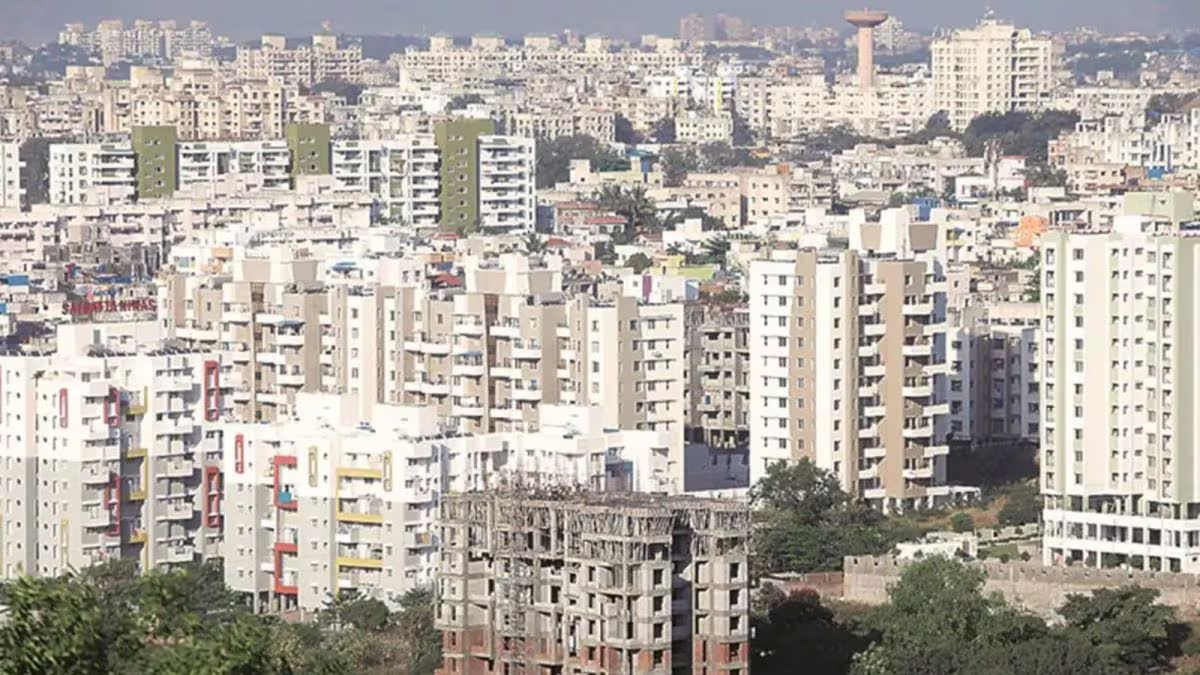
Pune’s residential property market is facing renewed scrutiny after a sudden escalation in apartment prices raised questions around affordability, pricing discipline and buyer confidence in one of India’s fastest-growing urban economies. The episode, involving a mid-to-premium three-bedroom apartment in the city’s western corridor, has brought attention to how rapidly changing price signals can unsettle end-users in an already strained housing environment.
The price movement amounting to a near double-digit increase within weeks has amplified anxieties among salaried professionals navigating job uncertainty, rising living costs and longer loan tenures. While Pune continues to benefit from strong demand driven by technology, manufacturing and education sectors, the pace of price revisions has outstripped income growth for many households, narrowing the window for first-time and upgrade buyers. Urban planners and housing analysts point out that Pune’s residential market has entered a complex phase. Over the past few years, new supply has increasingly focused on larger homes, gated developments and lifestyle-led projects. This shift has supported higher per-unit pricing but has also reduced the availability of mid-income housing in well-connected locations. As a result, even modest fluctuations in quoted prices can materially alter affordability calculations for families dependent on long-term home loans. The Pune residential market is further shaped by rising input costs, regulatory compliance expenses and land values in established micro-markets such as the city’s western suburbs. Developers, facing thinner margins and longer approval cycles, are attempting to protect returns through faster price escalations at early project stages. However, housing economists warn that aggressive repricing without clear value addition risks undermining market credibility and discouraging genuine end-user demand.
Beyond individual transactions, the implications are urban in scale. Housing affordability influences workforce stability, commuting patterns and environmental outcomes. When central or transit-linked neighbourhoods become financially inaccessible, households are pushed towards distant peripheries, increasing daily travel distances, infrastructure stress and carbon emissions. For a city positioning itself as a sustainable and innovation-led hub, housing volatility presents a structural challenge. Despite the concerns, experts caution against interpreting such incidents as evidence of an imminent market correction. Pune’s residential sector remains supported by relatively healthy balance sheets, limited speculative leverage and consistent end-user interest. However, the margin for pricing misjudgement is shrinking as household budgets face pressure from inflation and employment uncertainty.
Looking ahead, sustained stability in the Pune residential market will depend on predictable pricing, transparent sales practices and supply aligned with real purchasing power. As cities compete for talent and investment, the ability to offer accessible, well-planned and climate-resilient housing will increasingly define urban competitiveness rather than headline price growth alone.
Also Read: Pune Residential Prices Jump Beyond Income Growth
Pune Residential Market Faces Affordability Flashpoint
