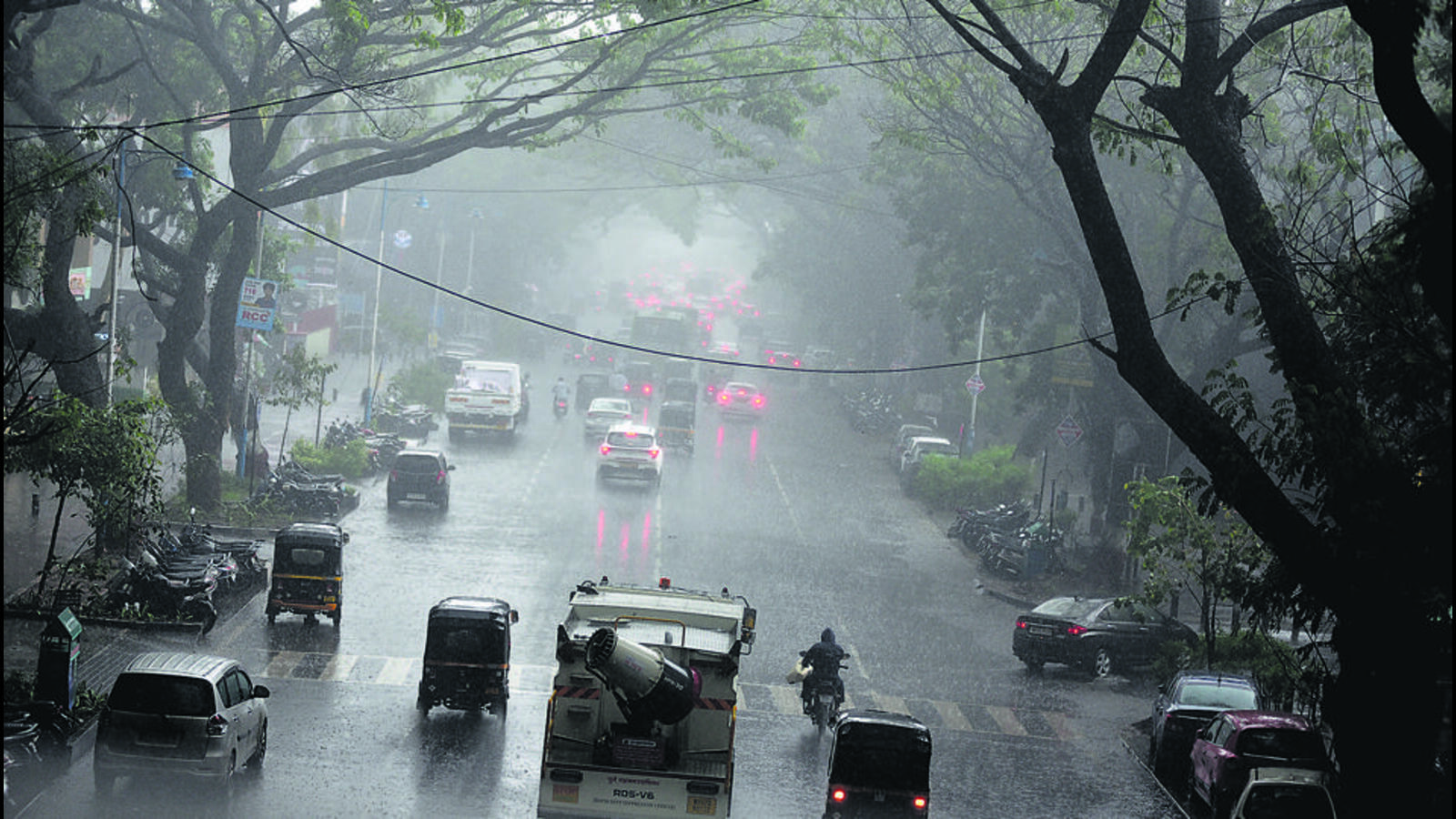
Pune entered the new year with an unexpected weather shift as parts of the city recorded light rainfall and persistent cloud cover, disrupting what is typically a dry and stable January. The unseasonal showers, reported across several western and northern suburbs, point to changing winter weather behaviour with implications for public health, urban planning, and climate resilience in one of Maharashtra’s fastest-growing cities.
Meteorological assessments indicate that the rainfall and overcast conditions are linked to a western disturbance influencing northern India, with its effects extending unusually far south into the Deccan plateau. While the showers were localised and brief, they arrived alongside marked temperature swings that residents have experienced over the past week. Pune is currently seeing pronounced day–night temperature contrasts. Early mornings have remained distinctly cold, with minimum temperatures hovering in the low teens, while afternoon readings have climbed close to 30°C. This sharp diurnal variation creates conditions favourable for moisture build-up in the lower atmosphere, increasing cloud formation and raising the likelihood of short-duration evening showers.
Weather experts note that such patterns are becoming more frequent during transitional seasons, reflecting broader climate variability rather than isolated anomalies. For cities like Pune—positioned at the intersection of urban expansion and sensitive hill ecosystems—these fluctuations complicate everything from water management to daily commuting patterns. The immediate impact has been felt at the neighbourhood level. Residents in peri-urban areas reported damp roads and reduced visibility during evening hours, while construction activity in some pockets slowed temporarily due to intermittent showers. Urban planners point out that unseasonal rain, even when light, places additional stress on drainage systems designed primarily for monsoon conditions, exposing gaps in local stormwater preparedness.
Public health professionals are also monitoring the situation closely. Rapid shifts from cold mornings to warm afternoons can weaken immune responses, particularly among children and older adults. Clinics across the city have reported seasonal increases in respiratory infections during such periods, a trend that tends to intensify when humidity levels rise unexpectedly during winter. Forecasts suggest that cloudy skies and sporadic rain may persist briefly before clearer conditions return. Minimum temperatures are expected to edge upwards later in the month, signalling a gradual tapering of winter intensity. For households and businesses, this variability translates into fluctuating energy demand, with heating and cooling requirements sometimes occurring within the same day.
From a long-term perspective, Pune’s unseasonal rain underscores the importance of climate-adaptive urban design. As the city continues to grow outward, experts argue for stronger integration of weather-resilient infrastructure—ranging from flexible construction schedules to improved public health surveillance during climate transitions. While the immediate weather disturbance is expected to pass, the episode serves as a reminder that Pune’s climate is becoming less predictable. How the city adapts to these shifts will shape its resilience in the years ahead.
Pune Records Unseasonal Rain And Cloudy Skies