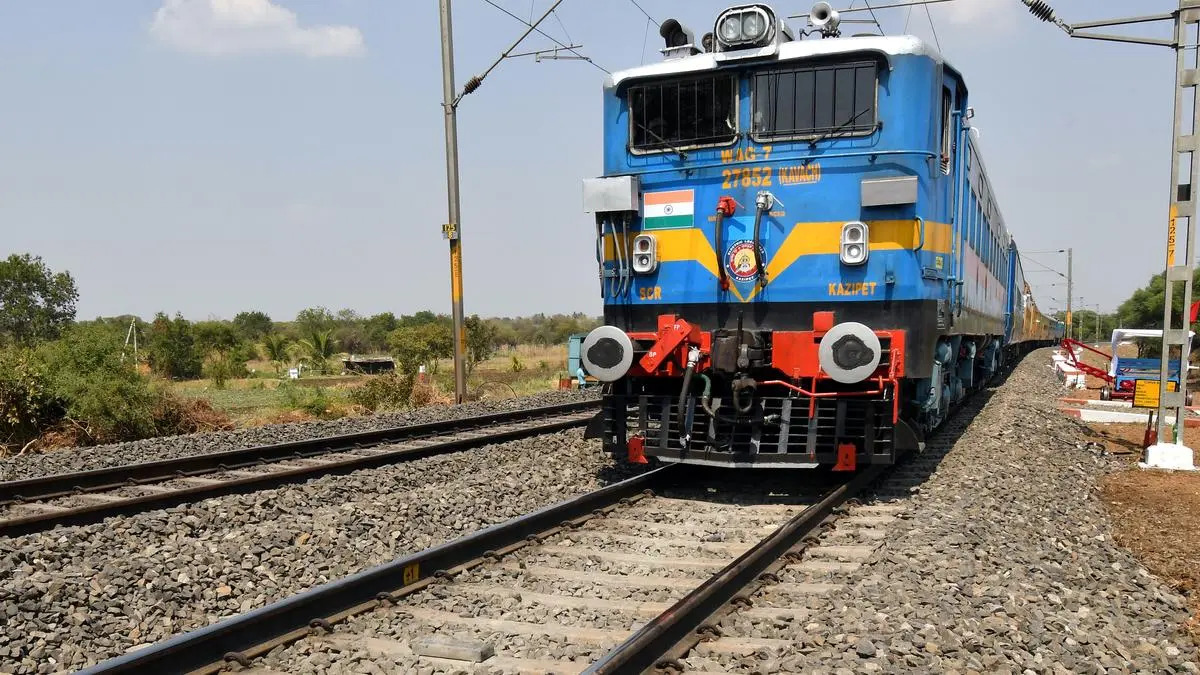
The Pune railway division has crossed a key milestone in deploying Kavach ATP, India’s homegrown train protection system, with trials completed across 295 kilometres of track. The expansion, spanning critical intercity corridors including Pune–Kolhapur and Daund–Manmad, signals a shift towards technology-led rail safety in one of Maharashtra’s fastest-growing mobility regions.
Railway officials confirm that the trials form part of a broader 700-kilometre implementation plan. The system is designed to continuously monitor train speed and signal compliance, automatically intervening through brake application if safety protocols are breached. For a division that handles dense passenger and freight traffic linking industrial belts and agricultural markets, the move represents more than a technical upgrade it is a structural investment in safer regional mobility. Kavach ATP (Automatic Train Protection) has emerged as a central pillar in the national rail modernisation programme. By reducing the risk of signal-passing incidents and rear-end collisions, it addresses long-standing vulnerabilities in high-density corridors. In urbanising districts around Pune, where rail remains a backbone for daily commuting and logistics, such safeguards directly affect economic continuity and commuter confidence.
Infrastructure installation under the second phase of the programme has begun to take shape. Three stations within the division have completed trackside equipment integration, while additional sections are being fitted with the required hardware. On the telecom side, more than fifty communication towers have already been erected to enable real-time data transmission between locomotives and control centres. This digital backbone is essential for ensuring uninterrupted signal exchange across varied terrain. Parallel to trackside deployment, onboard integration has also commenced. The division’s diesel and electric locomotive shed has successfully fitted Kavach systems on select engines, marking its first in-house installation exercise. According to railway engineers, this step reduces dependence on external facilities and accelerates scaling. The locomotives have undergone inspection and operational validation before being cleared for commercial service.
Transport economists note that collision-prevention systems can deliver significant long-term savings by reducing accident-related disruptions, asset damage, and human loss. In a climate-conscious era, safer and more reliable railways also strengthen the modal shift away from road transport, cutting congestion and emissions in rapidly expanding metropolitan regions. For Pune and its surrounding growth corridors, where infrastructure expansion often struggles to keep pace with population growth, the steady rollout of Kavach ATP signals a move toward resilient, technology-enabled public transport. The next phase will test how quickly the remaining 400 kilometres can be equipped and how seamlessly the system integrates across mixed passenger and freight operations. If executed on schedule, the initiative could redefine operational safety standards across western India’s rail grid, reinforcing rail’s role as a sustainable and dependable urban connector.