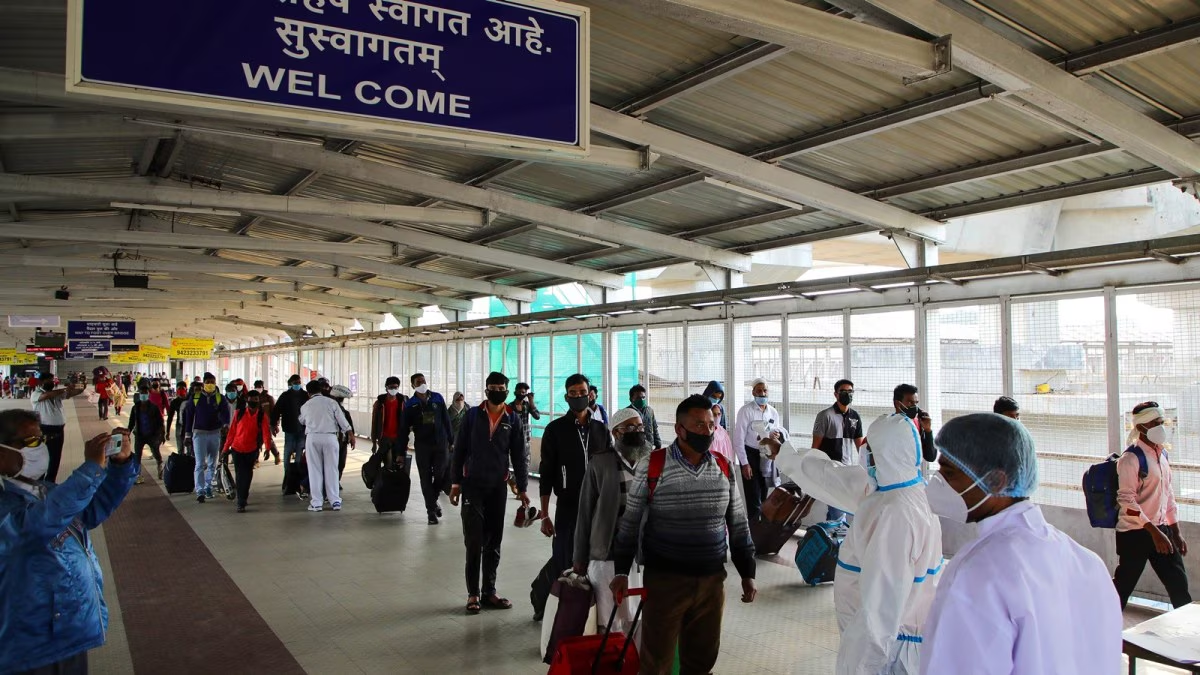
Rail travel through Pune reached a significant milestone in 2025, with the city’s railway division recording its highest-ever passenger volumes and a sharp rise in ticket revenue. The surge reflects changing mobility preferences in western India, where railways are increasingly absorbing demand driven by urban expansion, intercity commuting and seasonal travel pressures.
Data reviewed by railway officials shows that more than 6.5 crore passengers used services across the Pune Railway Division during the year, marking a year-on-year growth of over nine per cent. This rise translated into passenger revenue of ₹1,576 crore, underscoring the financial importance of the division within the Central Railway network. The figures highlight how rail infrastructure continues to play a central role in supporting economic activity across the Pune–Mumbai growth corridor and beyond. Pune’s rail network has emerged as a critical connector between Maharashtra’s industrial clusters, technology hubs and residential suburbs. On an average day, over 200 trains pass through the division, with dozens originating from Pune station alone. Long-distance services linking the city to northern and eastern India remain heavily patronised year-round, while commuter and intercity demand between Pune and Mumbai continues to grow amid rising highway congestion.
Urban transport analysts attribute the increase partly to ongoing station upgrades and improved passenger amenities across the division. Redevelopment efforts, combined with better service planning, have made rail travel more reliable and accessible, particularly for cost-sensitive travellers. As fuel prices and road travel times rise, railways are increasingly viewed as a predictable and economical alternative for both daily commuters and long-distance passengers. A notable contributor to the growth has been the expansion of special and seasonal train services. During peak travel periods such as festivals and school holidays, additional services were deployed on high-demand routes, easing pressure on regular trains. Officials indicate that these temporary capacity additions have played a crucial role in accommodating festive travel surges without major disruptions, while also boosting overall ridership numbers.
Infrastructure expansion within the division is also reshaping travel patterns. New terminals under development at Hadapsar and Khadki are nearing operational readiness, with some services already being routed through these nodes. Once fully functional, these terminals are expected to decentralise traffic from Pune’s main station, reduce congestion and improve access for suburban populations an outcome aligned with more balanced, people-first urban growth.
From a sustainability perspective, the shift towards rail has broader implications. Transport planners point out that higher rail usage can help moderate emissions growth from road traffic, particularly along busy intercity corridors. However, sustaining this momentum will depend on continued investment in capacity, punctuality and last-mile connectivity. Looking ahead, railway authorities anticipate further growth as new terminals come online and service frequencies rise. For Pune, the challenge will be to integrate rail expansion with urban planning, ensuring stations function as multimodal hubs rather than isolated assets. If managed well, the division’s strong performance could serve as a template for rail-led mobility in fast-growing Indian cities.
Pune rail division sees record passenger growth