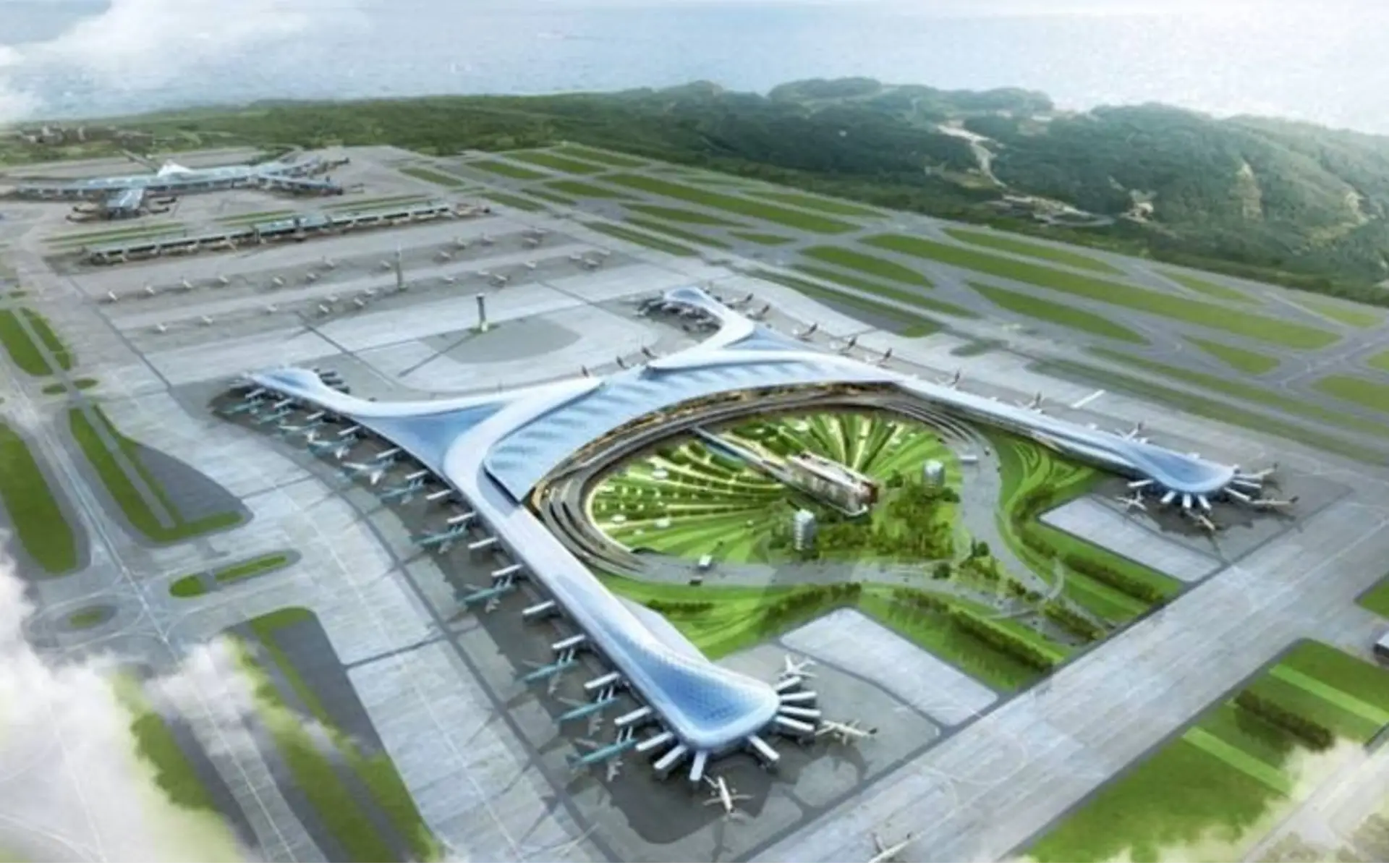
The Maharashtra government has approved the ownership framework for the special purpose vehicle that will deliver the proposed Purandar International Airport, marking a decisive step in advancing the long-delayed aviation project south-east of Pune. The structure formalises institutional roles and sets the financial blueprint for land acquisition, a critical precondition for execution.
Under the cleared arrangement, the City and Industrial Development Corporation will anchor the venture with a 51 per cent holding. The Maharashtra Airport Development Company will retain a minority stake, while the Maharashtra Industrial Development Corporation and the Pune Metropolitan Region Development Authority will hold equal shares. The equity split determines both governance rights and proportional responsibility for project liabilities. The Purandar International Airport SPV will raise close to ₹6,000 crore in debt to fund land acquisition across villages in Purandar taluka. According to officials familiar with the plan, repayment obligations will align with each agency’s equity participation. One state agency has already approved its financial contribution, while others are expected to formalise their commitments shortly.
Land procurement remains the most sensitive phase of the project. The district administration has been tasked with overall coordination, with the industrial development corporation designated as nodal agency for on-ground acquisition. Urban policy specialists note that transparent compensation frameworks and timely rehabilitation will be essential to prevent prolonged disputes that have slowed previous airport proposals in the region. The formation of the Purandar International Airport SPV comes nearly seven years after the joint venture concept was first endorsed. Since then, Pune’s passenger traffic has continued to grow, intensifying pressure on the existing Lohegaon facility, which operates under defence constraints. Aviation analysts argue that capacity expansion is necessary to support the city’s manufacturing, automotive and IT sectors.
However, infrastructure economists caution that new greenfield airports must be integrated with regional mobility and climate strategies. Surface connectivity through rail and road corridors will determine catchment efficiency, while design choices including energy sourcing and water management will shape the project’s environmental footprint. From a real estate standpoint, clarity on ownership and funding reduces uncertainty in peripheral land markets. Developers tracking industrial and logistics growth along the proposed alignment say that institutional backing improves investor confidence, though project timelines remain contingent on acquisition progress and regulatory approvals.
The next phase for the Purandar International Airport SPV will involve finalising debt arrangements, completing statutory clearances and initiating structured land transfer. As Pune positions itself as a multi-sector growth hub, the airport’s trajectory will test the state’s ability to align infrastructure expansion with fiscal prudence and sustainable regional planning. For now, the equity blueprint signals movement from prolonged deliberation towards implementation a shift closely watched by investors, residents and planners alike.
Pune Purandar Airport SPV Structure Finalised