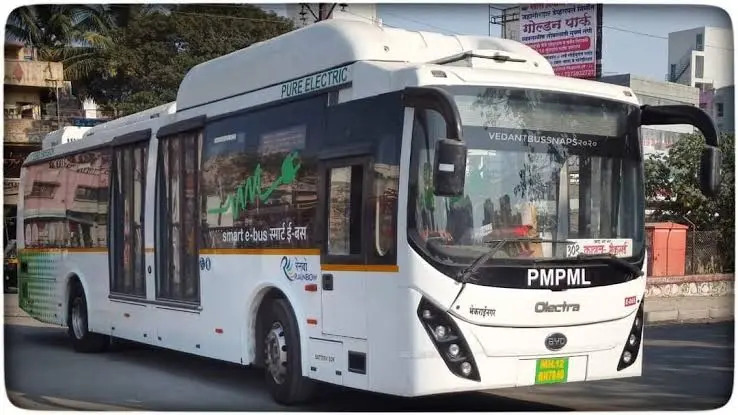
As thousands of secondary and higher secondary students begin travelling across Pune for their annual board examinations, the city’s public transport utility has introduced temporary mobility measures aimed at reducing commute-related stress during peak morning hours. The initiative, rolled out ahead of the SSC and HSC examination cycle, reflects a growing recognition of transport reliability as a critical civic service during high-stakes academic periods.
Under the new arrangement, students holding valid monthly or concessional passes issued by the city bus operator are being permitted to travel between their residences and examination centres without additional ticketing formalities for the duration of the exams. Transport officials said the decision is intended to remove friction points such as long queues, fare disputes, or boarding delays that frequently disrupt morning travel during congested hours. Beyond fare flexibility, operational changes have also been introduced to speed up access. Exam candidates are temporarily allowed to board buses from the front entrance, a deviation from standard protocols that prioritises time efficiency over routine passenger flow. According to transport planners, even small reductions in dwell time at bus stops can have a cumulative impact on punctuality during the early hours, when both student and office commuter volumes overlap.
To support implementation on the ground, supervisory staff are being deployed at high-footfall bus stops and transfer points across the city. Their role includes managing crowd movement, ensuring that students are not turned away from overcrowded services, and intervening where route-level demand exceeds capacity. Officials noted that data collected during this period will help refine future exam-season transport planning. Schools have also been asked to proactively share information on student travel patterns. Where clusters of candidates are commuting from the same neighbourhoods, the transport utility has indicated it will consider adding short-loop or extra services to prevent bottlenecks. Urban mobility experts say such coordination between education institutions and transport agencies remains underused but essential in large cities.
From a broader urban governance perspective, the Pune board exam buses initiative highlights how public transport can be adapted for social equity outcomes without major capital expenditure. By prioritising students during a time-sensitive period, the city reinforces the role of buses as inclusive infrastructure particularly important as private vehicle dependence continues to strain road capacity and air quality. As examination schedules extend over several weeks, transport authorities will be monitoring compliance, punctuality, and passenger feedback. If effectively managed, the measures could serve as a template for other Indian cities seeking low-cost, people-first mobility interventions during critical civic events.