Pune PNG Expansion Leaves Four Lakh Connections Inactive
Pune: Pune and Pimpri-Chinchwad’s piped gas network has reached around nine lakh households, but nearly 4 lakh connections remain inactive, exposing the gap between building urban utility infrastructure and getting residents to actually use it. The city’s gas distributor is now seeking to close that gap by September-end, as India also pushes to increase active domestic PNG connections.
Around five lakh households in the two cities have activated their connections, according to the latest figures. Infrastructure has also reached roughly 6,500 housing societies, meaning the remaining challenge is increasingly about household activation rather than extending pipelines alone. The distinction is important for Pune’s urban planning. A pipeline outside a flat does not automatically translate into a functioning household service. Residents may still face registration requirements, installation decisions, society-level coordination or concerns about cost and convenience. The result is an infrastructure network whose physical reach is considerably larger than its active user base. The current push comes as the Union government has introduced an incentive scheme aimed at increasing active domestic PNG connections. The scheme, effective from September 1, is intended to encourage city gas distribution companies to convert existing unbilled connections into working services and expand household access. The government says India currently has about 1.74 crore domestic PNG connections.
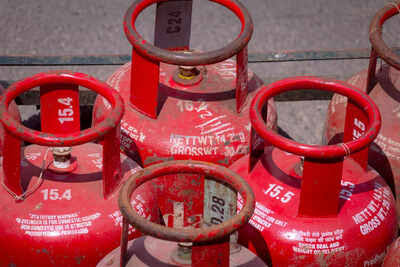
For Pune, activation could have wider implications for household energy management. PNG provides a continuous supply through a pipeline, removing the need to store and replace LPG cylinders. However, the environmental case needs to be considered carefully: natural gas is still a fossil fuel. Its urban value therefore lies more in improving energy access and reducing reliance on more carbon-intensive fuels than in treating it as a zero-carbon solution. The economics are also relevant. MNGL’s current domestic PNG tariff in Pune and Pimpri-Chinchwad is ₹51.50 per standard cubic metre, inclusive of applicable taxes. For households deciding whether to activate a connection, the actual cost comparison with LPG, connection-related charges and monthly consumption will matter more than network coverage alone.
Expansion is continuing. More than 95,000 additional PNG connections were reportedly prepared between January and August, while daily activation activity has risen to around 400 connections. At the same time, penetration remains more difficult in some of Pune’s older central neighbourhoods, where dense streets and established urban development can make utility expansion harder. The next measure of success will therefore be utilisation, not kilometres of pipeline laid. For Pune, the priority is to ensure that new energy infrastructure is affordable, accessible and properly maintained, while future investment increasingly shifts towards cleaner energy systems that can support the city’s long-term emissions goals.