


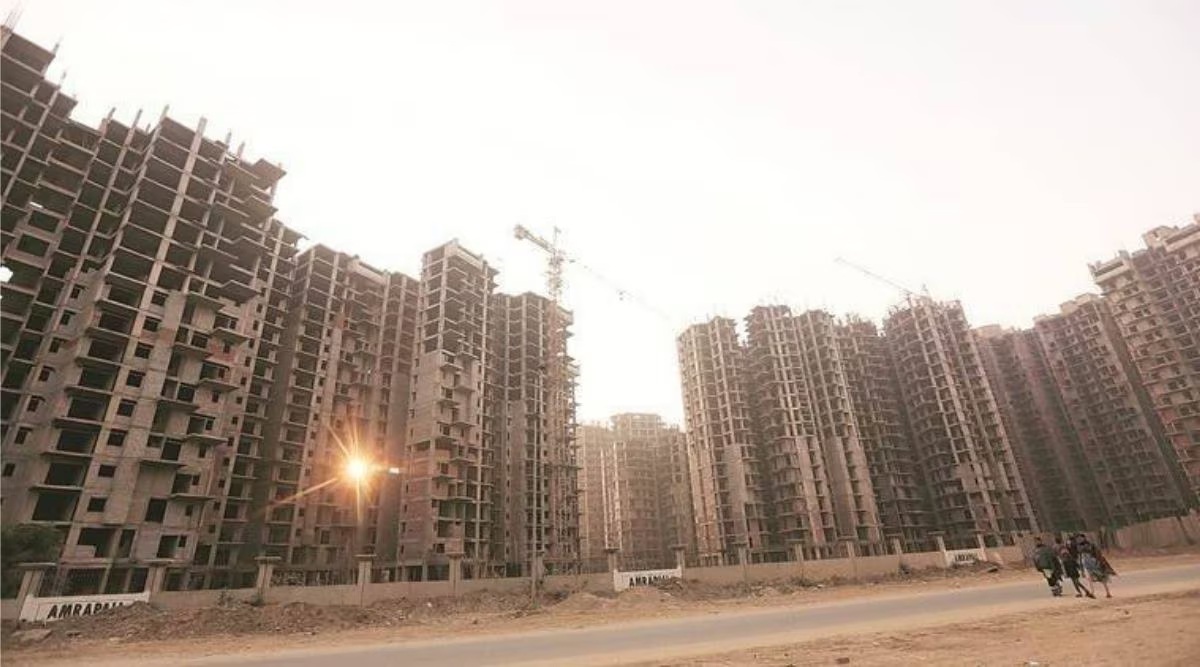
Urban planning across the Pune metropolitan region has entered a critical holding pattern, as the Pune Metropolitan Region Development Authority (PMRDA) remains unable to initiate its legally mandated structural plana prerequisite for future development. The prolonged delay is stalling transport, housing and infrastructure decisions across one of India’s fastest-growing urban regions, with direct consequences for mobility, investment confidence and long-term climate resilience.
The structural plan, intended to guide regional growth over several decades, has yet to move beyond the proposal stage. Urban planners note that without this foundational framework, PMRDA cannot legally draft or notify a new development plan, effectively freezing coordinated planning across Pune, Pimpri-Chinchwad and surrounding urbanising corridors. The impasse has been exacerbated by delays in appointing required town planning officials and the repeated enforcement of election-related codes of conduct. Senior officials familiar with the matter say the absence of designated planning personnel has created an institutional vacuum. Amendments to the Maharashtra Regional and Town Planning framework require that the structural plan be prepared by state-appointed town planning officers, rather than the authority itself. Despite PMRDA submitting formal requests months ago, approvals remain pending, leaving the regional body without the technical capacity to proceed.
The consequences are increasingly visible on the ground. Planned arterial roads, public transport alignments and utility corridors meant to decongest Pune’s core have been deferred, placing additional pressure on existing infrastructure. Traffic congestion, already among the most severe in Indian cities, continues to worsen as suburban growth outpaces transport provisioning. Urban economists warn that such delays increase long-term project costs and reduce the efficiency of future low-carbon mobility investments.The uncertainty has also begun to affect PMRDA’s land monetisation programme. The authority’s proposed e-auction of strategically located plots earmarked for education, healthcare, commercial activity and public amenities has been postponed until after the election period. These long-lease parcels were expected to support both civic infrastructure creation and non-tax revenue generation funds often reinvested into public transport and climate-adaptive urban services.
Industry experts point out that structural plans are not merely regulatory documents but instruments for balancing real estate expansion with environmental safeguards. By defining growth boundaries, transit-oriented development zones and infrastructure sequencing, such plans help cities avoid fragmented sprawl and reduce emissions from unplanned commuting. Urban governance specialists argue that resolving the PMRDA delay requires faster inter-departmental coordination and clearer timelines for statutory appointments. With the Pune metropolitan region projected to absorb millions more residents over the next two decades, the cost of inaction is rising. As election restrictions ease in the coming months, attention will turn to whether administrative approvals can be fast-tracked. For residents and businesses alike, the expectation is not speed alone, but a planning framework that delivers equitable access, resilient infrastructure and sustainable urban growth.
Also read : Pune infrastructure push gains orbital highway
