


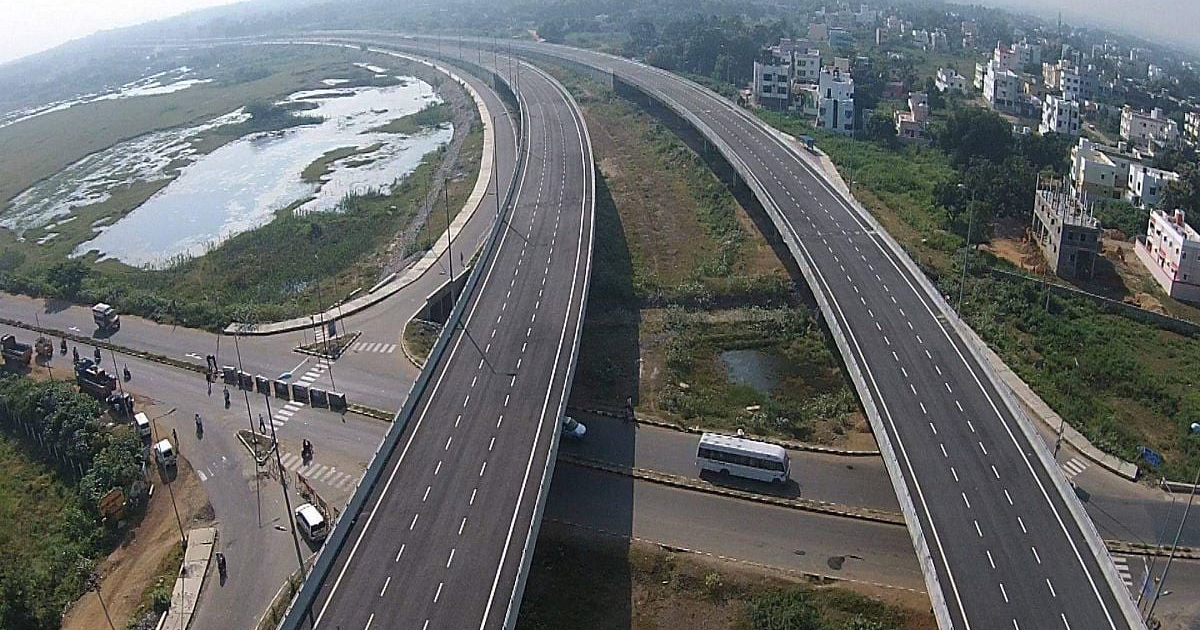
Pune, September 27, 2025: The Pune Metropolitan Region Development Authority (PMRDA) has unveiled a plan to construct a six-lane, 50-kilometre cement concrete road running parallel to the Hinjewadi–Shivajinagar Metro Line 3 at an estimated cost of ₹628 crore. Officials say the initiative aims to improve connectivity and streamline traffic management, but it has also sparked debate about whether it undermines the very purpose of mass transit.
According to senior PMRDA engineers, the project will involve widening existing four-lane stretches into six lanes. This will require land acquisition along certain portions, for which a consultant will be appointed to handle surveys, design, planning, and post-construction evaluation. The scope includes road construction, utility shifting, landscaped medians, electrification, and pedestrian-friendly infrastructure such as upgraded footpaths and cycle tracks.
Also Watch: An Exclusive Interview with Sanjeev Jaiswal (IAS), CEO MHADA
The proposed development, issued for tender earlier this week, will cover a 25-kilometre stretch on either side of the elevated Metro line. Along with four-lane carriageways, the plan outlines parking bays, bus lay-bys, service roads, and utility ducts. Trees on the alignment may either be cut or transplanted, with civic officials promising compensatory plantation.
While authorities insist the project will complement the Metro rather than compete with it, urban activists and transport experts remain unconvinced. Critics argue that such a large investment on road expansion may end up encouraging car use rather than fostering public transport reliance. “The Metro was conceptualised to reduce dependence on private vehicles. Building a parallel highway could dilute that purpose,” said one civic expert.
Daily commuters too have expressed scepticism, noting that Pune has a history of delays, poor maintenance, and overlapping road responsibilities between civic bodies. Concerns have also been raised about whether the project duplicates existing efforts rather than addressing congestion at its roots. “Why invest in wider roads when the city struggles to manage its current network?” asked a regular IT corridor traveller.
PMRDA, however, has defended the proposal as a long-term urban necessity. Officials emphasise that service roads alongside Metro corridors are standard practice in global metropolitan planning, ensuring last-mile connectivity, feeder services, and space for essential utilities. They argue that the road will be crucial for buses, emergency vehicles, and non-metro commuters who still rely on road infrastructure.As Pune balances rapid urbanisation with sustainable mobility, the ₹628 crore project highlights the ongoing tension between prioritising public transport and catering to private traffic. Whether it becomes a catalyst for seamless multi-modal connectivity or a setback for green urban planning will depend on its execution and integration with the city’s broader mobility vision.
