


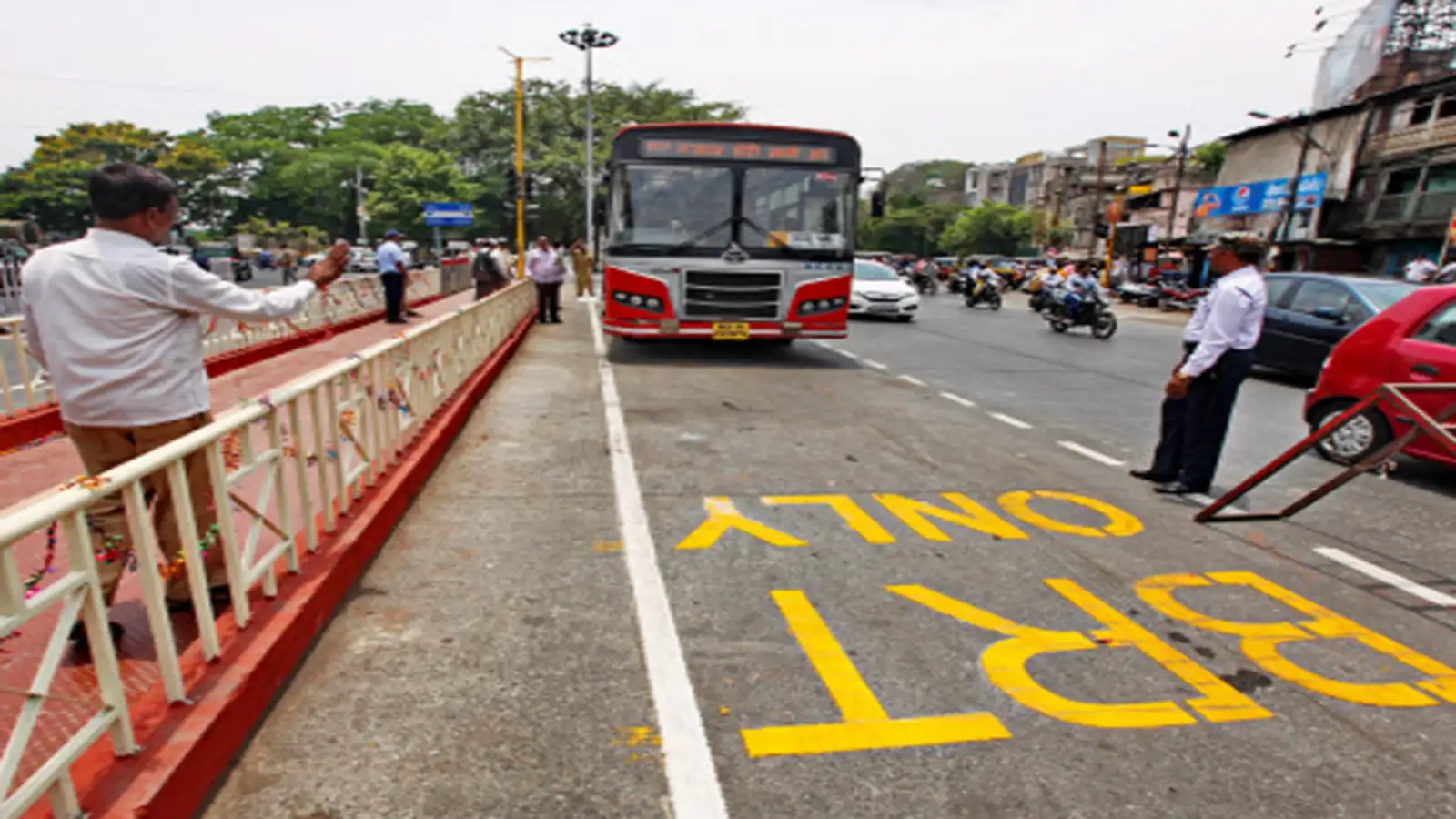
PMPML, the city’s public transport backbone, is navigating a mixed phase of operations post its recent fare hike. While ridership has shown a marginal dip, the utility’s revenue has surged significantly, indicating a complex response to fare restructuring. According to recent data shared by officials of the Pune Mahanagar Parivahan Mahamandal Limited (PMPML), average daily passenger footfall dropped from 10.16 lakh in May 2025 to 10.01 lakh in June. However, revenue leapt from Rs 44.11 crore to Rs 62.77 crore in the same period, marking a nearly 42% increase.
Officials attribute the fall in ridership to multiple factors, including the fare revision implemented on June 1 and the lack of substantial service upgrades. A senior PMPML official explained that even the reopening of schools on June 15 did not lead to the expected rise in passenger numbers. “Increased fares may have impacted travel frequency for some commuters. We are monitoring the situation and hope the passenger load improves this month,” the official said. Commuters, particularly regular pass users, appear divided in their response. While some acknowledge the improved revenue as a necessary step toward strengthening public transport, others voice concern over affordability. “The fare hike is significant, and the cost of monthly passes has increased. If the quality of service does not match the price, users may turn to private transport,” said a regular PMPML commuter.
Public transport advocacy groups are also weighing in. A study by Pune-based urban policy NGO Parisar highlights a broader issue. It found that PMPML’s ridership has grown by a mere 5% over the past decade despite the city’s expanding footprint. The number of buses per one lakh people has decreased from 34 to 22 in this period, far below the ideal benchmark of 60. According to experts from Parisar, the ridership decline, combined with the surge in private vehicle usage, paints a concerning picture. “With insufficient buses and fare hikes, commuters are being pushed towards less sustainable options. This will worsen congestion, pollution, and road safety,” said the organisation’s programme director.
In the financial year 2023-24, PMPML’s daily ridership had touched 12 lakh, but the numbers have been declining since. Experts note that while Pune Metro’s expansion may have pulled away a segment of bus users, the citywide public transport ecosystem as a whole isn’t witnessing meaningful growth. “PMPML remains the core surface mobility option. It requires strategic investment and reform to function optimally,” said an urban transport analyst. Amid these challenges, PMPML is pushing forward with its fleet expansion plans. The current operational fleet stands at around 2,000 buses, with roughly 1,700 in daily service. A senior PMPML executive confirmed that the agency has received 291 of the 400 contracted CNG buses, with the remaining expected shortly.
“We are also in the final stages of procurement for 1,000 additional CNG buses that will be owned by PMPML. Separately, another 1,000 electric buses are to be introduced under a central government scheme. With these additions, we expect our fleet size to touch 3,500 buses by next year,” the official added. However, stakeholders argue that fleet expansion must be matched with service quality improvements. Currently, many routes suffer from irregular schedules, inadequate frequency, and poor last-mile connectivity. “It is not just about having more buses; it is about ensuring they operate efficiently and serve the city’s growing and diverse travel demands,” said a member of a Pune-based commuter welfare association.
The fare hike has placed PMPML under closer scrutiny. While the revenue gains are promising from a financial sustainability standpoint, it has heightened expectations around service delivery. Urban mobility experts warn that fare increases without parallel service improvements can lead to a downward spiral of declining ridership and reduced public trust. Pune’s long-term mobility goals, as envisioned under its Comprehensive Mobility Plan (CMP), rely heavily on a strong public transport network. With rising fuel costs, road congestion, and air quality concerns, shifting more commuters to sustainable modes is essential.
Officials claim that the fare revision was a necessary step to meet operational costs and invest in new infrastructure. “Fare rationalisation was overdue. Our operational costs have gone up sharply due to inflation and fuel prices. However, we are committed to using this additional revenue to modernise our systems,” said a PMPML official. Planned enhancements include GPS-enabled real-time tracking, improved bus shelters, integrated ticketing with Metro and other urban modes, and the expansion of mobile app functionalities. Authorities hope these interventions, coupled with a growing fleet, will help rebuild commuter confidence.
Nonetheless, public reaction remains cautious. For many, PMPML’s ability to deliver on its promises will determine whether they stick with buses or explore alternatives. Ultimately, the current moment presents a pivotal juncture for PMPML. Balancing affordability, operational viability, and commuter satisfaction will be crucial to its future role in Pune’s urban transport framework. If executed with foresight, this phase could mark the start of a more robust, inclusive, and sustainable mobility narrative for the city.
Also Read : Pune Water Supply Cut On July 3 Amid Urgent Foothill Repairs
