


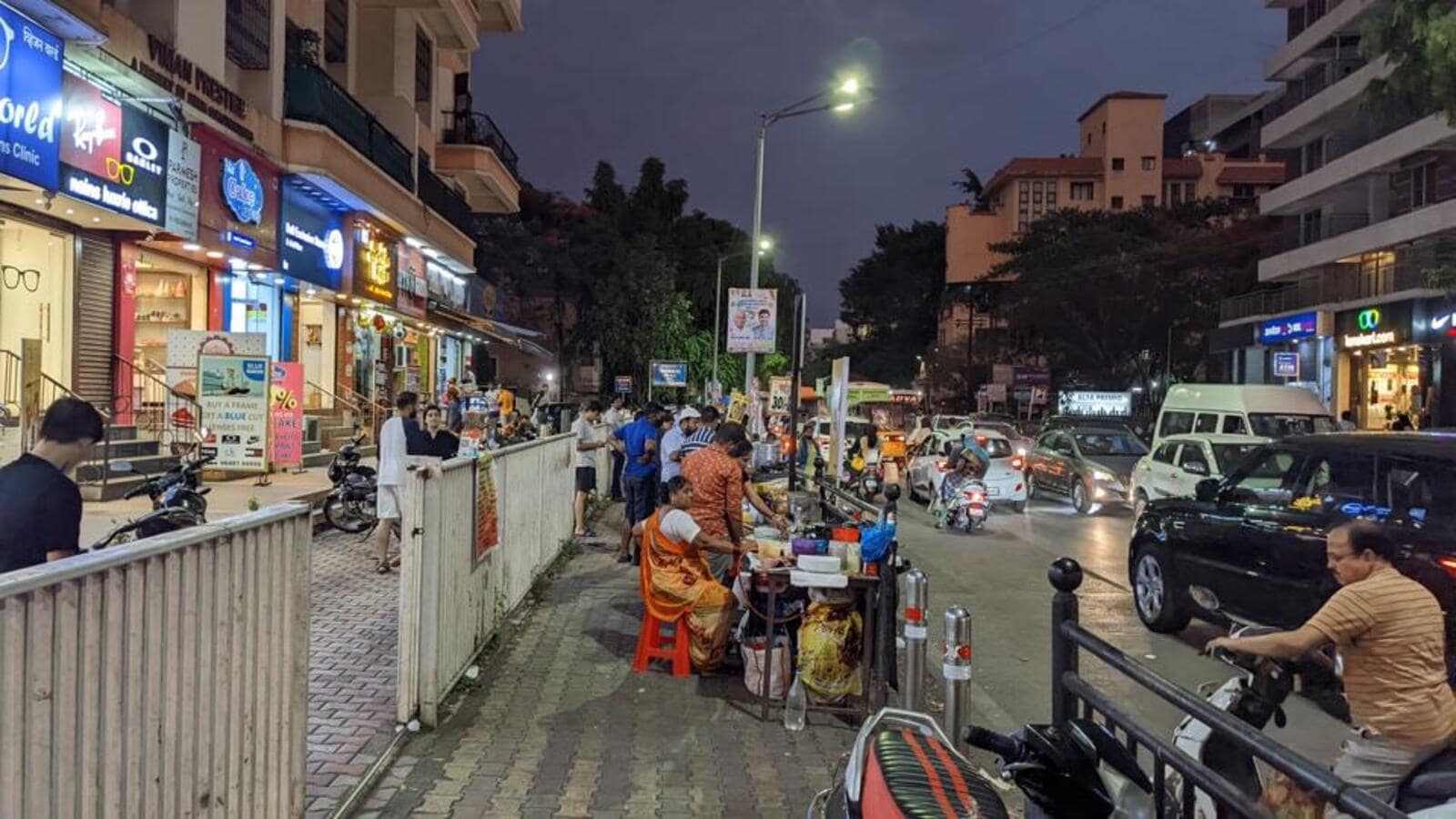
Pune’s popular shopping streets, including FC Road and JM Road, are witnessing a resurgence of illegal hawkers occupying footpaths, raising concerns among residents and urban planners alike. Despite Pune Municipal Corporation (PMC) claims of clearing unauthorised vendors, pedestrians report cramped walkways and frequent traffic snarls, highlighting gaps in enforcement and city management.
Civic officials insist that measures are being taken to control illegal hawking, with dedicated anti-encroachment teams monitoring key areas. “Teams have been deployed to evict unauthorised vendors, and fixed points have been established to manage street activity,” said an official from PMC’s anti-encroachment department. However, residents argue that these actions are sporadic and insufficient. Urban experts suggest that poor policy implementation and limited vendor licensing contribute to the persistent problem. According to data, PMC has authorised approximately 22,000 hawkers, yet around 38,000 applications were received when a citywide survey commenced four years ago. While 525 hawking zones have been finalised, the demand of 1,900 zones requested by vendor groups remains unmet, underscoring a structural gap in planning.
“The ineffective application of Supreme Court norms on vendor rehabilitation has led to the mushrooming of illegal hawking,” said an urban governance expert. “Licences have not been increased in line with population growth, and designated hawker zones remain underutilised. Vendors are entitled to earn their livelihoods, but civic authorities must provide adequate infrastructure such as sanitation, clean water, lighting, and security measures like CCTV in these zones.” Residents of high-traffic areas express daily frustrations. “Walking through FC Road is extremely challenging. Footpaths are fully occupied, and traffic congestion has become a routine ordeal,” said a local resident. The situation reflects a broader tension between urban mobility, civic regulation, and the economic needs of street vendors.
The Street Vendors (Protection of Livelihood and Regulation of Street Vending) Act, 2014, was enacted to ensure a balanced approach, safeguarding vendor livelihoods while maintaining urban order. It mandates the creation of Town Vending Committees and protects vendors from harassment. Nevertheless, the challenge remains in translating legislation into actionable urban planning that accommodates both citizens and vendors equitably. Experts argue that integrating eco-friendly and sustainable urban solutions could mitigate the issue, including the development of well-equipped, designated vending zones and continuous monitoring systems. Achieving zero-net carbon goals and equitable city spaces requires a more proactive approach that balances commercial activity with pedestrian safety and civic order.
Also Read: Mumbai Braces For Rain As Yellow Alert Issued For Thane And Palghar
