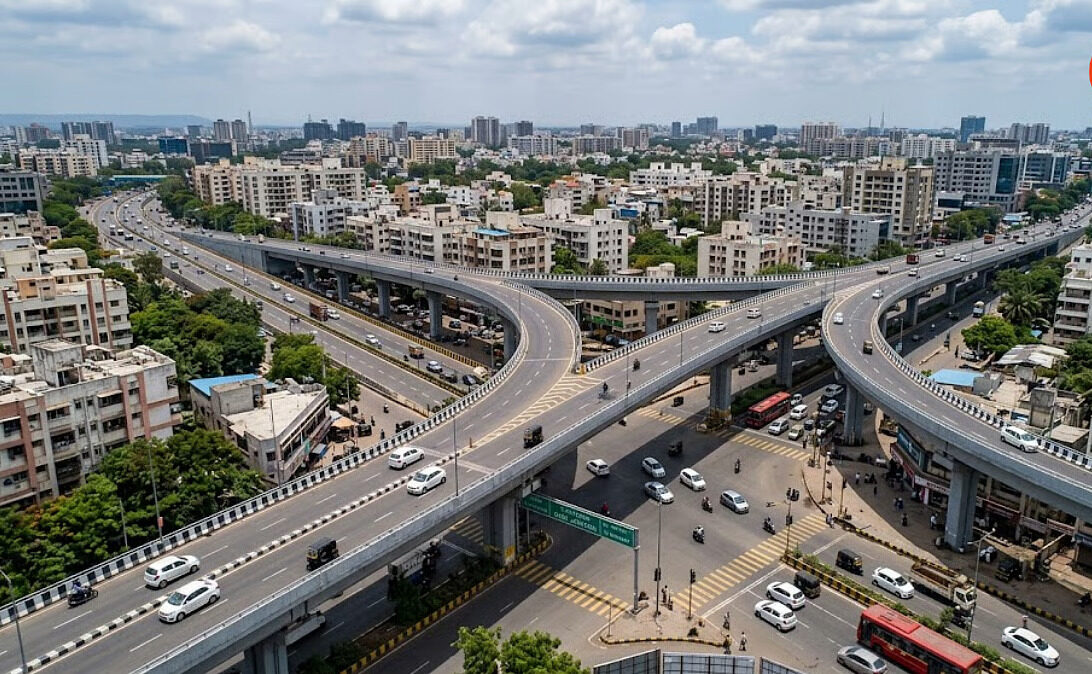
Pune’s civic administration is preparing to introduce a new elevated road structure in Shivajinagar to address persistent congestion along one of the city’s most critical transit corridors. The proposed project is aimed at easing daily traffic pressure in a zone that connects key institutional, commercial, and intercity routes, with implications for mobility, productivity, and urban efficiency.
The planned Shivajinagar flyover will create a direct elevated connection between an internal administrative hub and the Old Mumbai–Pune Highway, offering an alternative route for vehicles currently navigating congested intersections at ground level. This stretch, frequently used by office workers, students, and healthcare visitors, has long been identified as a bottleneck in Pune’s traffic network. Officials indicate that the design adopts a bifurcated structure, allowing traffic to split towards two major directions. One arm will channel vehicles towards the highway corridor linking Mumbai and other regional destinations, while the second will serve traffic heading towards key educational and institutional zones within the city. Urban mobility experts suggest that such Y-shaped designs can improve traffic distribution, especially at junctions with multiple directional demands.
The Shivajinagar flyover is expected to reduce dependency on surface-level intersections that currently experience high signal wait times and frequent congestion. By enabling uninterrupted movement for through-traffic, the project could also improve travel time reliability, a critical factor for economic activity and commuter efficiency in fast-growing urban centres. From an infrastructure planning perspective, the project reflects a continued reliance on grade separators to manage vehicular load. However, transport planners caution that while flyovers can deliver short-term congestion relief, their long-term impact depends on integration with public transport networks and demand management strategies. Pune is simultaneously expanding its metro network, and aligning road infrastructure with mass transit systems remains essential to avoid induced traffic growth.
The project has secured initial budgetary backing, with cost estimates covering construction, design, and associated works. However, timelines for execution are yet to be formally outlined, and further technical assessments are expected before construction begins. These may include traffic simulations, structural feasibility studies, and environmental evaluations. Environmental and social considerations are also likely to shape the final design. Experts emphasise that infrastructure projects in dense urban zones must account for noise levels, air quality, and pedestrian accessibility. Ensuring safe crossings and maintaining connectivity for non-motorised users will be critical to making the corridor inclusive.
For Pune’s evolving urban landscape, the Shivajinagar flyover represents both an opportunity and a test. While it promises immediate relief on a congested route, its success will depend on how effectively it is integrated into a broader mobility framework that prioritises sustainability, multimodal transport, and equitable access. As the city continues to expand, infrastructure interventions of this nature will need to balance capacity enhancement with long-term environmental and social resilience, ensuring that mobility solutions remain aligned with the needs of a diverse and growing population.
Pune Plans Y Shaped Flyover In Shivajinagar