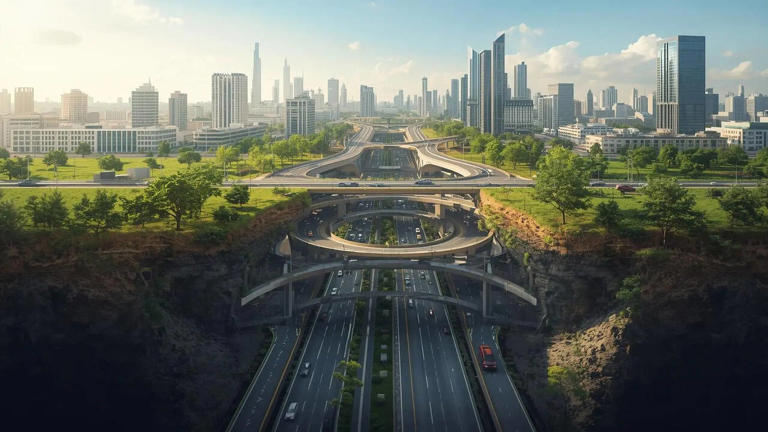
Pune is preparing for a major shift in how it builds mobility infrastructure as surface space across the city reaches saturation. With road widening stalled and elevated structures increasingly difficult to execute, the city administration has begun planning an underground road network spanning nearly 54 kilometres, an approach that could reshape how dense Indian cities respond to congestion without expanding their physical footprint. The initiative, currently at the planning stage, reflects a growing recognition that traditional traffic solutions are no longer viable in historic and tightly built urban cores. Civic officials say underground corridors are being explored to separate through-traffic from local movement, allowing surface streets to prioritise pedestrians, public transport and neighbourhood access while improving overall travel reliability.
Unlike earlier proposals led by regional agencies, the underground road programme will be designed and implemented directly by the city authority, citing jurisdictional control and alignment with city-specific mobility needs. An international consultant with experience in underground infrastructure is expected to be appointed shortly, with a detailed project report to follow within months. The scope will include traffic modelling, geological assessment, environmental risk mapping and integration with existing utilities. Urban planners note that underground roads are capital-intensive and technically complex, but may offer long-term value if deployed selectively. Rather than long-distance tunnels, city officials are signalling a preference for shorter, high-impact links between chronic bottlenecks particularly in areas where heritage precincts, narrow streets and dense commercial activity limit surface interventions.
The move also reflects a recalibration of Pune’s broader mobility strategy. While large tunnel projects have been positioned as congestion solutions in the past, internal assessments suggest that without careful traffic demand management, such infrastructure may merely shift bottlenecks rather than resolve them. City planners are therefore emphasising data-led corridor selection, supported by real-time traffic studies and future growth projections. From an economic standpoint, underground roads could protect productivity in one of India’s most important technology and manufacturing hubs, where commute delays translate into measurable business losses. At the same time, experts caution that such projects must be synchronised with mass transit investments, including metro expansion and bus network upgrades, to avoid inducing additional private vehicle demand.
Environmental and resilience considerations are also central to the planning process. Building below ground raises concerns around groundwater movement, flooding risk and construction emissions. However, planners argue that if paired with reduced surface traffic, the long-term gains lower air pollution, safer streets and improved public space could outweigh initial impacts. As the city moves toward detailed studies, the underground roads proposal marks a broader transition in Indian urban planning: from expanding outward to building smarter within existing limits. The next phase will test whether complex engineering can be aligned with inclusive, climate-conscious and people-first urban outcomes.