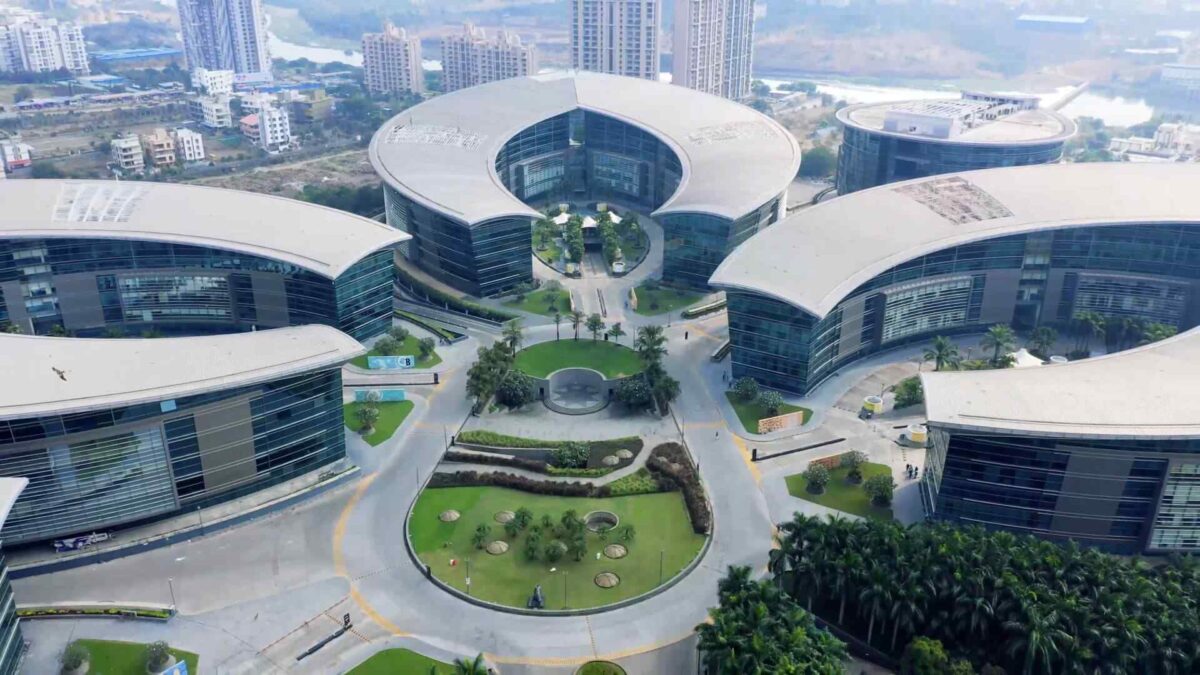
Authorities in Pune are advancing plans to establish a large-scale technology hub in Purandar, marking a strategic push to redistribute economic activity beyond the city’s saturated IT clusters. The proposed Pune Purandar IT park is expected to come up near the site earmarked for the region’s second international airport, positioning it as a future-ready employment and infrastructure node.
The initiative reflects a broader recalibration of Pune’s growth model. Established IT destinations such as Hinjewadi, Kharadi, and Magarpatta have witnessed rapid expansion over the past two decades, but now face mounting challenges linked to congestion, land scarcity, and pressure on civic services. By contrast, Purandar offers a relatively underdeveloped landscape with the potential for planned, large-format development. Officials indicate that the Pune Purandar IT park could be developed on a substantial land parcel spread across multiple villages in the taluka. The use of publicly owned land is expected to streamline early-stage processes, particularly land aggregation and approvals, which often delay urban infrastructure projects. The site is likely to be transferred to Maharashtra Industrial Development Corporation for execution, signalling a state-led approach to industrial planning.
A key factor shaping the project’s viability is its proximity to the proposed Purandar International Airport. Once operational, the airport is expected to enhance global connectivity for businesses, particularly those reliant on international travel and time-sensitive logistics. Urban economists note that such co-location of transport and employment infrastructure can accelerate the formation of new economic corridors. Beyond connectivity, the project is being positioned as a means to generate large-scale employment while easing spatial imbalances in the metropolitan region. Estimates from planning circles suggest that the hub could support tens of thousands of direct and indirect jobs, spanning technology services, support industries, and ancillary sectors such as logistics and hospitality.
However, experts caution that the long-term success of the Pune Purandar IT park will depend on execution quality rather than scale alone. Previous IT hubs in India have often outpaced supporting infrastructure, leading to traffic congestion and uneven access to housing and public services. Urban planners emphasise the need for integrated development, including public transport links, affordable housing, water management systems, and green infrastructure. Environmental considerations are also likely to shape the project’s trajectory. Purandar lies within a semi-rural landscape that could face ecological stress if development is not carefully managed. Incorporating low-carbon design, efficient land use, and climate-resilient infrastructure will be critical to ensuring that expansion does not compromise long-term sustainability. As planning progresses, the project is expected to influence real estate sentiment in southern Pune while redefining how emerging cities distribute growth. If aligned with transport, housing, and environmental frameworks, the new IT hub could offer a template for decentralised, balanced urbanisation in high-growth regions.
Pune Plans Purandar IT Park Near New Airport