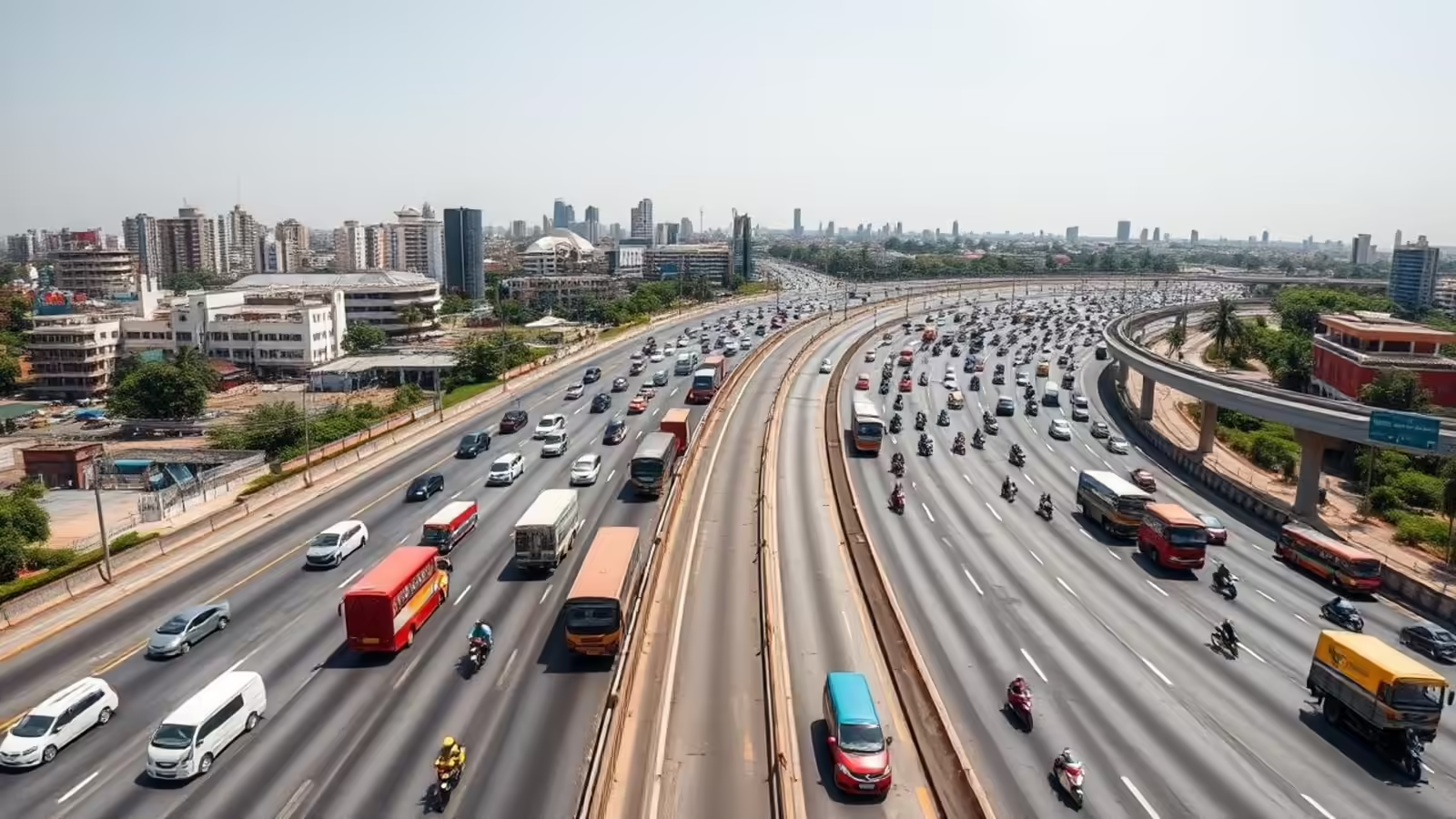
After a year marked by congestion, service disruptions and civic fatigue, Pune is entering 2026 with a rare window for structural repair. Multiple long-delayed transport, water and mobility projects are scheduled to be completed or substantially advanced over the next twelve months, offering the city a chance to stabilise daily life and reset its urban growth trajectory. For residents and businesses alike, the outcome will shape how liveable and competitive Pune remains as it expands.
Several road and junction upgrades are approaching critical milestones. A key flyover near the city’s largest public university is expected to open fully in 2026, easing one of Pune’s most persistent traffic choke points and improving east–west connectivity between employment hubs and residential neighbourhoods. Urban planners say this corridor has long constrained public transport reliability and emergency response times. In the eastern suburbs, an integrated flyover and metro structure over the Mula–Mutha river is nearing completion. Designed to separate long-distance traffic from local movement, the project is expected to reduce pressure on surface roads serving Hadapsar and Kharadi areas that have seen rapid real estate growth but limited supporting infrastructure. Transport experts caution that success will depend on pedestrian safety and last-mile planning, not just vehicle throughput.
National highway upgrades are also set to alter traffic patterns. A six-lane elevated corridor at a major southern junction is scheduled to open by mid-2026, allowing through-traffic to bypass one of the city’s most congested intersections. Freight operators and logistics firms expect this to reduce travel time variability on regional routes connecting Pune to southern Maharashtra and Karnataka.Closer to the core city, reconstruction of a critical bridge near the main railway station is progressing on a fast-track timeline. Once reopened, it will restore an essential link between commercial districts, transit nodes and high-density residential areas. Real estate analysts note that prolonged closure had affected property access and retail footfall in surrounding neighbourhoods.
Beyond roads, Pune infrastructure projects in 2026 extend to mass transit and utilities. Metro expansion remains central to the city’s mobility strategy, with a technology corridor line expected to become operational and further extensions moving into active construction. Authorities are also planning a larger bus fleet and improved suburban rail coordination to reduce dependence on private vehicles.
Water security remains another pressure point. Large-diameter pipelines and new sourcing initiatives are underway to address chronic supply gaps in both Pune and Pimpri-Chinchwad, where intermittent water delivery has affected households and industrial users alike. Environmental specialists stress that long-term resilience will require demand management alongside new supply.
Looking outward, early works on ring roads, regional expressway links and a new airport are expected to begin, signalling a shift towards decentralised growth across the district. Combined with the return of elected local bodies, 2026 could mark a more accountable phase of urban governance. Whether Pune’s infrastructure projects translate into measurable quality-of-life gains will depend on execution, coordination and maintenance. For a city at an inflection point, the year ahead may determine if recovery turns into renewal.
Pune Plans Major Infrastructure Push In 2026