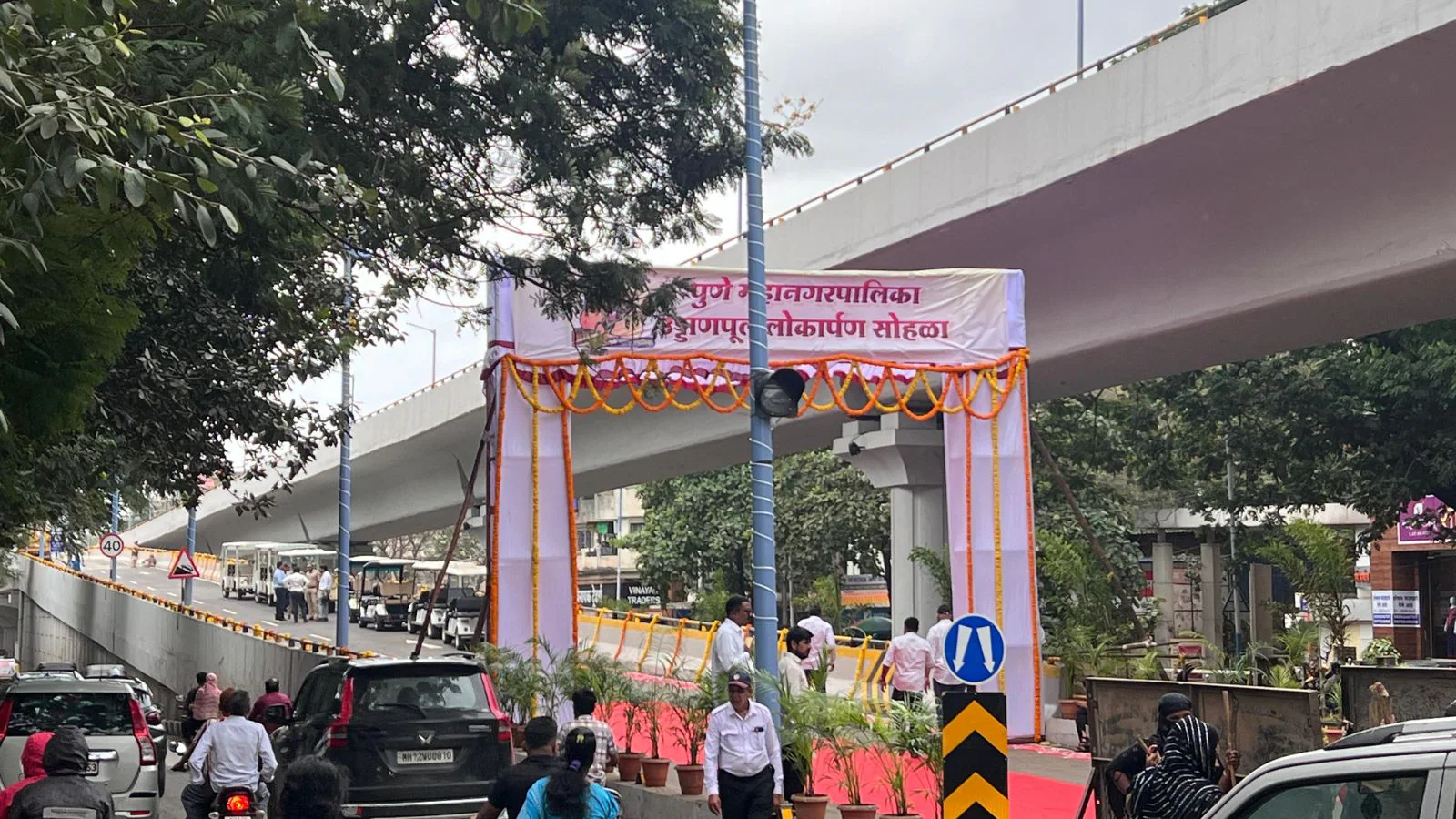
A fresh infrastructure push is underway in Pune as authorities move to examine an elevated corridor along the Mutha river, aimed at easing chronic congestion on the city’s western transport spine. The proposed Pune elevated road plan is being positioned as a critical intervention to decongest Sinhagad Road, a corridor that has struggled to keep pace with rapid residential expansion and rising vehicle ownership.
The state’s urban development machinery has asked the municipal administration to prepare a detailed feasibility report for the project, which would link Vitthalwadi to Nanded City. This stretch cuts through densely populated neighbourhoods where daily commutes have become increasingly unpredictable, affecting both productivity and quality of life. Sinhagad Road has evolved into a key connector between the city’s core and its fast-growing outskirts, carrying traffic from multiple directions, including spillover from the Pune–Bengaluru highway. Over time, the corridor has seen a surge in private vehicles alongside steady real estate growth, resulting in near-continuous congestion rather than peak-hour bottlenecks. Urban mobility experts note that such patterns signal structural capacity constraints rather than temporary traffic issues.
The Pune elevated road plan attempts to address this by introducing a parallel, grade-separated route that could divert through-traffic away from local streets. Elevated corridors, which run above ground level, are typically designed to minimise land acquisition challenges while improving travel speeds. However, their success depends heavily on integration with existing road networks and public transport systems. This is not the first time riverside infrastructure has been explored in the city. Previous efforts to develop road links along the Mutha river encountered legal and environmental hurdles, particularly around river ecology and floodplain management. In at least one instance, non-compliance with environmental safeguards led to judicial intervention and the eventual removal of constructed sections, highlighting the risks of inadequate planning.
Learning from past setbacks, the current Pune elevated road plan is expected to incorporate design strategies that reduce ecological disruption, such as limiting direct interference with the riverbed and ensuring compliance with environmental norms. Urban planners argue that such projects must balance mobility gains with climate resilience, especially as cities face increasing risks from flooding and extreme weather events.
Beyond engineering considerations, the proposal also raises broader questions about Pune’s long-term mobility strategy. While road expansion can offer short-term relief, experts caution that without parallel investments in mass transit and demand management, congestion may simply shift rather than disappear. For now, the project remains at a preliminary stage, with the detailed report expected to assess technical feasibility, environmental impact, and financial viability. Its findings will likely shape whether the corridor moves forward as a flagship intervention or prompts a rethink of how Pune addresses the complex interplay between growth, mobility, and sustainability.