


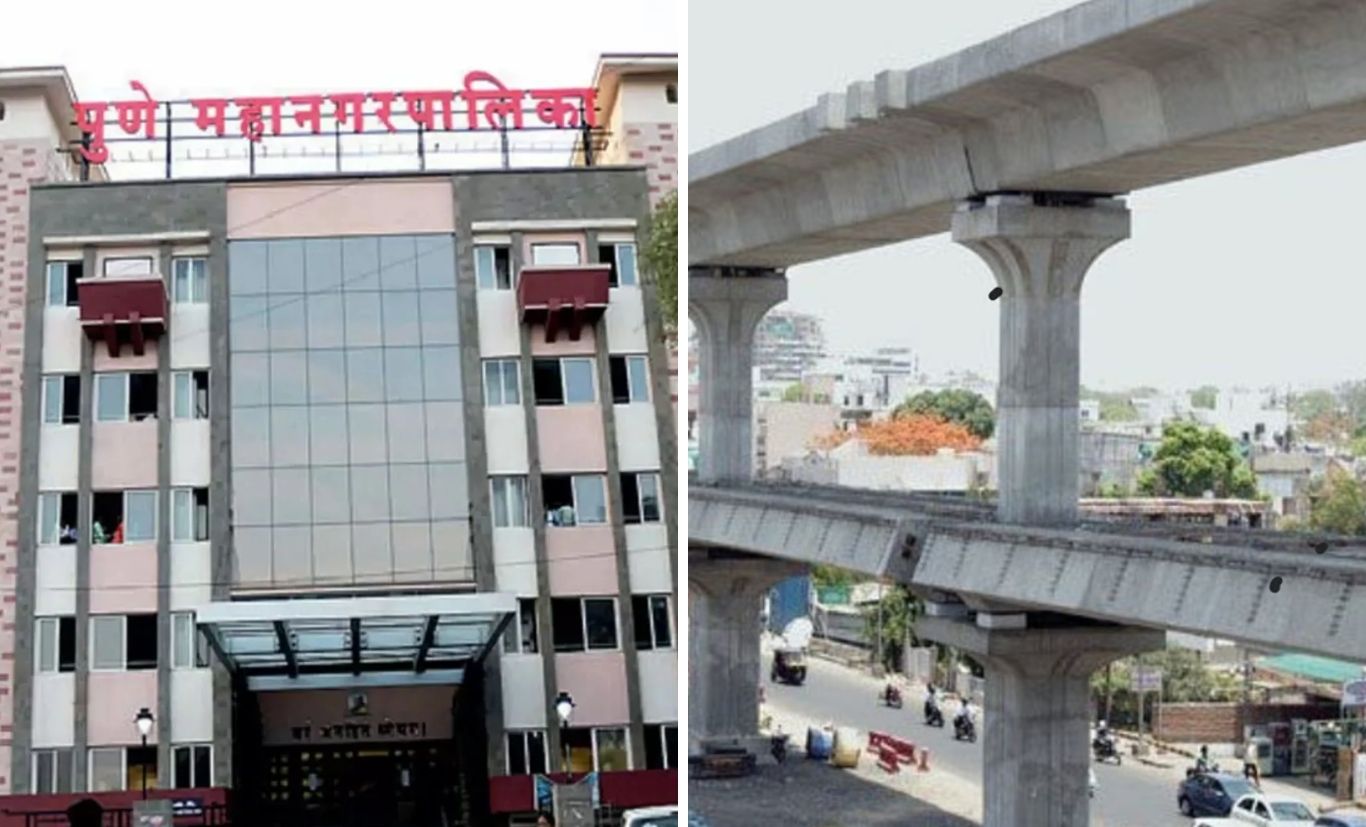
Pune grapples with increasing traffic congestion, the Pune Municipal Corporation (PMC) has unveiled an ambitious proposal to build 10 new double-decker flyovers across the city.
The project aims to address the city’s growing mobility challenges by optimizing the available urban space, effectively tackling the escalating traffic problems that have been affecting commuters daily. The proposed flyovers will be designed with dual-deck structures, where the lower deck will accommodate vehicular traffic, and the upper deck will be dedicated to metro rail services. This integration of road and metro infrastructure is part of a broader strategy to improve connectivity and ease congestion in key areas of the city. Similar double-decker flyovers, such as those at Nal Stop on Karve Road and near Savitribai Phule Pune University on Ganeshkhind Road, have already proven successful in easing traffic congestion. With the new proposal, PMC hopes to replicate these successes in more parts of the city, particularly in high-traffic zones.
The flyover locations include major chokepoints such as Mundhwa Mahatma Phule Chowk, Kalubai Chowk on Solapur Road, Dandekar Pul Chowk, Wagholi Awhalwadi Chowk, Ambedkar Chowk in Warje, Kothrud Bus Depot (Bhusari Colony), Golibar Maidan Chowk, Viman Nagar Chowk, Wanowrie Fatimanagar Chowk, and Ravidarshan in Manjari. These locations have been chosen based on extensive traffic analysis, considering both the current flow of traffic and the projected population growth in these areas. According to initial estimates, the cost of constructing the vehicular decks of the flyovers is expected to be around ₹60 crore for the Mundhwa bridge, ₹35 crore for Kalubai Chowk, and ₹45 crore for Dandekar Pul Chowk.
One of the significant benefits of this initiative is the collaboration between PMC and metro development agencies. Pune’s metro system has been a game-changer in the city’s public transport landscape, but the need to integrate metro services with the city’s road network has become even more pressing. To address this, PMC is collaborating with agencies such as the Maharashtra Metro Rail Corporation Ltd (Maha-Metro) and Pune Metropolitan Region Development Authority (PMRDA). The plan is for PMC to fund the construction of the lower vehicular decks, while the metro development agencies will finance the upper metro rail decks. This integrated approach reflects a shift towards more sustainable, multi-modal urban infrastructure. The shared bridge model not only optimizes the available space but also ensures that both road traffic and metro services can coexist, thereby reducing the need for separate infrastructure projects. This collaboration is expected to reduce costs, improve efficiency, and enhance connectivity across the city.
As the feasibility study continues, experts are closely monitoring the impact of this project on Pune’s overall urban mobility. Early projections suggest that these flyovers will provide significant relief to commuters, reducing travel time and improving the flow of traffic in areas that are currently gridlocked. The integration of metro and road infrastructure also aligns with the city’s long-term goals of reducing dependency on private vehicles, which is essential for managing Pune’s growth in a sustainable manner. The double-decker flyover project also reflects a growing trend of sustainable urban development in Indian cities. As cities like Pune face mounting challenges related to traffic congestion, air pollution, and limited urban space, planners are increasingly turning to innovative infrastructure solutions. The double-decker flyover concept is one such solution that can help balance the growing demand for road space with the need to expand public transportation networks, which is crucial for reducing carbon emissions.
Despite the promise of these flyovers, urban planning experts caution that infrastructure alone may not be enough to solve the city’s traffic woes. Experts suggest that these projects need to be part of a larger, holistic strategy that also includes improving pedestrian facilities, expanding public transport options, and encouraging the use of eco-friendly vehicles. Furthermore, ensuring that these flyovers are accessible and inclusive for all sections of the population, including women, the elderly, and persons with disabilities, will be crucial for their success. Another consideration that experts highlight is the environmental impact of large-scale construction projects. While the double-decker flyovers will contribute to easing traffic congestion, construction activity itself can cause disruption to the environment and residents. The PMC has pledged to follow best practices in environmental management, ensuring that the construction process minimizes damage to the local ecosystem and reduces pollution during the building phase.
As Pune continues to grow and urbanize, projects like these double-decker flyovers represent a step towards more sustainable and integrated urban development. With a focus on maximizing space, improving mobility, and integrating multiple forms of transport, Pune’s plan for double-decker flyovers is a forward-thinking solution to one of the city’s most pressing challenges.
Also Read : PMC Installs Air Filters to Tackle Cremation Smoke
