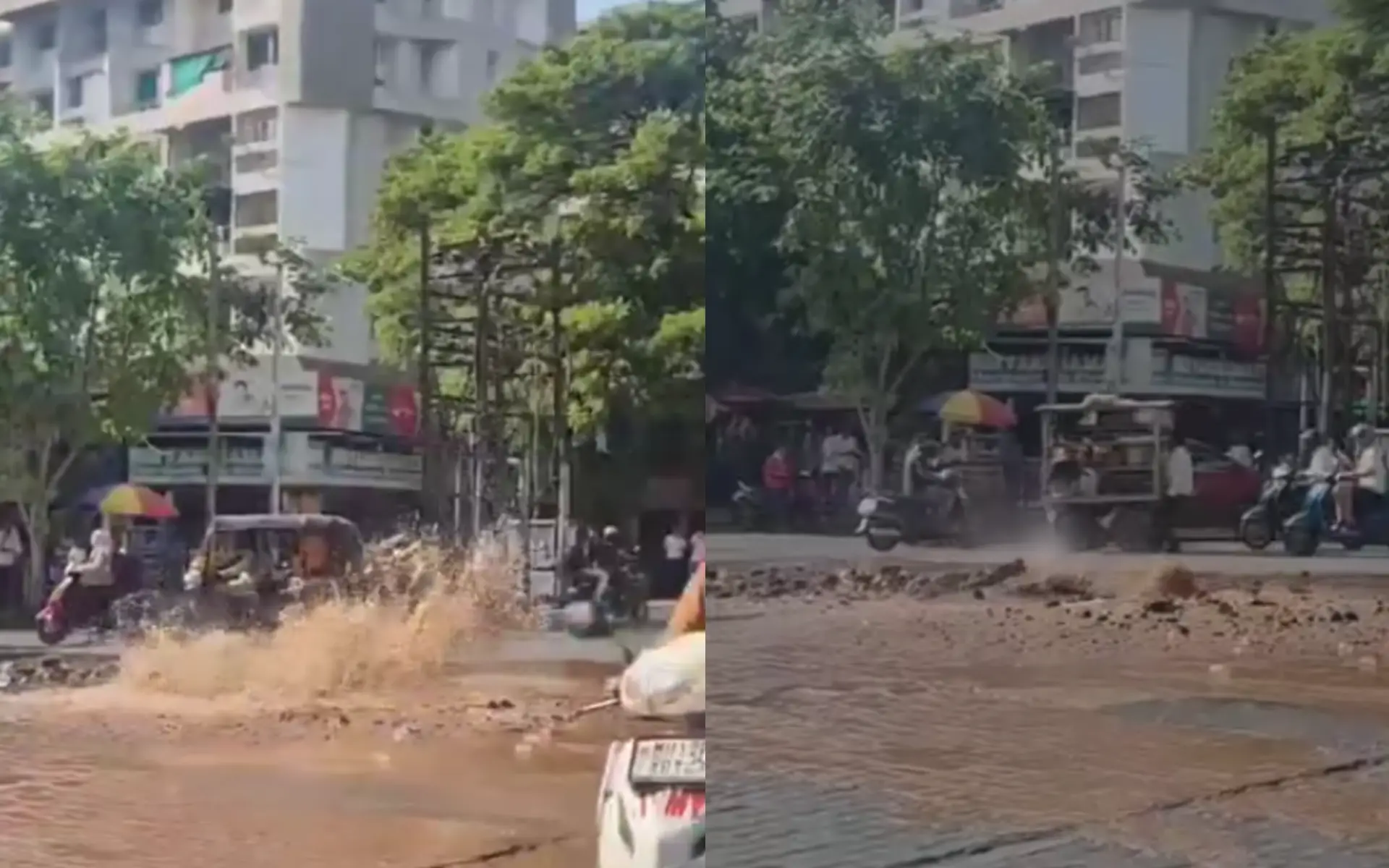
Pune Pipeline Burst Disrupts Traffic In Kalyani Nagar
A sudden rupture in an underground water pipeline in Pune’s Kalyani Nagar triggered widespread waterlogging on Saturday afternoon, disrupting traffic flow and raising fresh concerns over the resilience of the city’s ageing utility infrastructure. The incident unfolded during peak hours, highlighting the vulnerability of critical urban systems in high-density neighbourhoods.
The Pune pipeline burst led to a rapid outflow of water onto a key arterial road, submerging stretches within minutes and forcing vehicles to slow down or reroute. Commuters navigating the area faced delays as water accumulation reduced road usability and increased the risk of vehicle damage. Pedestrian movement was also affected, with limited safe passage across flooded sections.Urban infrastructure experts note that such incidents are not isolated but indicative of broader systemic challenges. In rapidly expanding cities like Pune, underground utility networks—often decades old—are under increasing stress due to rising demand, construction activity, and inconsistent maintenance practices. A Pune pipeline burst of this nature points to gaps in monitoring and preventive upkeep rather than a singular operational failure.
The affected locality, a mixed-use urban zone with residential complexes, offices, and commercial establishments, has seen significant development over the past decade. With higher water demand and frequent road excavation for utility works, the pressure on existing pipelines has intensified. Experts suggest that without coordinated infrastructure planning, such failures may become more frequent. Beyond immediate disruption, the Pune pipeline burst also raises questions about urban flood preparedness. Even in the absence of rainfall, sudden water discharge from infrastructure failures can overwhelm drainage systems, leading to temporary flooding. This underscores the need for integrated planning between water supply networks and stormwater management systems.
Civic authorities are expected to undertake emergency repairs and assess the extent of damage to restore normal supply and traffic conditions. However, long-term solutions will require a shift towards data-driven asset management, including regular pipeline audits, pressure monitoring, and timely replacement of ageing infrastructure. From a sustainability perspective, water loss due to pipeline failures represents a significant inefficiency, particularly in cities already facing resource constraints. Reducing non-revenue water—losses that occur before water reaches consumers—is increasingly seen as essential for ensuring equitable and reliable supply.
For residents and daily commuters, the incident serves as a reminder of the interconnected nature of urban infrastructure, where a single failure can disrupt mobility, water access, and local economic activity. As Pune continues to grow, strengthening the resilience of its utility networks will be critical to maintaining service reliability and supporting sustainable urban development.
Pune Pipeline Burst Disrupts Traffic In Kalyani Nagar