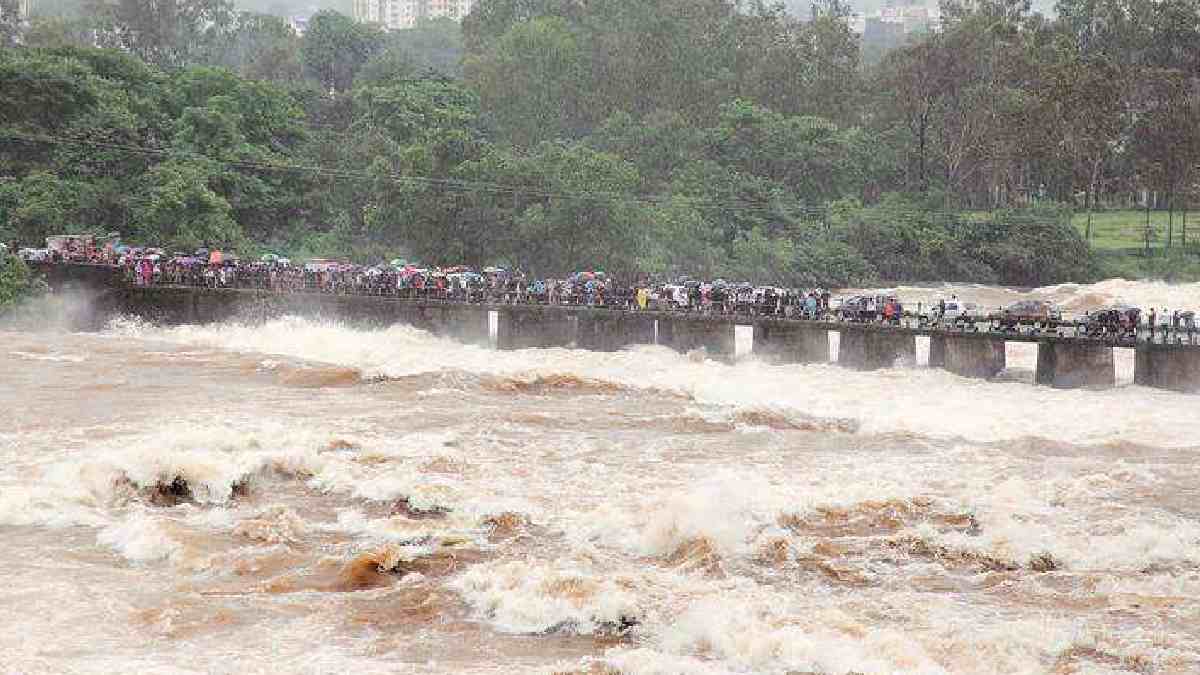
Pune on flood alert as Khadakwasla dam water released
Pune authorities issued a flood alert on Tuesday after heavy rainfall in the district’s catchment areas led to a sharp rise in water levels across reservoirs. The situation prompted controlled water discharge from the Khadakwasla dam into the Mutha River, raising concerns for low-lying localities along its banks.
Officials confirmed that the release of water from the dam had reached 19,334 cusecs by Tuesday afternoon and was expected to increase further to over 25,000 cusecs by evening. The rising inflows, coupled with continuous heavy rainfall across the ghat sections and feeder dams, have placed downstream areas on heightened alert.The irrigation department has cautioned residents near the riverbed to remain vigilant, stressing that the volume of discharge could be raised further if rainfall continues unabated. The decision underscores the delicate balance between safeguarding the structural integrity of the dam and protecting lives and property downstream.
The meteorological department has already placed Pune district under a red alert for the next 24 hours, warning of intense rainfall in the hilly catchment regions. These zones feed the Khadakwasla, Panshet, Warasgaon and Temghar reservoirs, which play a crucial role in the water supply and flood management of Pune city.Officials emphasised that coordinated measures are in place between civic authorities, emergency response teams and irrigation engineers to manage the situation. They confirmed that continuous monitoring of inflows is underway, ensuring that precautionary measures are enforced to reduce the risk of flooding.
While the release of water is a routine monsoon operation, the frequency and intensity of rainfall this season have reignited discussions on urban flood preparedness. Experts argue that Pune’s growing urban footprint has outpaced its drainage and flood management infrastructure, leaving vulnerable communities exposed to seasonal climate risks.The discharge of water also brings into focus the city’s broader climate resilience agenda. Environmental planners have stressed the need for integrating sustainable urban designs, eco-friendly infrastructure and floodplain management to mitigate future risks. With rainfall patterns becoming more erratic under the impact of climate change, the emphasis is shifting from emergency response to long-term resilience planning.
For residents of riverside neighbourhoods, the immediate concern remains safety. Authorities have urged people in flood-prone areas to stay alert, avoid venturing near swollen riverbanks, and heed evacuation advisories if required. As the monsoon intensifies, the city’s ability to balance water security, dam safety and flood protection will be tested once again.At present, officials remain cautious but assured that comprehensive efforts are being made to manage water flows responsibly. However, if the downpour persists in the catchment areas, Pune could face a flood-like scenario similar to past years, underlining the city’s vulnerability to extreme weather.