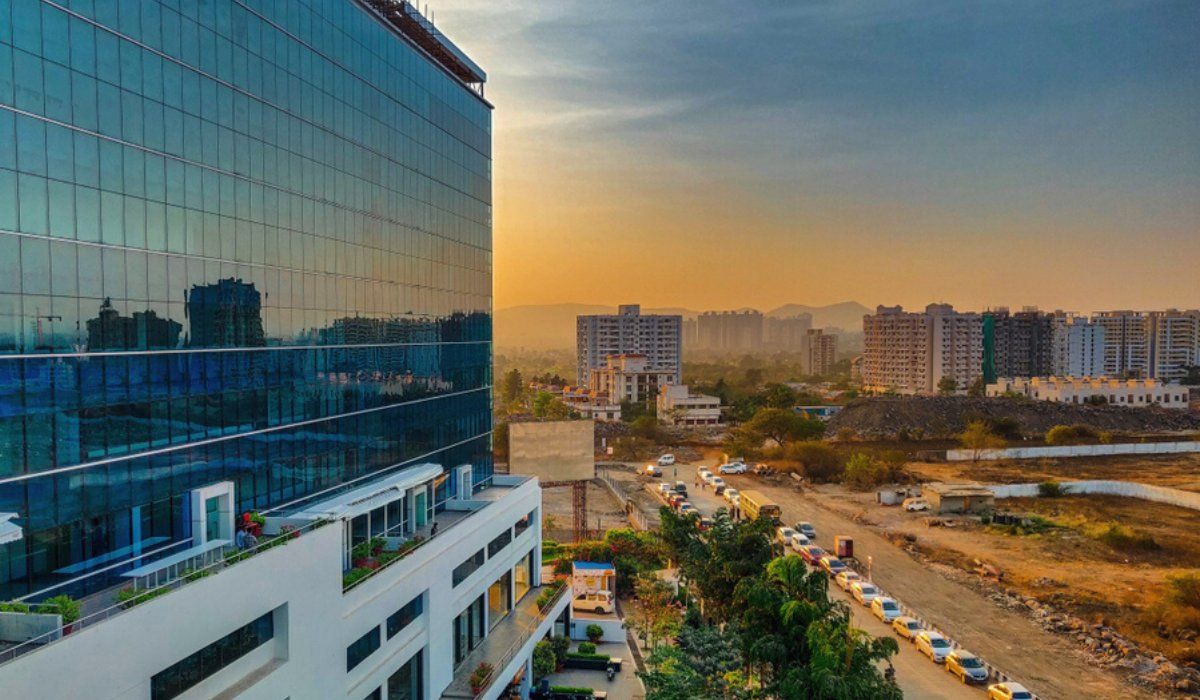
A large integrated township in North Hinjawadi has drawn renewed national attention after senior voices from India’s real estate advisory and investment ecosystem visited the Pune site this week, reflecting the growing strategic importance of western Pune in the country’s urban expansion narrative. The 100-plus acre development, positioned along the fast-evolving IT corridor, is being planned as a mixed-use township combining residential clusters with social infrastructure and commercial components.
The visit, which included interactions with the project’s leadership team, focused on long-term urban planning, infrastructure integration and the role of master-planned communities in shaping Pune’s next growth cycle. The Pune North Hinjawadi township sits within a micro-market that has witnessed accelerated transformation over the past decade. Originally driven by IT park expansion, the corridor has evolved into a mixed urban district, attracting housing demand from technology professionals, entrepreneurs and service-sector employees. With metro connectivity under development and road upgrades linking the area to central Pune and the Mumbai–Pune Expressway, land values in the belt have steadily appreciated.
Urban planners say the appeal of integrated townships lies in their ability to internalise infrastructure such as water management systems, waste treatment, mobility planning and open spaces rather than relying entirely on overstretched civic networks. In high-growth cities like Pune, this model is increasingly viewed as a way to balance density with liveability. Participants in the closed-door discussions highlighted how large-format developments are responding to evolving buyer preferences. Post-pandemic demand has shifted towards larger units, shared amenities and community-focused layouts. Developers are also incorporating digital planning tools and sustainability features, reflecting rising environmental awareness among homebuyers.
However, experts caution that the long-term success of the Pune North Hinjawadi township and similar projects will depend on synchronised public infrastructure. Traffic congestion, last-mile connectivity and pressure on groundwater remain structural challenges in western Pune. Without coordinated planning between private developers and municipal authorities, large townships risk becoming isolated enclaves. From a market perspective, integrated projects of this scale often act as catalysts for ancillary development. Retail centres, educational institutions and healthcare facilities typically follow residential absorption, expanding employment opportunities within the local economy.
This clustering effect can reduce commute times and support more balanced urban growth. Real estate analysts observe that national attention towards Pune underscores its positioning as a secondary city with metropolitan characteristicsstrong employment generation, a diversified economy and relative affordability compared to Mumbai or Bengaluru. As Pune continues to urbanise, the emphasis is shifting from standalone housing towers to ecosystem-led planning. The Pune North Hinjawadi township reflects this transition, signalling how developers are attempting to align scale with sustainability and long-term resilience. Whether such projects deliver inclusive and climate-aware urban growth will depend not just on design intent, but on execution, governance alignment and sustained infrastructure investment in the years ahead.