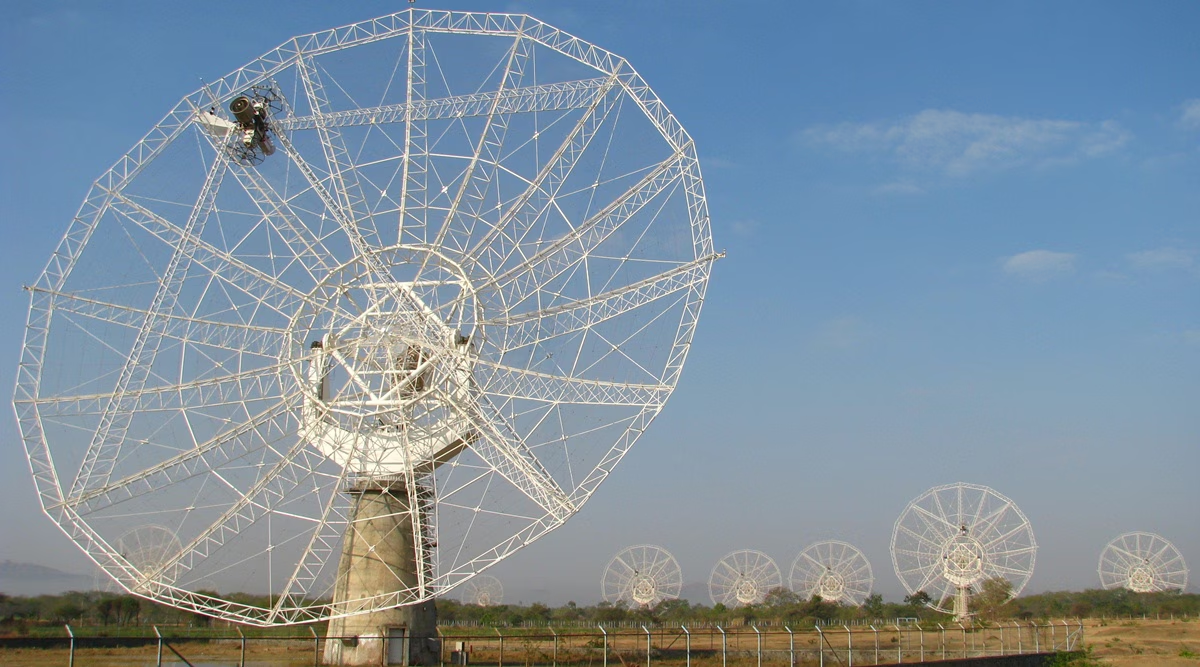
The proposed Pune-Nashik high-speed railway corridor is undergoing realignment to ensure the uninterrupted operation of the Giant Metrewave Radio Telescope (GMRT) located in Khodad village, Pune district.
Union Railway Minister Ashwini Vaishnaw confirmed that the new alignment would avoid interference with the GMRT, a critical facility for radio astronomy research.The GMRT, established by the National Centre for Radio Astrophysics (NCRA) under the Tata Institute of Fundamental Research (TIFR), is the world’s largest and most sensitive low-frequency radio telescope. Its array of 30 parabolic dishes, each 45 meters in diameter, spans approximately 25 kilometers in a Y-shaped configuration. The facility operates within the 150–1420 MHz frequency range, making it highly susceptible to electromagnetic interference.
Concerns arose when the initial proposed route for the Pune-Nashik railway corridor was found to pass within close proximity to the GMRT array, potentially compromising its sensitive observations. Electromagnetic emissions from train operations, including sparks from pantographs and wireless communication systems, could disrupt the telescope’s data collection capabilities. In response, the scientific community urged the authorities to reconsider the alignment to protect the integrity of the GMRT’s research.
Minister Vaishnaw emphasized that relocating the GMRT was not a viable option, given its international significance and the need for consensus among the 23 countries involved in its operation. He stated, “Shifting the GMRT would mean weakening one of India’s greatest scientific strengths.” Consequently, the railway ministry is exploring alternative alignments that would mitigate potential interference with the telescope.Two potential realignment options are under consideration:Manmad-Ahilyanagar-Daund Route: This alignment would reroute the railway line along an existing corridor, minimizing proximity to the GMRT facility.
1. Nashik-Shirdi-Ahilyanagar-Pune Route: This proposed high-speed route would connect Nashik to Pune via Shirdi and Ahilyanagar, bypassing the GMRT area.Both options aim to preserve the scientific operations of the GMRT while facilitating the development of the Pune-Nashik railway corridor. The final decision on the alignment will be made after thorough consultations with all stakeholders, including the Maharashtra government and the scientific community.
The GMRT’s role in advancing our understanding of the universe underscores the importance of balancing infrastructural development with the preservation of scientific research facilities. As the realignment process progresses, it is imperative to ensure that the Pune-Nashik railway project does not compromise the operations of this invaluable national asset.
Also Read : Kolkata Data Centre Boosts AI Innovation