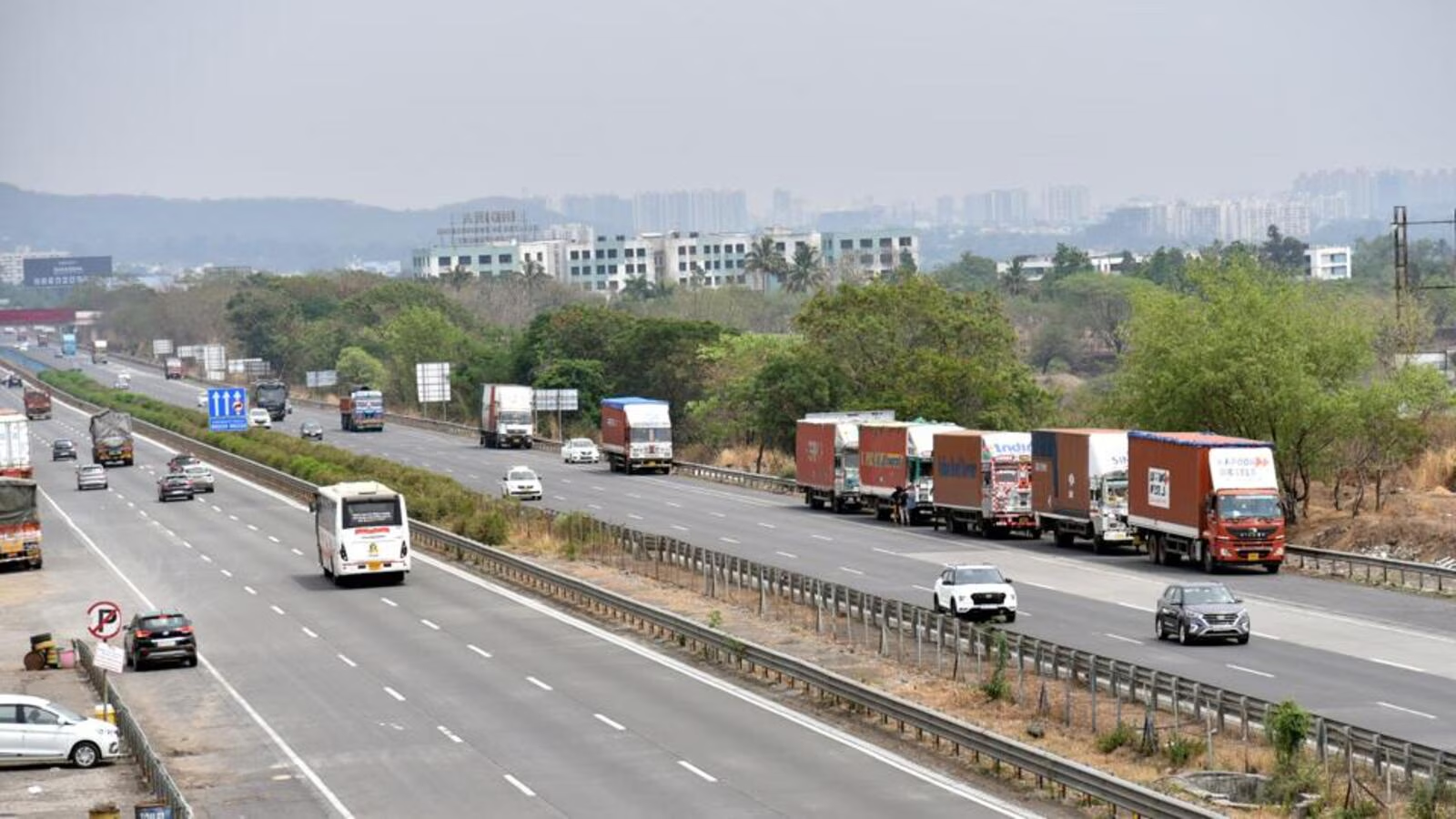
A major highway upgrade is advancing in the Pune metropolitan region, with an elevated corridor planned to ease congestion along the busy Pune–Nashik route and strengthen links to key industrial zones. The Pune Nashik elevated corridor, spanning roughly 30 kilometres between Nashik Phata and Khed, is being positioned as a critical intervention to improve freight movement and daily commuting across one of western India’s most economically active belts.
The project, led by the national highways authority, has entered a crucial stage with technical evaluations underway for construction bids. With an estimated investment running into several thousand crores, the corridor signals a significant push to address long-standing mobility constraints in Pimpri-Chinchwad and adjoining areas, where traffic volumes have surged alongside industrial and residential expansion. This stretch serves as a vital connector between Pune city and manufacturing hubs such as Chakan, Bhosari and Moshi, which host automotive, engineering and logistics clusters. Industry stakeholders have long highlighted congestion on this route as a bottleneck that affects supply chains, delivery timelines and workforce mobility.
he Pune Nashik elevated corridor is expected to provide a faster, uninterrupted transit option, particularly for long-distance and commercial traffic. Design plans indicate a multi-lane elevated structure supported by a streamlined pillar system, coupled with the widening of existing road infrastructure at ground level. Service roads are also expected to be integrated into the project to segregate local and through traffic, a measure aimed at improving safety and reducing conflict points between different types of road users.
However, infrastructure experts caution that large-scale road pr ojects must be evaluated within a broader mobility framework. While elevated corridors can reduce travel time in the short term, their long-term effectiveness depends on how well they are integrated with public transport systems and regional planning strategies. Without such alignment, there is a risk of induced demand, where increased road capacity eventually leads to higher vehicle usage.
Land acquisition remains a key challenge, particularly in densely developed stretches and environmentally sensitive zones near the Indrayani river. Negotiations involving compensation mechanisms and development rights have been ongoing, reflecting the complexities of executing linear infrastructure in rapidly urbanising regions. From an urban development perspective, the Pune Nashik elevated corridor underscores the growing interdependence between infrastructure and real estate growth. Improved connectivity tends to unlock land value and accelerate development, especially in peri-urban areas.
This raises important questions around managed growth, zoning and the provision of civic amenities alongside transport upgrades. As the project progresses through tendering and planning stages, its eventual impact will hinge not only on engineering execution but also on how effectively it balances economic efficiency with environmental safeguards and inclusive urban access. For Pune’s expanding metropolitan region, the corridor represents both an opportunity to streamline mobility and a test of how infrastructure can support sustainable, future-ready growth.
Pune Nashik Highway Elevated Corridor Gains Momentum