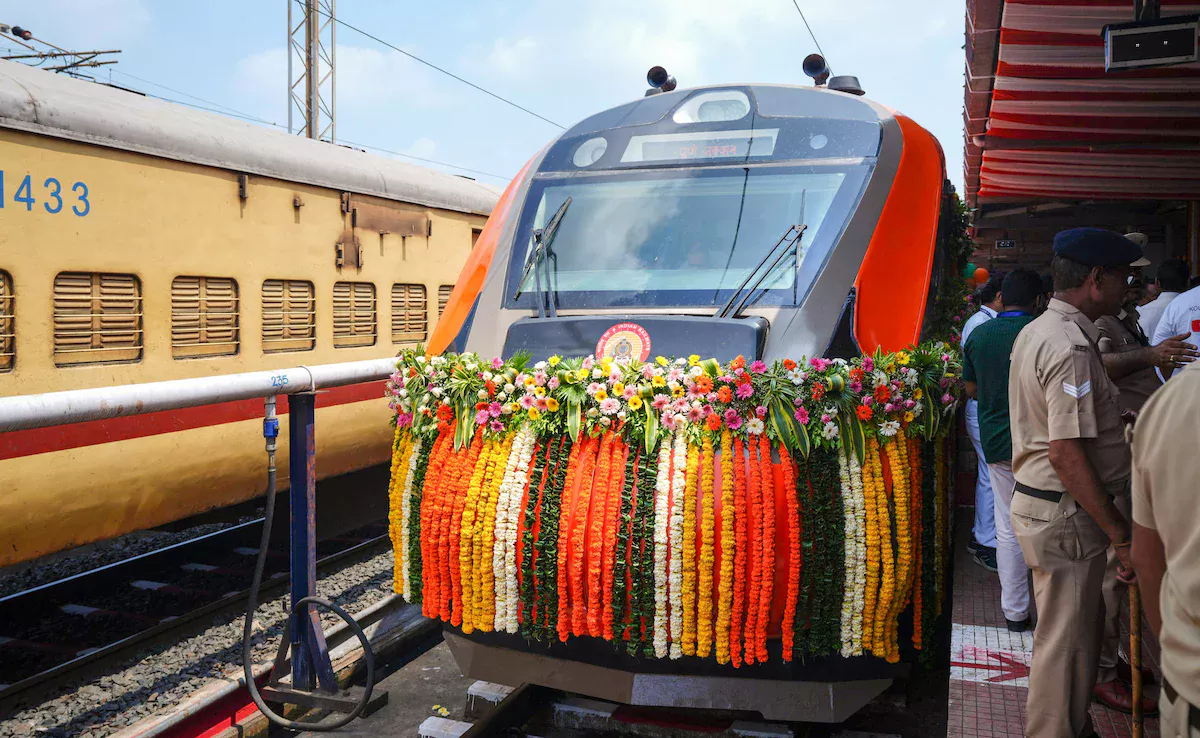
In response to rising intercity travel demand, Central Railway has scheduled additional services connecting Mumbai and Pune with Nagpur, reflecting growing pressure on key rail corridors linking Maharashtra’s economic centres. The move, implemented under a dynamic capacity model, is aimed at accommodating seasonal passenger surges while maintaining network efficiency.
The newly introduced Mumbai Nagpur special trains and Pune connections will operate in early April, covering overnight and daytime schedules to cater to both business and leisure travellers. Railway officials indicate that bookings have been opened with flexible pricing linked to demand patterns, a mechanism increasingly used to optimise seat utilisation on high-traffic routes. The Mumbai Nagpur special trains are particularly significant for regional mobility, as they connect the state’s financial capital with its eastern logistics and administrative hub. Similarly, Pune’s link to Nagpur serves a mix of students, professionals and small businesses, highlighting the role of railways in supporting economic integration across cities with distinct industrial and institutional profiles.
Transport analysts note that such temporary capacity enhancements signal a broader shift in how Indian Railways is managing peak demand. Instead of relying solely on fixed schedules, operators are adopting more responsive models that adjust supply based on travel trends. This approach, while improving availability, also raises questions around affordability as dynamic pricing can lead to higher fares during periods of high demand.
From an urban development perspective, the reliance on rail corridors like the Mumbai–Nagpur and Pune–Nagpur routes underscores the importance of strengthening intercity connectivity to reduce pressure on road and air transport. Rail remains one of the most energy-efficient modes of mass transit, aligning with long-term goals of reducing carbon emissions in the transport sector.However, experts caution that the need for frequent special services points to underlying capacity constraints. Key routes in Maharashtra are witnessing sustained growth in passenger volumes, driven by urban expansion, migration and increased economic activity. Without long-term infrastructure upgrades—such as track doubling, signalling modernisation and station capacity enhancements—temporary measures may only offer short-term relief.
The introduction of the Mumbai Nagpur special trains also has implications for real estate and regional growth. Improved connectivity can influence housing demand, commercial investments and labour mobility, particularly in emerging corridors along the route. Cities like Nagpur, positioned as logistics and warehousing hubs, stand to benefit from more reliable and frequent rail links. As Indian Railways continues to experiment with demand-driven services, the focus will increasingly shift towards balancing operational efficiency with accessibility. For passengers, the immediate benefit lies in improved availability, but for cities, the larger question remains how transport infrastructure can evolve to support sustainable and inclusive growth across regions.
Pune Nagpur Special Trains Announced For Peak Travel