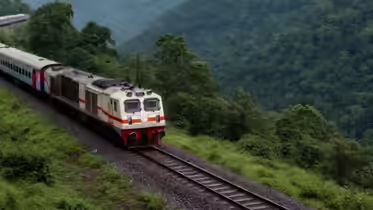
Central Railway has scheduled additional long-distance passenger services between Mumbai, Pune and Nagpur this February, responding to seasonal travel pressure across one of Maharashtra’s most critical rail corridors. The move temporarily increases rail capacity on routes that link the state’s financial capital, its education and manufacturing hub, and its fast-growing eastern city a triangle that underpins both labour mobility and regional commerce. The special services, operated under a demand-based timetable framework, are designed to absorb peak travel volumes without disturbing the regular train network. Railway officials indicate the intervention is aimed at preventing overcrowding while ensuring predictable journey times during a period that typically sees elevated intercity movement for work, family travel and examinations.
From an urban systems perspective, the decision highlights the continuing dependence of Maharashtra’s mid-distance cities on rail connectivity as an affordable and lower-emission alternative to road travel. The Mumbai–Nagpur and Pune–Nagpur corridors collectively support thousands of daily commuters, students, traders and informal workers, many of whom rely on overnight or long-haul trains to remain economically active across cities. The additional services will operate between Mumbai’s central rail terminals and Nagpur, as well as between Pune and Nagpur, covering multiple departure windows across mid and late February. Rolling stock configurations include a mix of air-conditioned, sleeper and unreserved coaches, reflecting the diverse income groups that use these routes. Transport planners note that such mixed-coach compositions are essential to maintaining inclusive mobility on intercity rail networks.
Urban economists point out that temporary capacity enhancements often serve as indicators of latent demand rather than one-off spikes. Nagpur’s emergence as a logistics, education and defence-linked employment centre has intensified travel flows from western Maharashtra, while Pune’s expanding student population continues to generate regular long-distance movement. Mumbai remains the anchor city, supplying jobs, healthcare access and administrative services that pull passengers from across the state. Importantly, the use of demand-responsive scheduling aligns with broader conversations around adaptive infrastructure management. Instead of large-scale capital expansion, transport agencies are increasingly experimenting with flexible operations to maximise existing assets a strategy that carries lower environmental costs and faster implementation timelines.
For cities pursuing climate-resilient transport transitions, rail remains a critical lever. Each additional train service potentially offsets hundreds of private vehicle journeys, easing highway congestion and reducing per-capita emissions. However, experts caution that sustained benefits will depend on whether such temporary measures translate into long-term capacity planning, station upgrades and improved last-mile connectivity. As Maharashtra continues to urbanise beyond its major metros, ensuring reliable and equitable rail access between regional cities will remain central to economic balance and social mobility. The February expansion offers short-term relief, but it also underscores the need for a more permanent recalibration of intercity rail supply in line with evolving urban demand.